


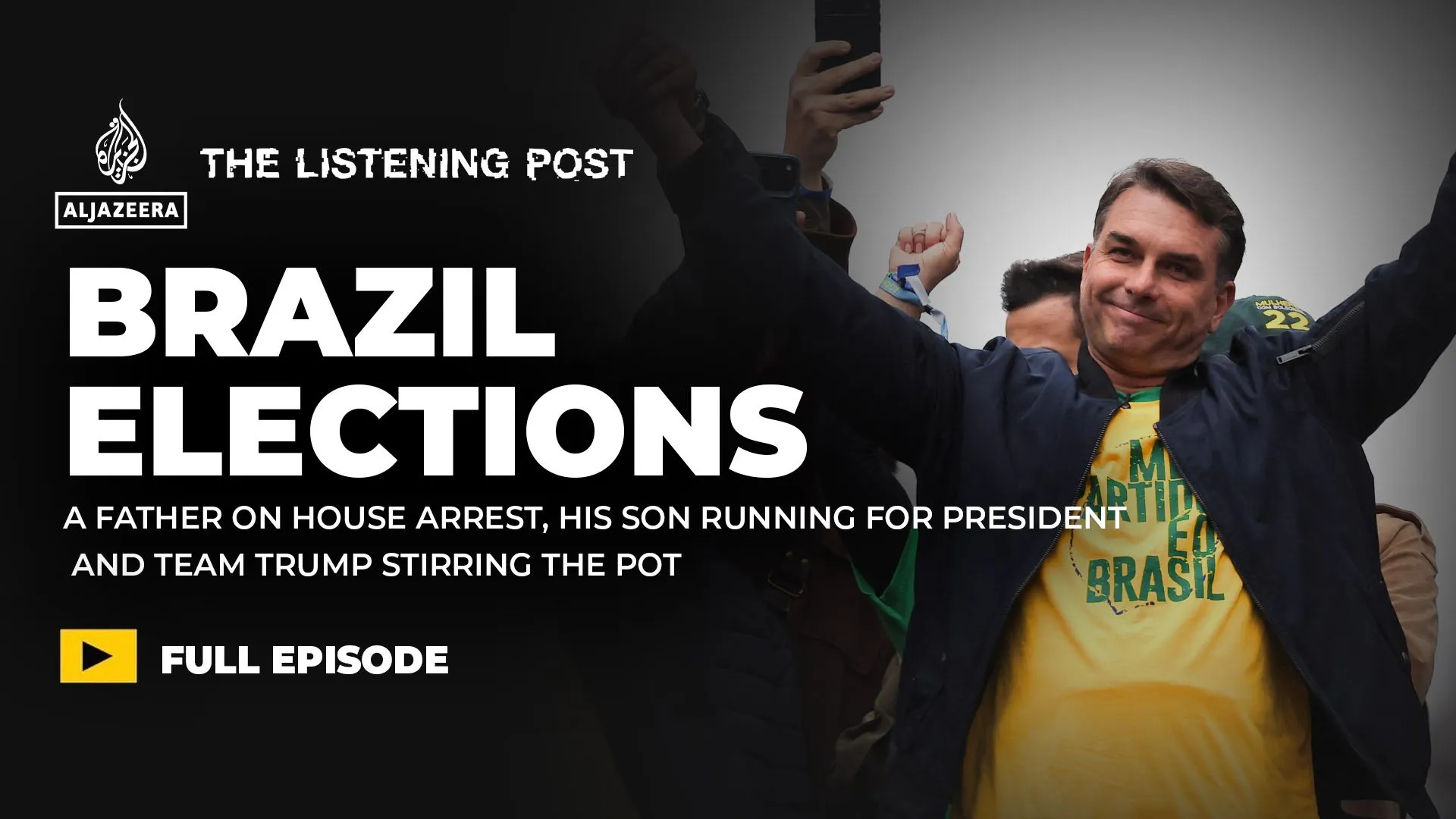
Brazil’s election media battle is being shaped by the return of the Bolsonaro name to the ballot, with Flavio Bolsonaro presenting himself as a more moderate alternative to his father, former president Jair Bolsonaro.
The campaign’s coverage has also been dominated by a major corruption scandal described as the biggest banking fraud case in Brazil’s history. The affair has placed corruption at the centre of the election narrative.
Brazilian voters are accustomed to scandals involving political figures, but coverage often adopts a broad interpretation: that all politicians are equally corrupt. That framing risks making it harder to distinguish between individual allegations and the wider political contest.
The role of the media in shaping the election is being examined by Andrew Fishman, president and co-founder of Intercept Brasil; David Nemer, a professor at the University of Virginia; Andre Pagliarini, a professor at Louisiana State University; and Natalia Portinari, a reporter at O Globo.
With Flavio Bolsonaro seeking to separate his political identity from that of his father, the election campaign is unfolding against a backdrop of corruption coverage and a continuing debate over how Brazil’s media presents its political choices.
