


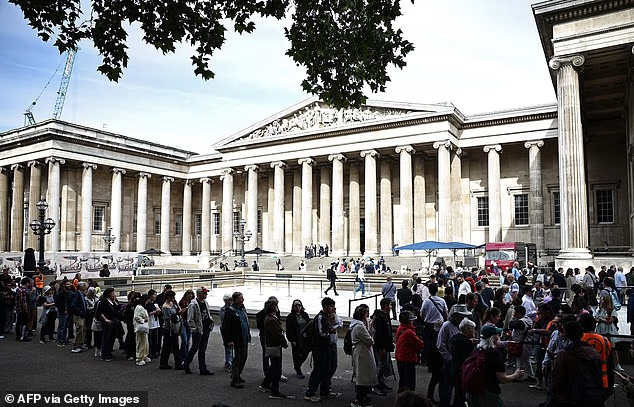
Visitors to the British Museum’s Bayeux Tapestry exhibition have been turned away or left waiting for hours, prompting an apology from the museum over chaotic queues and shortened viewing slots.
Some people with timed tickets were unable to see the 1,000-year-old embroidery, while others found their allotted 40 minutes substantially reduced by delays inside the exhibition.
John Wilson arrived for a 4.20pm appointment on Wednesday but waited more than two hours before reaching the first panel. About 20 minutes later, staff switched off the gallery lights and ordered visitors to leave.
Mr Wilson said the experience had been a “horror tale”, adding that visitors should consider booking an earlier time in the day “at least that gives you the chance that the lights won’t go off”.
“I suspect there are people who are maybe taking a bit longer [than 40 minutes] but when you have been queueing for so long why would you scurry through,” he said. “You want to be able to take in all the amazing detail.”
British Museum apologises over Bayeux Tapestry queues
Another visitor, Michael Hallihane, said he waited 50 minutes to enter at 11.40am and was repeatedly instructed by staff to keep moving.
“It is more or less constantly that you are told to keep moving. And then there are the automated messages in English and French telling you the same,” he said.
“I was so annoyed. It is just like a conveyor belt. It does detract from the experience of what is a really fantastic artefact.”
The museum has already prohibited photography in an effort to keep visitors moving along the embroidery. It is also considering further measures to reduce congestion before more tickets are released on October 21.
A spokesman said demand for the exhibition had been unprecedented and that the museum’s priority was to allow as many people as possible to see the tapestry while maintaining “the best possible visitor experience”.
“We have been planning in earnest and have extensive measures in place to try to manage visitor flow, but we recognise that some visitors have waited longer than we would have wanted,” he said. “We apologise to those affected. We will be contacting them directly.”
The first batch of tickets sold out within hours, with the museum having sold 100,000 tickets so far at prices ranging from £25 to £33 for adults.
Not every visitor reported difficulties. When the exhibition stayed open until 9pm on Thursday, there were no complaints about queues or the time available inside the gallery.
On the opening day, solicitor Richard Samuel, 60, praised the tapestry’s condition, saying: “It’s amazing that the colour is still so vivid…it’s amazing it’s survived so well and so long.”
Pauline Gairey, 53, who travelled from Wales and remembered studying the embroidery at school, said: “It’s just magical, isn’t it?”
The exhibition is the first time the Bayeux Tapestry has been displayed outside France. It will remain at the British Museum for the next ten months after being transported from northern France, where its usual home is undergoing refurbishment.
The medieval work depicts events leading up to the Norman Conquest of England in 1066 and offers glimpses of 11th-century life, including warfare, ships, clothing, food and furniture.
France has loaned the tapestry to Britain as part of an exchange under which French museums will display England’s Sutton Hoo collection of seventh-century helmets, shields and other metalwork.
