


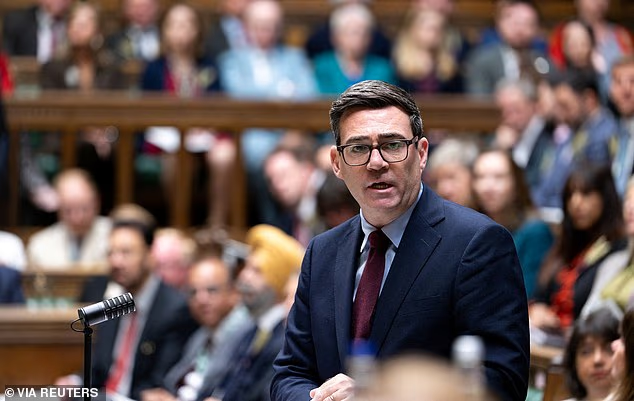
Labour has been branded the “Welfare Party” after Prime Minister Andy Burnham refused to prioritise defence spending over benefits, insisting that national security “cannot come at the expense of social security”.
The remarks, made during a heated session of Prime Minister’s Questions on Wednesday, opened a sharp political divide over how quickly Britain should increase military spending and whether the money should come from welfare reforms.
Conservative leader Kemi Badenoch accused Mr Burnham of “saying the quiet part out loud” and claimed Labour had placed benefits ahead of the country’s defence.
“The Labour Party has become the Welfare Party,” she said. “The first duty of government is defence of the country, not paying more benefits.”
Mr Burnham rejected what he described as “crude” attempts to reduce benefits in order to fund the Armed Forces. He argued that a resilient society was itself an essential part of national security and said Labour would not be forced to choose between the two.
His position is likely to intensify pressure from MPs who believe the Government must commit to a faster increase in defence spending amid growing threats from Russia and other hostile states.
Defence spending becomes dividing line
The Conservatives have proposed finding £10 billion to raise defence spending to 3 per cent of GDP by 2030. Their plan includes around £8 billion in welfare reductions, with half of the savings expected to come from changes to housing benefit.
Other measures include restoring the two-child benefit cap, which Labour has scrapped, ending VAT exemptions for Motability vehicles and redirecting funds earmarked for windfarms and civil research. The Conservatives have also proposed abandoning the agreement concerning the Chagos Islands.
Mrs Badenoch has said the package would provide an immediate source of funding for the military, rather than relying on longer-term reforms to employment, housing and education.
Mr Burnham, however, has refused to commit to reaching 3 per cent of GDP by 2030. He instead adopted a target of 3.5 per cent by 2035, while insisting that the Government had a fully funded plan to increase defence spending “the Labour way”. ([lbc.co.uk](https://www.lbc.co.uk/article/burnham-defends-defence-spending-pmqs-5HjdhC4_2/?utm_source=openai))
Labour’s current plans would see defence spending rise from 2.6 per cent next year to 2.7 per cent by the end of the decade. Germany is expected to reach 3.5 per cent by 2030, while Poland is already spending 4.7 per cent of its GDP on defence.
Tan Dhesi, the Labour chairman of the Commons Defence Committee, has accused the Prime Minister of “kicking the can down the road”. Chancellor John Healey, who previously served as Defence Secretary, has also warned that 3 per cent by 2030 should be regarded as the minimum required to keep Britain safe.
Wes Streeting, the new Defence Secretary, said in June that “there is no social justice without national security” – a formulation that now appears to sit uneasily alongside the Prime Minister’s insistence that social security must not be sacrificed.
The Government is also facing questions over the rising cost of sickness and disability benefits. Spending in the area is forecast to reach £109 billion by the end of the decade, more than £30 billion above last year’s level.
Mr Burnham said he opposed immediate welfare reductions but maintained that structural changes to housing and education could eventually reduce the benefits bill.
Critics argue that such measures would take too long to produce savings. Helen Whately, the Conservative welfare spokesman, said: “Does Burnham know what happens when a vulnerable country gets attacked? Without national security, there will be no social security.”
Reform UK deputy leader Richard Tice accused the Prime Minister of “surrender”, claiming he was treating anxiety and welfare provision as more important than the safety of the country. Conservative MP Claire Coutinho described the comments as “barking mad”.
The dispute leaves Mr Burnham under pressure from opponents and members of his own party to provide a firm timetable for higher defence spending. It also raises fresh doubts about whether Labour will take decisive action to restrain the welfare budget after abandoning plans last year to save £5 billion following a revolt by backbench MPs.
