


The Ku Klux Klan faction led by Thomas Robb is attempting to broaden its appeal by rebranding as The Knights Party, while continuing to promote a white nationalist ideology, according to an interview in Boone County, Arkansas.
Robb, a Christian pastor who took over the group in 1989, told reporter Phil Lavelle that the organisation was seeking to centre its message on family and faith. But he said Black people would not be welcome at its church because it was “a white nationalist church”.
The group was formerly known as the Knights of the Ku Klux Klan, and remains part of the wider KKK movement. Robb has changed his title from “grand wizard” to “national director”, allowed members to join confidentially by post and publicly distanced himself from the organisation’s history of violence.
Its racial beliefs, however, remain intact. Asked about politicians including New York City mayor Zohran Mamdani and Michigan Senate candidate Abdul El-Sayed, both of whom identify as Muslim, Robb said: “Well, first off, they’re not Americans.”
When told that El-Sayed was born in Michigan, Robb dismissed the point. “I don’t care where he’s born. He’s not American,” he said.
Robb said the children of white immigrants could be considered American “because they’re white”, while making a distinction between them and the children of non-white immigrants.
White supremacist groups in the United States
The Ku Klux Klan was founded in 1865, after the American Civil War, in opposition to efforts to expand civil rights for Black people and other minority groups. Its campaign included lynchings and other targeted violence intended to prevent non-white participation in government and preserve racial divisions.
The Southern Poverty Law Center estimates that at least 152 white supremacist organisations are currently active in the United States, describing the number as part of a rising trend over the past decade.
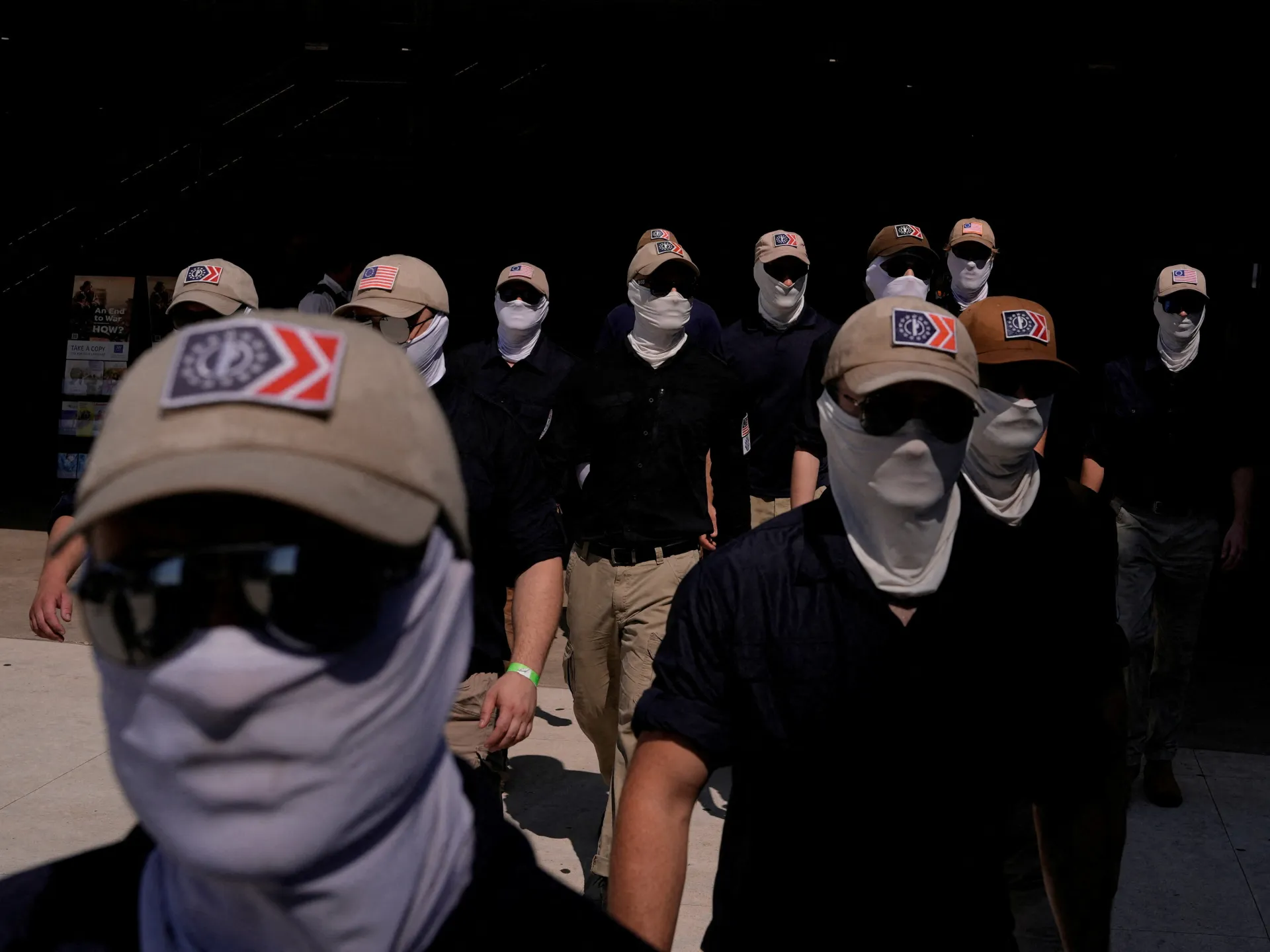
Another group, Patriot Front, marched through Washington DC during the Independence Day holiday this year. The developments have coincided with wider concern over the spread of white nationalist ideas in American public life.
A 2025 survey by the Public Religion Research Institute, involving more than 20,000 US adults, found that 32 per cent agreed with the statement: “Immigrants are invading our country and replacing our cultural and ethnic background.”
That belief is central to the so-called great replacement theory, a conspiracy which falsely claims that immigrants, Jews and non-white groups are seeking to replace white people in Western countries.
Critics have accused President Donald Trump and other right-wing figures of normalising such views through language portraying immigration as an “invasion” and “an assault on Western countries”. Trump has also faced criticism over a 2022 dinner with Holocaust denier Nick Fuentes and remarks after the deadly 2017 clash between white nationalists and protesters in Charlottesville, Virginia, when he said there were “fine people on both sides”.
Trump has instructed his second administration to dismantle diversity initiatives, while the government has opened inquiries into whether universities and companies such as Nike discriminate against white people. His administration has also prioritised white South Africans in refugee admissions, amid his claim that they are facing a “genocide”.
Robb said the current rise in white nationalist sentiment began before Trump, during Barack Obama’s 2008 election as the country’s first Black president. “People are beginning to stir and being angered by what they see happening to the country,” he said. “So we’re kind of a voice for that.”
Despite his claim that support for the movement is growing, Robb declined to provide membership figures or evidence. He acknowledged that people could be reluctant to formally join a white supremacist organisation.
“Maybe we’re wrong. Maybe everybody hates us. I don’t know,” Robb said.
