


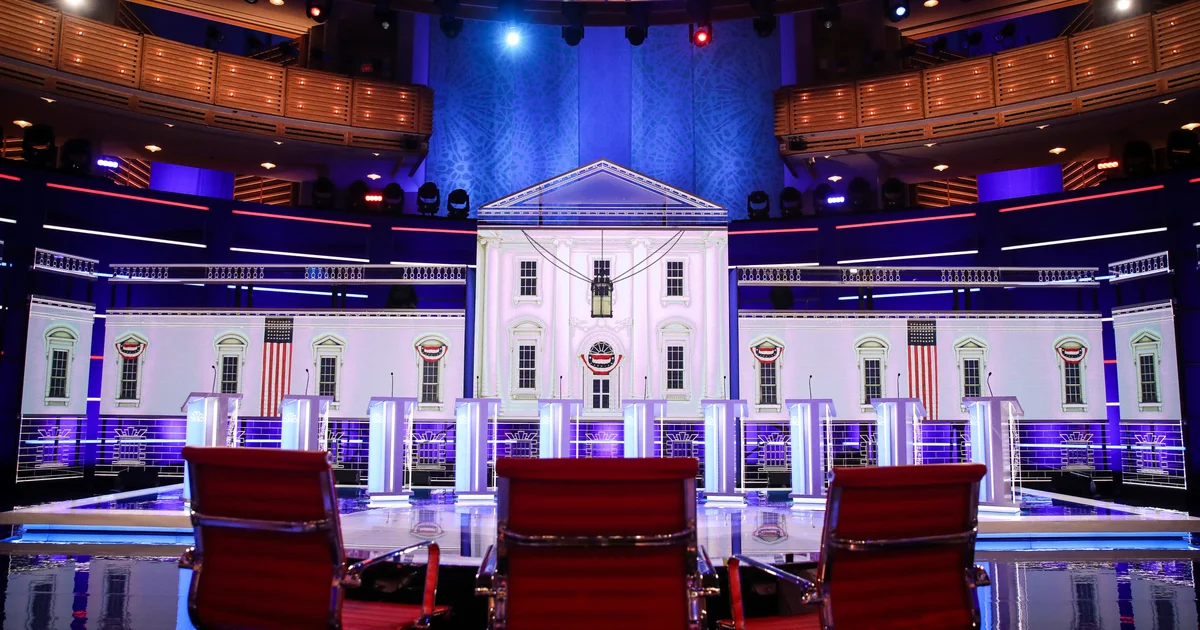
The Democratic National Committee has unveiled plans for 12 presidential primary debates, beginning in June 2027 and continuing into early 2028 as the party prepares for a wide-open contest.
Five debates are scheduled for 2027 and a further seven for 2028. No Democratic candidate has formally entered the race, although several prominent figures have indicated they are considering a White House bid.
DNC chair Ken Martin said each debate would be limited to 20 participants. If enough candidates qualify to exceed that number, the field will be divided between two nights, with candidates assigned to each event at random.
The exact dates, broadcasters and thresholds for polling and fundraising qualification will be announced later.
Democratic debate plan includes dark money pledge
Under the framework, candidates must sign a pledge promising to publicly denounce support from super PACs and “dark money” non-profit groups. The DNC acknowledged that it cannot prevent outside organisations from spending on behalf of candidates.
The rules also introduce a complaints and review process, allowing campaigns to raise alleged violations before debate qualification periods. Candidates would only need to disavow a super PAC or non-profit once, even if its spending continued.
More significant restrictions will apply to relationships between campaigns and Democratic Party organisations. Presidential campaigns will be barred from joint fundraising agreements with party committees during the primary and will not be able to authorise coordinated spending by state or local Democratic parties on their behalf.
DNC officials said the measures were intended to limit the influence of dark money and preserve party neutrality. The party has faced accusations of favouritism in previous primaries, particularly during the 2016 contest between Hillary Clinton and Bernie Sanders.
Outside spending was also a prominent issue during the 2020 primary, when Mr Sanders and Senator Elizabeth Warren made opposition to super PAC and dark-money funding central themes of their campaigns. The latest framework has been backed by progressives including Representatives Greg Casar and Jason Crow, Senator Andy Kim, Mr Sanders, Ms Warren and former DNC chair Jaime Harrison.
The debate schedule follows the party’s decision to alter its primary calendar, placing South Carolina first and moving Iowa’s caucuses out of the early voting window. The DNC also held 12 debates during the 2020 presidential primary, which began in June 2019.
Democrats are entering the next contest after strong midterm election results. The party secured its 258th House seat, giving it its largest majority since 1992, and won 56 Senate seats, including victories in Mississippi, Iowa and South Carolina, which is due to host the first Democratic primary in 2028.
