


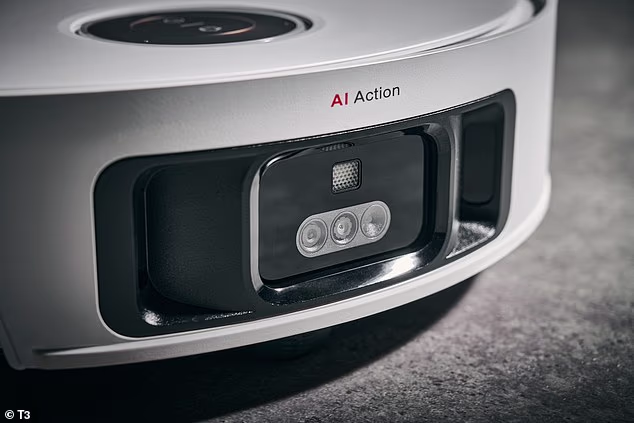
Robot vacuum cameras have been used to expose an alleged affair, while raising wider concerns about privacy, data collection and the legal limits of smart-home technology.
A man in Taiwan accessed his robotic vacuum’s live camera through a mobile app and recorded his wife with another man. He used the footage in a civil case over an alleged breach of their marital agreement and was awarded $16,000.
His wife later countersued, claiming she had been filmed without her consent. Secretly recording or disclosing private or intimate information without consent is illegal in Taiwan, and the man was sentenced to five months in prison.
The case illustrates how devices designed to navigate a home can also gather detailed information about the people living in it, experts said.
Robot vacuums use cameras and other technology to map floor plans, allowing them to move around furniture and avoid becoming trapped. More advanced models can connect to an app, enabling users to view what the device sees even when they are away from home.
George Grispos, an associate professor of digital forensics at Arizona State University, said the devices operate through a “two-way system” that records data on a wireless network and makes it available to customers through an app.
“We have Big Brother in our home, effectively, and we’re either happy to invite Big Brother in, but once we do, we just need to realize what could happen,” he said.
The information gathered can include images and create what Grispos described as a digital portrait of a home. He said researchers were still examining how accurately the cameras depict their surroundings and the full extent of the data collected.
Hank Fradella, a professor of criminology and criminal justice at Arizona State University, said the Taiwanese case demonstrated the serious consequences of using such technology to monitor another person.
“When I read that story, the first thing that struck me was that he got jail time. Five months of jail time for using this device to spy on his wife,” he said.
Privacy concerns over robot vacuum cameras
Fradella said the legal position in the United States was complicated by differing state laws. The federal Wiretap Act prohibits illegally obtained communications from being used as evidence, but states vary over whether everyone involved must consent to a recording.
He added that the legislation applied to audio, meaning silent video footage could be admissible in court. Questions could include whether both spouses knew about the device, or whether one had installed it without the other’s knowledge.
Whether agreeing to a product’s terms and conditions amounts to consent is also unresolved. Consumers may have “constructive knowledge” of what they have agreed to, Fradella said, but that does not necessarily mean they understood the terms or realised they could be recorded inside their own home.
“Is constructive knowledge buried in the terms of service that nobody reads going to be enough, legally? Well, we’ll have to see,” he said.
Concerns about images being accessed or shared have arisen before. In 2022, researchers found photographs online that appeared to have been captured by a Roomba robot vacuum, including an image of a woman on a toilet and another of a child lying on the floor.
The images were reportedly used by employees of an artificial intelligence company that labelled them to improve the robot’s ability to identify objects. iRobot, which makes Roomba, said at the time that the photographs had been shared in breach of a written non-disclosure agreement with a service provider.
Jihun Joun, an assistant professor of interdisciplinary forensics at Arizona State University, advised consumers to look for terms such as “collect, download, store, and share” when reviewing an agreement.
He cautioned that a statement saying data would not be sold did not necessarily mean it would not be shared.
Fradella called for manufacturers to provide clear, plain-language warnings before consumers buy products that collect data, rather than relying on lengthy terms and conditions.
“And let’s be transparent in a way that the average person opening up the device gets fair notice right away. I don’t think that’s too much to ask for,” he said.
Grispos warned that the same risks extended beyond robotic vacuums and applied to other connected devices in the home.
“There’s this technology, if you want it, it’s there, but it’s gonna come with a risk to your life,” he said.
