


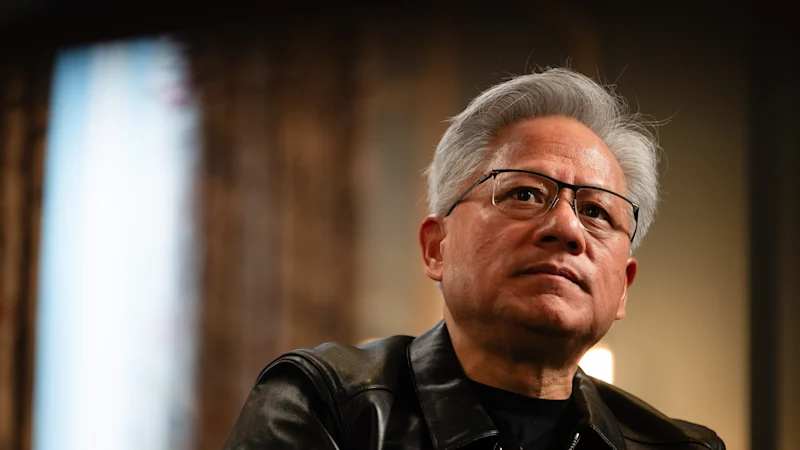
Jensen Huang has resigned with immediate effect as chief executive of Nvidia, the chipmaker he co-founded, after reports of extramarital affairs and allegations that one relationship raised national security concerns.
Nvidia said Colette Kress, its chief financial officer and executive vice-president since 2013, would become interim chief executive. Harvey C Jones, an entrepreneur and venture investor, has been appointed the company’s first chairman.
The leadership crisis follows reports that Huang had a relationship with Alice Huang, a businesswoman formerly associated with Singapore-based Megaspeed International. US intelligence agencies reportedly suspect she passed information to Beijing, an allegation denied by China, which has described the claims as “unsubstantiated” and a smear campaign.
Huang apologised to employees after reports of his relationship with Alice Huang, saying he had been “unfaithful to my wife”. He added: “My actions hurt her and our children,” while saying that his colleagues “deserve better” from him.
The pair are not related, despite sharing a surname. Alice Huang, who is also known as Huang Le, was questioned by Singaporean authorities and had her passport confiscated during an investigation into Megaspeed. Officials concluded there was insufficient evidence that she had committed a crime, but suspected she had provided inaccurate information about her role at the company and barred her from returning to Singapore.
Megaspeed has previously been accused of illicitly shipping advanced Nvidia chips to China, although it later said there was “no evidence” of such exports. The company said it took US export-control laws seriously and was committed to working “constructively and transparently” with the American authorities.
Nvidia’s leadership crisis deepens
A separate report alleged that Huang had an affair with Kimberly Powell, Nvidia’s vice-president of healthcare. Huang, 63, and Powell, 48, are both married to other people, and Nvidia’s code of conduct tells staff to avoid circumstances that could create conflicts, including personal relationships.
A further allegation involving another Nvidia employee emerged after Huang’s resignation, adding to the pressure on a company that had previously been led by its co-founder for 33 years. Nvidia said its internal review was continuing and that it had no reason to believe national security or company secrets had been compromised.
US lawmakers from both parties have called for further investigations. Donald Trump said the FBI was examining Huang’s relationship with Alice Huang, although the status of that inquiry remains unclear.
The president had maintained a close relationship with Huang during his second term, praising him as “smart” and “amazing”. Nvidia’s chief executive had joined Trump on Air Force One and attended events at the White House, while the company committed 25 million US dollars towards a ballroom renovation project there.
Trump continued to defend Huang after the resignation, saying he had “done a fantastic job”. He also suggested that former Apple chief executive Tim Cook should take over at Nvidia, writing: “A Legend replaces a Legend!”
Treasury Secretary Scott Bessent, however, said the board should look outside Nvidia for a permanent replacement, arguing that the company needed “a dramatic shakeup”. Other names reported as possible candidates include Nvidia co-founder Chris Malachowsky, executive Ian Buck, AMD chief executive Lisa Su, Arm boss Rene Haas, former Google chief Eric Schmidt and Intel chief executive Lip-Bu Tan.
Kress said Nvidia’s “strength has always come from its people” and that she was “committed to building on the extraordinary foundation Jensen created over the last 33 years”.
Shares fall as Huang leaves Nvidia
The fallout has hit Nvidia’s market value. Its shares closed 4.3 per cent lower, with the decline during the week wiping almost 500 billion US dollars from the company’s capitalisation. Nvidia, which had been valued at more than 5.8 trillion US dollars in early October, is now worth about 4 trillion US dollars.
Huang’s personal fortune has fallen by about 19 billion US dollars, according to Forbes, leaving him ranked 13th among the world’s wealthiest people with an estimated net worth of about 143 billion US dollars.
The disruption comes as Nvidia remains central to the global artificial intelligence industry, with its high-end chips providing much of the infrastructure used to develop AI systems. Analysts have warned that the leadership change will test not only the company but the resilience of the wider AI boom.
