


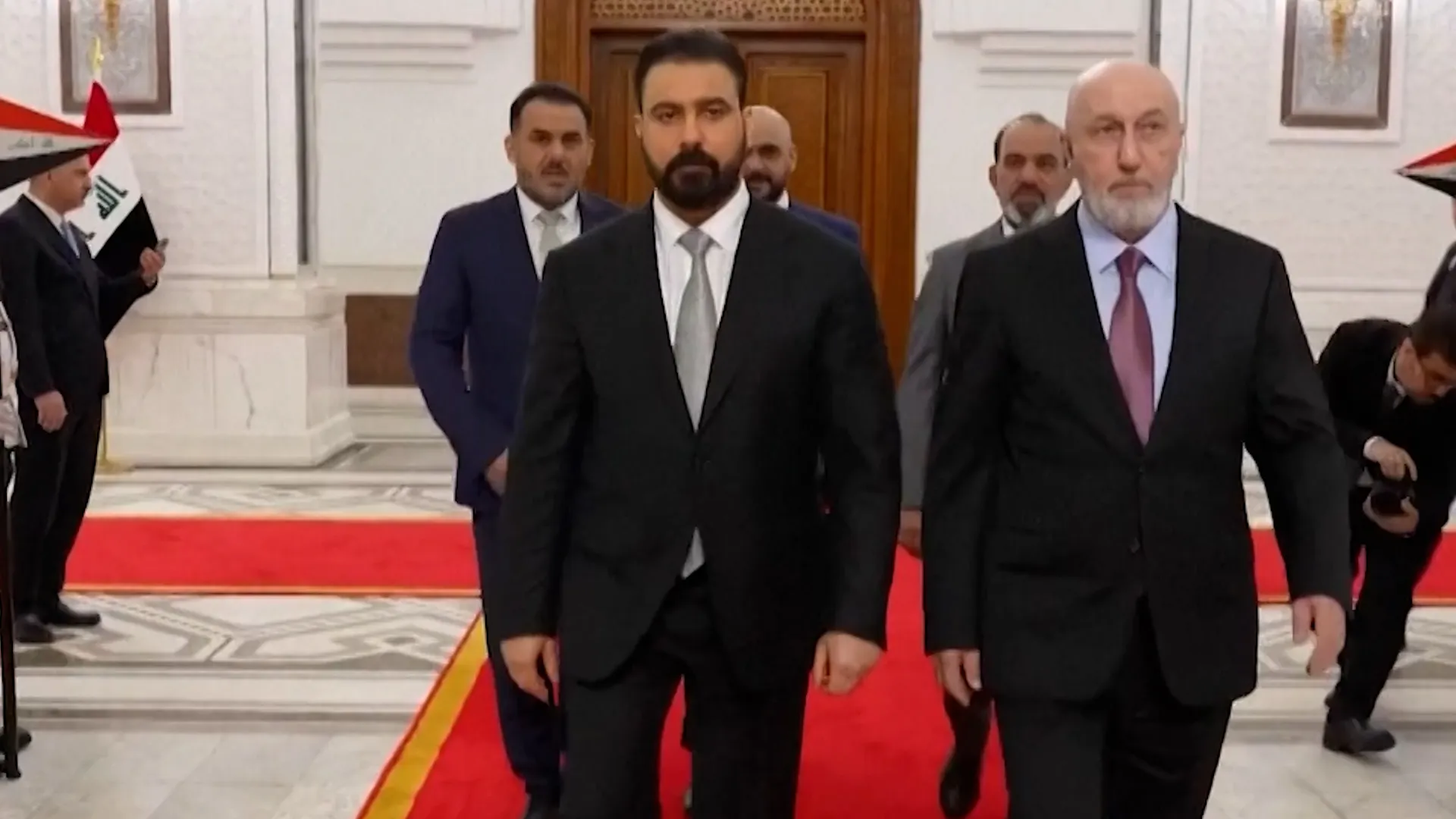
Iraq’s Prime Minister Ali al-Zaidi has dismissed nine senior officials over an alleged oil smuggling operation in Jurf al-Nasr, a stronghold of the Iran-backed Kataib Hezbollah group.
The officials include security and intelligence officers in Babil province, a commander in the Interior Ministry and the director of the Oil Pipelines Company at the Ministry of Oil. Babil’s police chief was also removed.
Al-Zaidi took the decision after chairing an emergency security meeting to examine the findings of a committee investigating smuggling in the area, military spokesman Sabah al-Numan said.
The inquiry uncovered illegal oil refineries and evidence of manipulation linked to the alleged operation. Those accused of involvement have been ordered to face judicial proceedings.
Oil smuggling investigation
Intelligence documents reported by the Iraqi News Agency included satellite images which appeared to show crude oil and oil derivatives being smuggled by an armed faction in Jurf al-Nasr. The documents alleged that a pipeline in the area had been tapped.
Al-Numan said the investigating committee had confirmed the accuracy of the information.
Two strategic oil pipelines running through southern Iraq, south of Baghdad, were allegedly used to siphon off oil which was then sold on the black market. The operation was estimated to be worth tens of millions of dollars each month.
Peter Smith, reporting from Baghdad, said previous Iraqi governments had been cautious about confronting an alleged network with a value of up to 30 million dollars a month. He said the area had effectively operated as “a state within a state until now”.
Kataib Hezbollah, one of Iraq’s most heavily armed factions, has issued sharp statements against the prime minister in recent weeks. The group has threatened his government and accused him of corruption.
Akeel Abbas, a senior non-resident fellow at the Atlantic Council’s Iraq Initiative, said oil smuggling by political factions and armed groups was common in Iraq and was driven by commercial rather than strategic or political gains.
He said the latest action was also connected to efforts to disarm militias, arguing that the prime minister had framed the move as an anti-corruption operation to cut off the group’s financial support.
