


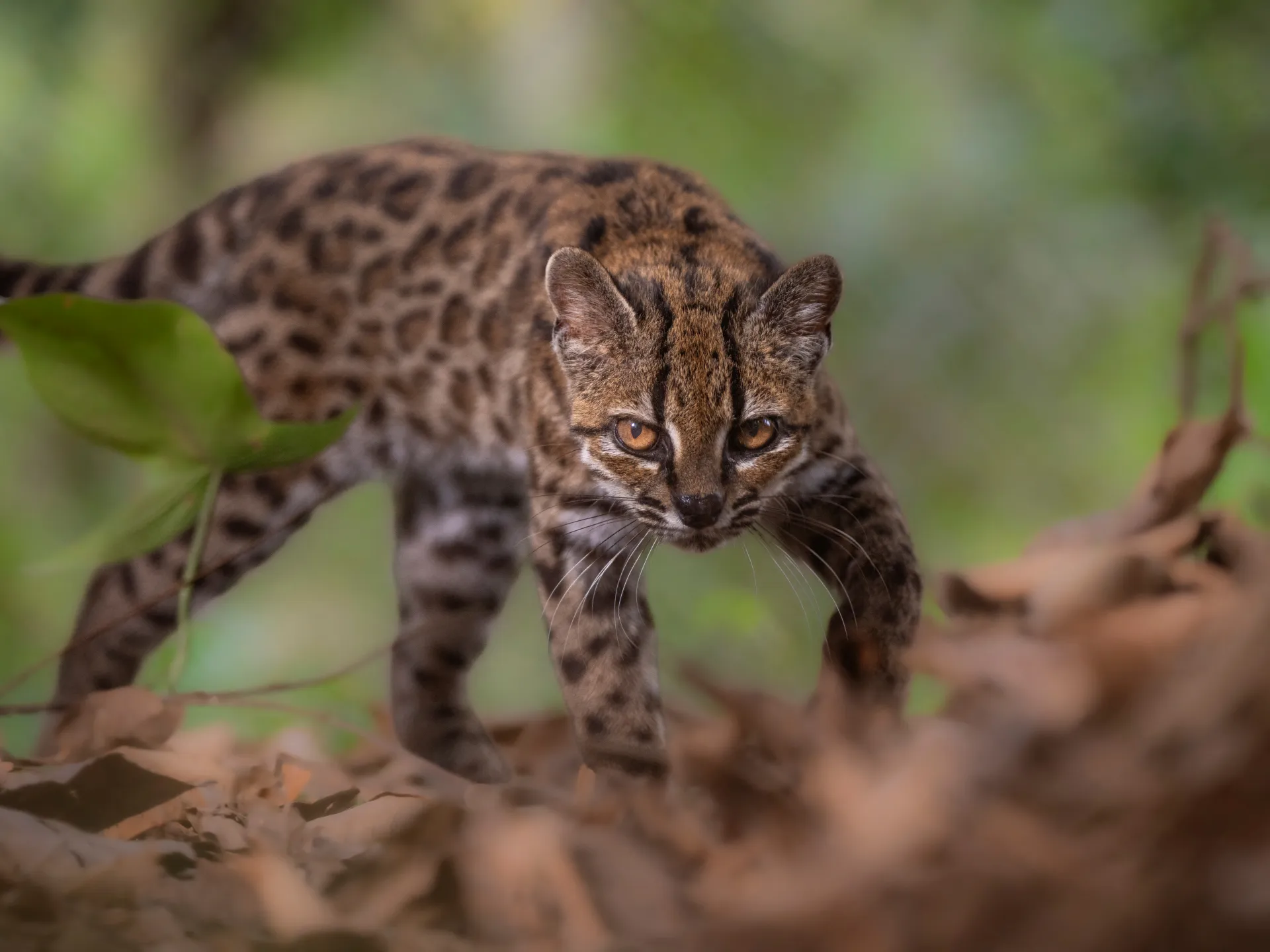
A wildcat discovered after a Bolivian family took in an abandoned kitten has been formally recognised as a new species following almost a decade of research.
Leopardus tilcayo was identified in the Bolivian Yungas, a humid cloud-forest region on the eastern slopes of the Andes. The finding, announced in a study published in Current Biology, is described as the first new cat species discovered in more than a century.
The last new cat species to be reported was the pampas cat in 1923. The newly named animal was known to people living in the Yungas, who used the name tilcayo to distinguish it from other small spotted cats.
How the new wildcat was identified
The research began after a local man found a lone kitten near the forest and assumed it was a stray domestic cat. The animal lived with his family for about a year, but in 2016 it began chasing neighbours’ chickens and became too difficult to keep.
The family eventually surrendered it to Senda Verde, an animal refuge, which contacted Paola Nogales Ascarrunz, a biologist and lead scientist of the Bolivian Felids Research Program.
She initially thought the animal was a tigrina, or Leopardus tigrinus, a small spotted cat found across much of Central and South America. But its size, facial shape and the appearance of its spots raised doubts.
“When you want to pet a wild animal, then you think the power of love is going to change the behaviour of this animal. But a wild animal, it doesn’t matter if you give him the best food, it’s not going to behave,” Nogales Ascarrunz said.
She said similar cases were common in Bolivia, particularly after wildfires, when orphaned animals can be captured and sold through the illegal pet trade before being surrendered by owners unable to care for them.
While Nogales Ascarrunz investigated the unusual cat, researchers in several countries were examining the genetics of tiger cats across South America. The group had long presented a taxonomic puzzle because animals that look almost identical can belong to genetically distinct species.
DNA samples from Bolivia, Brazil, Colombia, the Guianas and Peru were combined with existing genomic data. The analysis identified five distinct tiger cat species, rather than the two to four previously expected, and showed that the Bolivian animal was separate from the other recognised or suspected groups.
Jonas Lescroart, a University of Antwerp researcher and co-author of the study, said the new cat was different from species whose scientific names had simply been restored after genetic research showed they had been wrongly classified.
“It had never been given a scientific name, and it had never been formally described in a scientific way that was published,” he said. “So we had the honour of coming up with a name for this animal and doing the formal scientific description.”
What is known about Leopardus tilcayo
Researchers have so far confirmed the species genetically only in Bolivia. The Yungas extends into Peru and northern Argentina, but it is not yet known whether the tilcayo lives there or whether it is restricted to a smaller area of forest.
Little is known about its population or behaviour. Scientists have yet to document its diet, predators or reproduction, and do not know how many animals exist. Lescroart said the number could be in the thousands, but added that researchers had no firm estimate.
The name tilcayo was adopted from local people, who said they had learned it from parents or grandparents. Its meaning and origin are not known.
The discovery could also affect conservation assessments. Tiger cats are currently treated collectively as vulnerable on the International Union for Conservation of Nature’s Red List, but dividing them into five species means each group may represent a smaller population requiring more targeted protection.
Genetic evidence suggests that most tiger cat lineages have declined over time, with some populations falling by as much as 80 per cent from historical highs. That is consistent with accounts from Bolivian elders, who have told Nogales Ascarrunz that they are seeing fewer tilcayos in the forest.
