


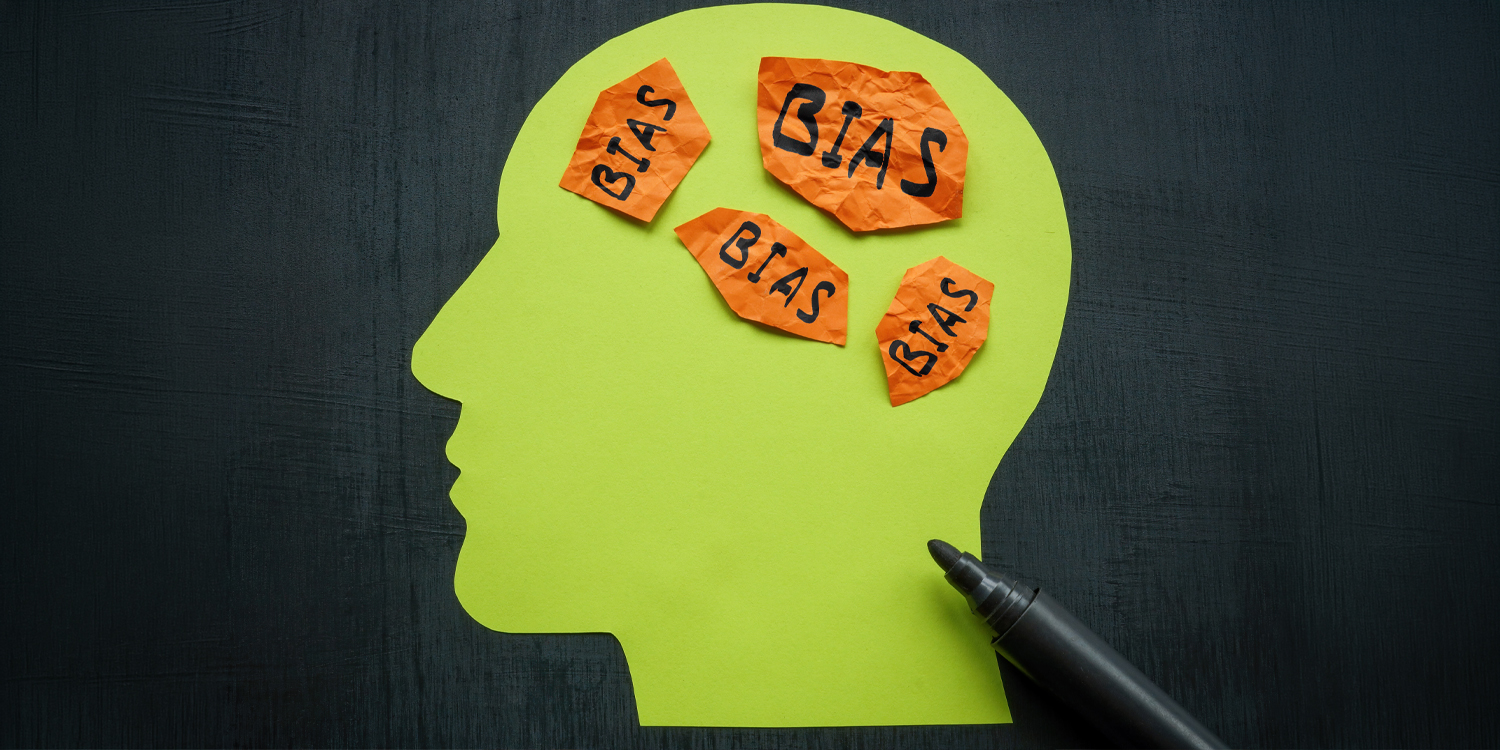
A new study challenges the core assumption behind the world’s most widely used measure of implicit bias, arguing that a participant’s careful, conscious strategy may drive test scores more than automatic associations. The research, published in Nature Human Behaviour, analysed data from more than a hundred thousand test sessions to reach its conclusion, led by Kyle J. LaFollette of the University of Chicago Booth School of Business.
Implicit biases are attitudes or stereotypes that can influence understanding and decisions, often without conscious awareness. The Implicit Association Test, or IAT, is a common tool used to detect these hidden attitudes. In a typical IAT, participants rapidly sort images and words into categories on a screen using two keys, with compatible and then incompatible pairings designed to reveal biases through reaction times.
In a racial-bias example, a participant might first pair White faces with positive words and Black faces with negative words, before switching to pair White with negative and Black with positive. The slower responses during the swapped, or incompatible, pairings contribute to a final D-score, a standard metric researchers interpret as the strength of implicit bias. The traditional view has been that this delay reflects automatic memory associations, a concept known as decision ease.
But the new study proposes an alternate mechanism: participants may simply adopt a more cautious strategy, slowing down to avoid mistakes. This response caution is a conscious, strategic choice about accuracy over speed, rather than an automatic mental activation that is hard to fake.
Historically, mathematical models of the IAT have suggested bias hinges on how easily people process associations, with caution treated as a testing artefact. A 2007 study, for instance, parsed the IAT into cognitive components and concluded that real bias lies in the ease of processing information, while caution played a secondary role. A 2020 study further explored how anti-bias programmes affect decision ease versus caution, underscoring why identifying the true driver matters for real-world training.
The latest work directly tests whether response caution is a more prominent factor in IAT results than previously recognised. Lead author LaFollette explained the motivation: “The IAT is the most widely used tool for measuring implicit bias, and it’s usually interpreted as picking up on how easily a stereotype or attitude pops into someone’s mind.”
He added: “But researchers have long wondered whether that’s the whole story. Some of what shows up in an IAT score might actually come from people being more careful or cautious in certain parts of the test, rather than from the strength of an automatic association. That distinction matters because caution is something people can control, while the automatic association process is supposed to be the part that’s harder to fake or consciously manage. We wanted to test how much of the IAT’s signal actually comes from each of these two things, using a large dataset and a modelling approach built for teasing them apart.”
The researchers drew on the Ideology 2.0 Study, a vast dataset hosted on the Project Implicit platform, comprising 109,417 unique test sessions across 39 IAT topics including race, sexuality, politics, age and economic systems. For each topic, participants completed the standard sorting tasks with recorded choices and response times in milliseconds, and many also completed an explicit preference questionnaire.
Using a mathematical approach known as a Racing Diffusion Model, the team separated reaction times into three cognitive mechanisms: decision ease (automatic activation of associations), response caution (the amount of evidence needed to answer accurately), and non-decision time (the physical aspects of pressing a button and registering the stimulus).
The analysis showed that these mechanisms behaved differently in compatible versus incompatible test blocks, but their effects varied greatly. Across all 39 topics, response caution emerged as the stronger predictor of a person’s final D-score than either decision ease or non-decision time.
Participants consistently slowed during the incompatible blocks to improve accuracy, a shift in strategy that heavily influenced the delay measured by the IAT. The D-score, the researchers note, conflates these factors, meaning the test may be rating cautious behaviour rather than pure bias.
LaFollette underlined the broader implications: “The role of caution was consistently greater than the role of automatic association, and that held true across almost every one of the 39 topics we looked at, using several different ways of scoring the test.” He stressed that this was not a fringe effect, noting its appearance across diverse topics, from race and age to attitudes toward novelty.
The study also explored how these cognitive mechanisms correlated with what people reported on the preference questionnaires. They found that explicit preferences aligned with higher levels of response caution, while decision ease and non-decision time did not reliably predict self-reported attitudes.
“That cautious, more controllable behaviour also lined up better with what people said they actually believed than the automatic process did,” LaFollette said. “It also did a better job predicting people’s stated attitudes, and it did so for about half the topics, compared to roughly 1 in 10 for the automatic process.”
He warned that IAT scores are not a straightforward reflection of unconscious mind activity: “IAT scores aren’t as simple as they’re often made out to be. In short, an IAT score reflects a blend of factors, and part of that blend is more deliberate than the ‘implicit’ label suggests.”
The study also acknowledged caveats. The modelling relies on mathematical approximations of cognitive processes, and the data capture only the final reaction time after mistake corrections, not the initial errors. The online nature of Project Implicit testing could also mean participants are a self-selecting group highly motivated to monitor and manage their performance.
Commenting on the significance, Daniel J. Lee, associate professor of entrepreneurship at the University of Delaware, said the findings “grapple with a question that’s plagued us since the advent of the IAT.” He suggested the results fit within ongoing debates about how prior knowledge of bias may influence scores on future tests and hinted that individuals might consciously respond with greater caution to avoid biased impressions being detected.
Lee also speculated about how the results might translate outside the laboratory: if someone fears a psychologist’s test will reveal bias, they might be more ‘response cautious’ while taking it, potentially inflating caution-related effects in real-world settings.
The authors propose future work to separate caution from automatic association more clearly, including exploring how different instructions (such as prioritising speed over accuracy) might alter results and help isolate automatic memory processes. They emphasise the value of extending this approach to analyse mistakes and to other tools used to measure implicit attitudes.
LaFollette suggested researchers might benefit from using tools like FlexDDM to fit diffusion models more easily, noting that the software is available for free on the Microsoft store and is useful for instruction as well as research.
The study, “Challenging the Mechanism for the Implicit Association Test,” lists Kyle J. LaFollette, Doroteja Rubez, Heath A. Demaree and Amit Goldenberg as its authors.
