


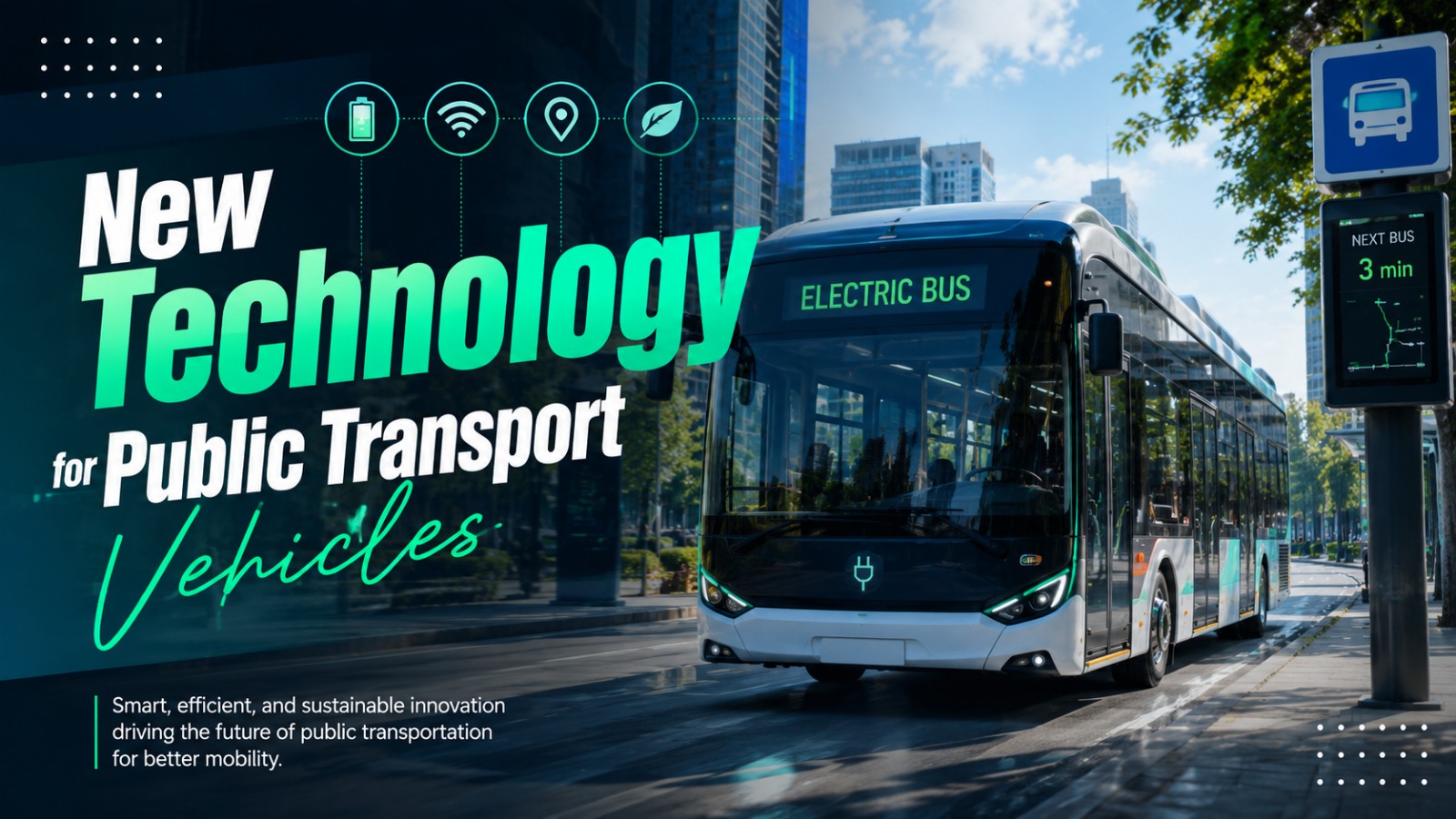
Public transportation is changing rapidly as cities look for ways to make mobility safer, cleaner, faster, and more efficient. New technology is being introduced into buses, trains, trams, and other public transport vehicles to improve both passenger experiences and operational performance. These innovations range from electric power systems and smart sensors to digital ticketing and real time vehicle monitoring. As urban populations continue to grow, technological development can help public transport operators serve more passengers while managing resources more effectively.
The adoption of new technology also supports the transition toward more sustainable transportation. Electric vehicles can reduce direct exhaust emissions, while intelligent systems can help operators optimize routes, maintenance, and energy use. However, successful implementation requires appropriate infrastructure, investment, skilled workers, and careful planning.
ELECTRIC POWER TECHNOLOGY
One of the most important developments in public transport is the growing use of electric vehicles. Electric buses and trains can use electric motors instead of conventional internal combustion engines, reducing direct tailpipe emissions from road vehicles. Battery electric buses are increasingly suitable for urban routes because improvements in battery technology have increased their practical operating range. Electric drivetrains can also provide smooth acceleration and lower noise levels, which can improve the passenger environment.
Charging infrastructure is an essential part of electric public transport. Operators may use overnight depot charging, opportunity charging during scheduled stops, or other charging strategies depending on the route and vehicle requirements. Proper planning is necessary because charging time, electricity capacity, operating schedules, and battery performance all affect fleet efficiency. The International Energy Agency reports that electric buses are part of the wider global expansion of electric mobility and that electrification is increasingly influencing public transport systems.
SMART VEHICLE MONITORING SYSTEMS
Modern public transport vehicles can use sensors and connected monitoring systems to collect information about vehicle conditions and operations. Sensors can monitor factors such as battery status, temperature, energy consumption, vehicle location, and mechanical performance. This information can be transmitted to operators through digital communication systems for analysis and decision-making.
Real time monitoring can help transport companies identify operational problems more quickly. For example, unusual temperature or performance readings may indicate a developing technical issue that needs inspection. Data based monitoring can therefore support preventive maintenance and reduce the possibility of unexpected vehicle failures. It can also help operators understand how vehicles perform under different routes, traffic conditions, and passenger loads.
ARTIFICIAL INTELLIGENCE AND PREDICTIVE MAINTENANCE
Artificial intelligence AI is becoming increasingly useful in transportation because large amounts of operational data can be analyzed more efficiently. AI systems can assist operators in identifying patterns related to traffic, passenger demand, energy consumption, and vehicle performance. These insights can support better scheduling and operational decisions without completely replacing human judgment.
One important application is predictive maintenance, where data from sensors and maintenance records can be analyzed to identify potential problems before serious failures occur. Instead of relying only on fixed maintenance intervals, operators can use vehicle condition data to determine when components may require inspection or replacement. This approach can improve fleet reliability, reduce unnecessary downtime, and potentially lower maintenance costs when implemented correctly.
REAL TIME GPS AND FLEET MANAGEMENT
GPS technology has become an important component of modern public transport systems. Vehicles equipped with GPS can provide operators with real time location information, allowing control centers to monitor fleet movement. This information can also be used to estimate arrival times and provide passengers with more accurate travel information.
Fleet management platforms can combine GPS data with information about traffic, schedules, and vehicle conditions. Operators can use these systems to identify delays, adjust services when appropriate, and monitor whether vehicles are following planned routes. For passengers, real time information can make public transportation more predictable because they can better understand when a bus or other vehicle is expected to arrive.
DIGITAL TICKETING AND CONTACTLESS PAYMENT
Technology has also transformed how passengers pay for public transportation. Digital ticketing systems allow travelers to use mobile applications, smart cards, QR codes, or contactless payment methods depending on the transport system. These options can reduce dependence on cash and make boarding more convenient, especially on busy routes.
Contactless systems can also improve operational efficiency by speeding up the payment process. When integrated with a wider transport platform, digital tickets can potentially support connections between different services and provide operators with useful information about travel patterns. However, payment systems should be designed with security, privacy, accessibility, and reliability in mind so that technological progress does not create unnecessary barriers for passengers.
ADVANCED SAFETY TECHNOLOGY
Safety is another major area of technological development in public transport vehicles. Modern vehicles can be equipped with cameras, collision warning systems, automatic emergency braking, blind spot monitoring, and driver assistance technologies, depending on the vehicle and regulatory requirements. These technologies can help drivers detect hazards and respond more effectively to potentially dangerous situations.
Advanced safety systems are particularly valuable in busy urban environments where vehicles operate close to pedestrians, cyclists, motorcycles, and other road users. Cameras and sensors can provide additional information that may not always be visible to the driver. However, these systems should be treated as support tools rather than complete replacements for trained drivers and proper safety procedures.
CONNECTED AND SMART PUBLIC TRANSPORT
Public transport vehicles are becoming increasingly connected through Internet of Things IoT technology. Connected vehicles can communicate with control centers, infrastructure, and digital platforms to exchange operational information. This can create a more integrated transport environment in which vehicle locations, traffic conditions, passenger demand, and service information can be managed together.
Smart connectivity can also support better passenger services. Digital displays inside vehicles can provide route information, service updates, and estimated arrival times. In some systems, passengers can receive information through mobile applications before and during their journey. These features can make public transport easier to understand and more convenient, particularly for people who frequently travel through complex urban networks.
IMPROVING PASSENGER COMFORT
New technology is not only focused on vehicle performance. It can also improve passenger comfort and accessibility. Modern public transport vehicles may include USB charging ports, Wi Fi connectivity, digital information displays, improved climate control, and automated announcements. These features can make longer journeys more comfortable and help passengers remain informed during their trips.
Technology can also support passengers with different mobility and communication needs. Automated audio announcements, visual displays, accessible boarding systems, and other assistive features can make public transport easier to use. The most effective innovations are those that improve convenience while maintaining simple and inclusive access for passengers with different levels of technological experience.
THE FUTURE OF PUBLIC TRANSPORT TECHNOLOGY
The future of public transport will likely involve greater integration between electric vehicles, artificial intelligence, connected infrastructure, automation, and digital passenger services. Autonomous driving technology is also being tested and developed in different transportation environments, although widespread deployment requires extensive safety validation, regulation, infrastructure preparation, and public acceptance. The technology may therefore develop gradually rather than replacing human-operated vehicles immediately.
Future public transport systems will also need to balance technological innovation with practical requirements. Operators must consider cost, cybersecurity, maintenance, energy supply, workforce skills, and passenger accessibility when introducing new systems. Technology is most valuable when it solves real transportation problems rather than simply adding complex features.
CONCLUSION
New technology for public transport vehicles is changing how cities operate buses, trains, and other transportation services. Electric propulsion can support cleaner mobility, while GPS, sensors, AI, and connected systems can improve fleet management, maintenance, safety, and service reliability. Digital ticketing and passenger information systems can also create a more convenient travel experience.
However, technology alone cannot solve every transportation challenge. Successful public transport modernization requires reliable infrastructure, skilled personnel, effective regulation, proper maintenance, and passenger focused planning. When these elements work together, technological innovation can help create public transportation that is safer, more efficient, sustainable, and better prepared for future mobility needs.
