


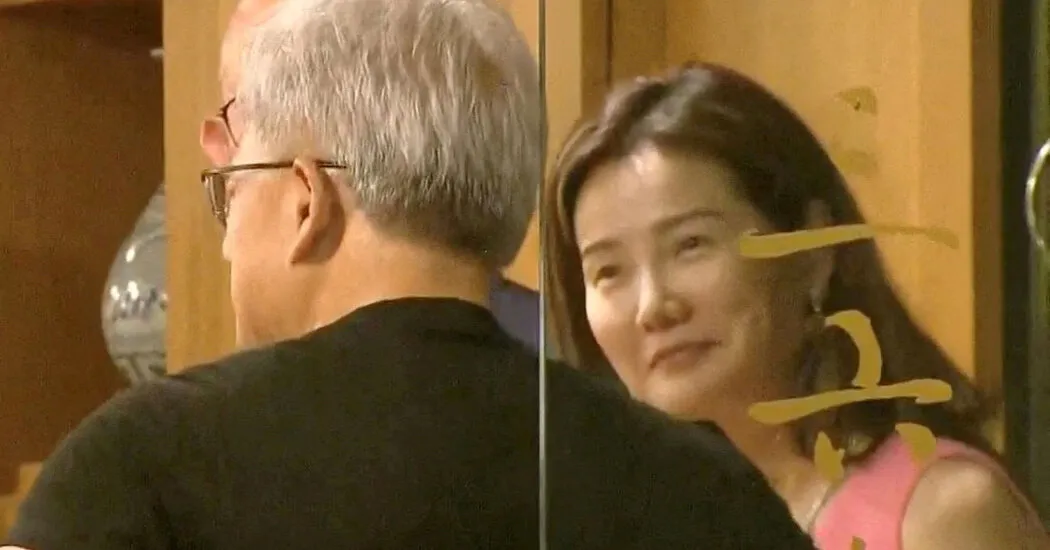
Alice Huang, the Chinese executive at the centre of allegations involving Nvidia, is believed to have used her relationship with the company’s founder to help China circumvent US restrictions on advanced artificial intelligence chips, according to people who have reviewed American intelligence reporting.
However, US intelligence agencies are still assessing when Ms Huang began working with China’s Ministry of State Security, whether she acted voluntarily or under pressure, and how much information she passed to officials in Beijing.
Her relationship with Jensen Huang, who stepped down as Nvidia’s chief executive on Thursday, may have given her access to confidential information about the company’s technology, his strategic thinking and debates in Washington over AI policy.
Ms Huang also had a commercial interest in maintaining the supply of Nvidia chips to her own company, Megaspeed, a Singapore-based firm that built data centres in south-east Asia for customers including Alibaba.
US intelligence concerns about her activities were serious enough for Donald Trump to be briefed twice: once late last year and again this spring. One briefing was delivered by Marco Rubio, the Secretary of State and national security adviser.
Mr Rubio oversaw a memorandum dated March 30 which was sent to a small number of Cabinet secretaries. It described Ms Huang’s close relationship with Nvidia’s founder and her contacts with China’s main civilian intelligence service.
People briefed on the intelligence said Ms Huang appeared to be an “asset” providing information secretly to the Ministry of State Security, rather than a trained intelligence officer. Multiple people who had reviewed the underlying material said it showed she had been working with the agency.
The intelligence community is understood to have been monitoring Ms Huang for more than a year, with surveillance beginning after she had already entered a close relationship with Mr Huang. Establishing when she began providing information is regarded as important to determining what she may have learned through the relationship.
Mr Trump has defended the former Nvidia leader, whom he has regarded as an important ally in maintaining American leadership in AI and as a significant force in the US economy. But he indicated this week that he was less certain than intelligence agencies that Mr Huang had been the target of a Chinese operation.
“The big thing is, was the woman a spy, and I don’t know if that’s been determined yet,” Mr Trump said in an interview with Stephen A Smith. “But if the woman was a spy, yes. If the woman was not a spy perhaps it would be different.”
The allegations have emerged as Mr Trump prepares to travel to Asia next week, where he is due to meet China’s President Xi Jinping. Beijing has made closing the gap with the US in artificial intelligence a major priority.
The Commerce Department had already been investigating whether Megaspeed helped divert Nvidia chips to China illegally. The inquiry was later taken over by the Justice Department, while authorities in Singapore questioned Ms Huang last year. Her current whereabouts are unknown.
Attorney General Todd Blanche said the Justice Department was investigating whether advanced chips had been sold to China in breach of US export controls.
“If there are chips that shouldn’t be sold it could potentially be a violation of our export laws,” Mr Blanche said. “That could be civil, regulatory, it could also be criminal, depending on the case. And that investigation is ongoing.”
He declined to say whether the department had reached a conclusion about Ms Huang’s role.
Current and former officials said Chinese business executives could become involved in espionage in different ways, ranging from passing on information they already possessed to acting under direct instructions. Some may believe that co-operation with the state is necessary to advance their careers, or feel unable to refuse requests for information or assistance.
Mr Huang resigned after acknowledging an affair and after Nvidia’s board began examining his relationship with Ms Huang. The board’s decision was not based solely on the spying allegations; he had also conducted another affair with an executive who reported directly to him.
