


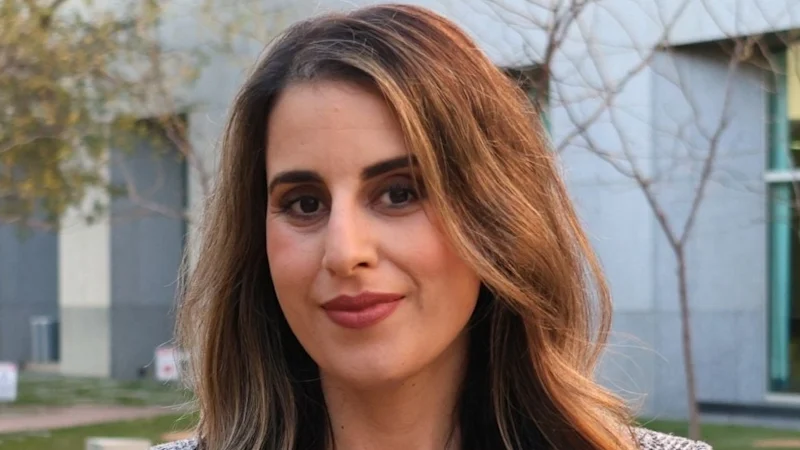
Western Australia’s outgoing Liberal Party president, Caroline Di Russo, has dismissed the once-powerful faction known as “The Clan” as a historical footnote as she prepares to leave the role next month.
Di Russo, who has served the maximum four-year term, said the party’s culture had improved markedly since she took over in October 2022, following the resignation of Richard Wilson.
“The culture is much better. The engagement is much better. There’s a lot less in the way of silly games and unproductive carry on,” she said.
The Clan was a faction of about two dozen people, including sitting MP Nick Goiran, former MP Peter Collier and current OECD chair Mathias Cormann. It sought to influence office-bearing positions and candidate selections within the party.
Its activities became public after a 700-page leak of WhatsApp records following the Liberals’ catastrophic 2021 election result, and the issue has remained a source of tension within the party.
Asked whether the group remained active, Di Russo said: “The Clan, as it was, is long consigned to history.”
She acknowledged that factions and internal competition were a permanent feature of politics, but said the group’s former structure no longer existed.
“The Labor Party formalises it, so you’re always going to have competition…and actually, to be honest, I think healthy competition is good,” she said.
“But the makeup of the factions from when everything broke in 2021, 2022, that there is a footnote of Liberal Party history, frankly.”
Di Russo’s successor will be Perth economist and former Young Liberals president Aiden Depiazzi, who is due to be elected unopposed at next month’s state conference. Depiazzi was a member of The Clan WhatsApp group but declined to comment, citing party rules that restrict public comment on behalf of the party to the president or state director.
A party insider said the party’s factional divisions were now broadly split between branches in the wealthy western suburbs and the rest of the organisation.
Di Russo credited changes to lay membership rules with helping to curb branch stacking. The party has banned membership payments outside immediate families, restricted transfers to new branches to once every 12 months and doubled its membership fee from $25 to $50.
“That really slows down the playing of games, and also we doubled our membership fee,” she said. “While that might not seem a lot to go from $25 to $50, it does provide a financial restraint.”
She also pointed to third-party checks on candidates and improved fundraising as measures that had strengthened the party ahead of the 2028 federal and 2029 state elections.
However, Di Russo accepted that internal improvements had not yet translated into major electoral gains. She said the party still had a small state team, although it provided a strong foundation.
Remaining involved in the federal Liberal Party as one of its vice presidents, Di Russo said the rise of One Nation was a concern. She argued that disaffected voters needed a credible alternative to the Albanese government.
“What we do know is that Anthony Albanese is incredibly unpopular. Where people are unhappy with the current government and the vote can peel off, it’s incumbent on us to give it a home to go to,” she said.
Di Russo said the Liberals’ relationship with One Nation could not be reduced to a simple alliance or rivalry, noting that both parties wanted to remove Labor from office.
“I think it’s a little bit more nuanced, but quite frankly, both us and One Nation, our focus should be on removing poor Labor governments,” she said.
