


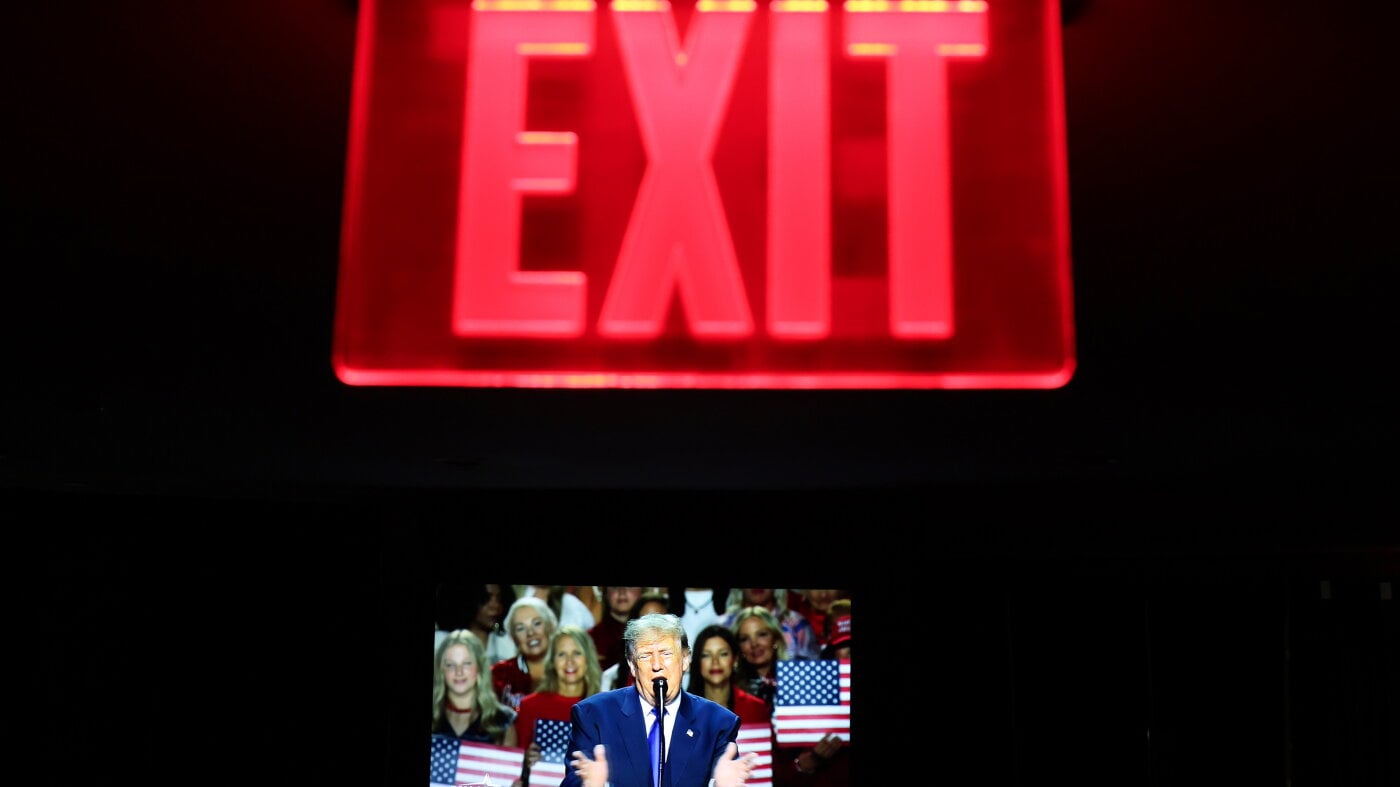
Republican dissent ahead of the US midterm elections is becoming increasingly visible, as candidates and elected officials distance themselves from Donald Trump’s position on Iran, immigration and the cost of living.
The divisions are emerging with less than 40 days until voting ends and the party fights to retain its narrow majority in Congress. Control of both the Senate and House of Representatives could be decided by a handful of closely contested races.
Mr Trump has urged voters to treat the elections as a referendum on his presidency, despite historically low approval ratings. The latest NPR/PBS News/Marist poll found that 45% of registered voters, and a majority of independents, viewed their vote as a vote against him.
Sarah Longwell, a Republican strategist and long-standing critic of the president, said Republican candidates had traditionally been reluctant to challenge him because of his influence over the party.
But as public support for Mr Trump weakens, she said candidates and lawmakers might feel more able to oppose him on issues they considered important.
Republican candidates break with Trump over Iran
Two Republican Senate candidates in closely fought contests have recently criticised the war with Iran and called for help with rising costs.
Ashley Hinson of Iowa said voters in her state should not have to bear the cost of the conflict at petrol stations or supermarket tills. She said the war “needs to be brought to a successful and immediate end”.
Mike Rogers of Michigan also linked the conflict to household finances in a video filmed in a supermarket.
“Michigan families are struggling with the price of everyday life. Groceries cost too much. We have to bring prices down. The war with Iran needs to end and end quickly. When it does, energy costs will plummet,” he said.
Neither candidate mentioned Mr Trump directly, but both statements marked a break with the White House, which has defended the decision to enter the war and played down its economic impact.
Pressure is also growing on Capitol Hill. Seven Republican members of the House last week joined Democrats in backing a resolution intended to remove US forces from Iran, compared with four Republicans who supported the measure over the summer.
Ron Bonjean, a Republican strategist, said candidates in difficulty were trying to show voters they were not simply aligned with the president on every issue.
“For a long time, Republicans have stuck with the president through thick and thin. But the ones who are facing real trouble at the polls need to differentiate themselves,” he said.
Immigration tensions expose wider Republican unease
The unease extends beyond foreign policy. In Florida, Republican congresswoman María Elvira Salazar has criticised Mr Trump’s immigration agenda in an advert aimed at her district’s large Hispanic population.
She said the administration’s enforcement efforts had “gone too far” and warned the president that Hispanic voters who helped him win the White House in 2024 felt betrayed.
Ms Salazar later said she had had a “fantastic conversation” with Mr Trump and described him as receptive. “There are no attacks here,” she said, presenting her intervention as advice from a member of Congress representing South Florida.
House districts with large Hispanic populations in states including Texas and Florida have recorded falls in Republican support, according to a recent New York Times/Siena poll cited in the source material.
The challenge for Republicans is compounded by the president’s continued popularity among the party’s voters, even as some candidates seek to create distance from him.
Mr Curtis, a Republican senator from Utah who is not seeking re-election until 2030, has urged the Senate Judiciary Committee to investigate Donald Trump Jr. after a report alleged that a Russian oligarch financed large parts of a lavish wedding celebration.
Longwell said the move could indicate that some lawmakers believe Mr Trump’s political coalition is becoming less secure. “You are starting to see the very beginnings of people recognising that Trump just doesn’t have the juice that he once did and starting to push back,” she said.
