


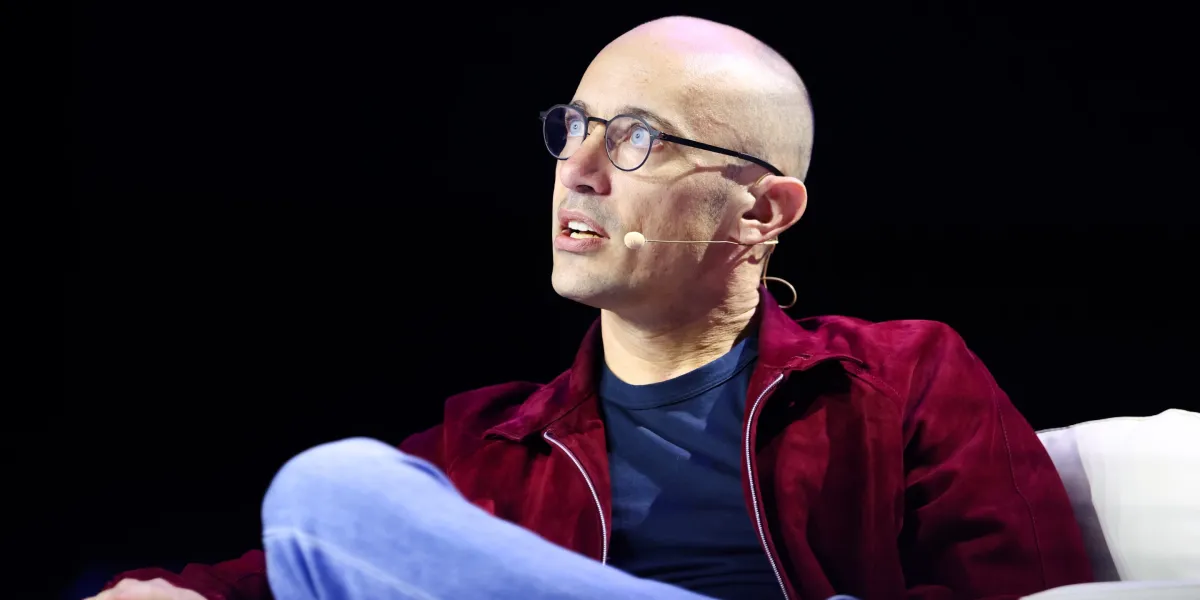
Shopify chief executive Tobias Lütke has warned that employees are using artificial intelligence to produce poorly checked emails and code, creating what he calls “slop grenades” for colleagues to deal with.
Lütke previously told Shopify staff that using AI was “a baseline expectation” and that they should first demonstrate they “cannot get what they want done using AI” before requesting additional resources.
But speaking on The Knowledge Project podcast on Tuesday, he said some employees were failing to take responsibility for the material produced by the technology.
“We call those ‘slop grenades’ that people toss at each other,” Lütke said. “That’s definitely a bad thing.”
He said it was easy to let AI “go nuts”, but warned that excessive or careless use could create more work for colleagues who had to read and correct the results.
Lütke said AI should help employees synthesise the main points of an email, rather than produce “a big missive” that wastes the recipient’s time. “You don’t really read it, and now it has to be reviewed by your colleagues, and they are like, ‘this doesn’t look right’,” he said. “You’re just letting AI do the work for you.”
The rise of AI-generated workslop
The term “workslop” has been coined by researchers to describe AI-generated output that appears polished but ultimately reduces productivity because it requires substantial revision.
A survey of 962 American full-time desk workers by BetterUp Labs and Stanford’s Social Media Lab found that 52.7% said they had sent workslop to colleagues this year. It was more common among workers whose organisations encouraged the use of AI.
Some 38% said they had received workslop and estimated that correcting it took an average of 3.4 hours each month. Examples included well-structured emails containing broken links and code that was more complicated than necessary.
The survey also found that workslop could damage workplace relationships. Employees viewed colleagues who sent it as less competent and less friendly, while 36% of recipients said they wanted to avoid working with those colleagues in future.
The amount of time spent revising workslop had risen from the previous year, when 40% of respondents reported encountering it and said they spent two hours reworking it. The estimated cost in 2025 was $186 a month for a single employee, rising to as much as $9 million a year in lost productivity for an organisation with 10,000 workers.
Lütke is not the only technology leader to have moderated his enthusiasm for AI. Duolingo chief executive Luis von Ahn announced last year that the company would become “AI-first”, including assessing staff on their use of the technology and replacing human contractors with AI.
However, von Ahn later said he had been carried away by how well AI performed in writing demonstrations. When used at scale, he said, it did not match the creativity of Duolingo’s employees.
“We may need to write 1,000 different stories for people to learn a language, then you’ll find that 20% of the things were just pure slop,” he said. “Whenever we scale a lot [of] things with AI, we have to really be careful that slop doesn’t get through.”
