


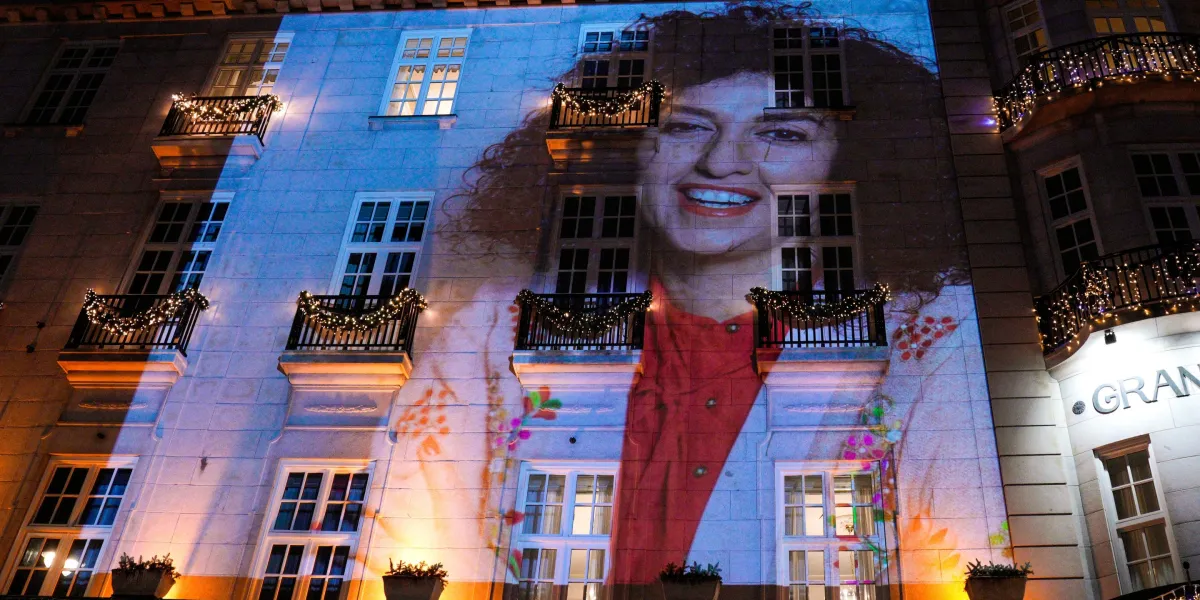
Narges Mohammadi, the Iranian Nobel Peace Prize laureate, has said worsening economic hardship and intensified repression have left people in Iran with “no room to breathe” after 18 months of war and crisis.
In an interview conducted outside Iran, the prominent human rights activist said many Iranians were paying a heavy price as pressure mounted on society. She also said resistance remained widespread, particularly among a younger generation increasingly aware of its rights.
“I am sorry to say, but since the outbreak of war, in the past months and last year and a half, we have seen that repression in society has severely increased and now, with these economic pressures and with the repression that really has left no room for people to breathe, it’s the people who are paying an extremely heavy price,” she said.
Mohammadi, 54, was awarded the Nobel Peace Prize in 2023 while in prison. She was temporarily released on bail earlier this year after losing consciousness and being transferred to hospital.
Narges Mohammadi describes ‘life-threatening’ detention
She said security forces severely beat her when she was detained in December in Mashhad, north-eastern Iran. She had been attending a memorial ceremony for human rights lawyer Khosrow Alikordi, who was found dead in his office, and was arrested while delivering a speech.
Mohammadi was sentenced to 16 years in prison and more than 100 lashes for attending the rally. She said she had not been flogged, but had spent lengthy periods in solitary confinement.
“My detention was really life-threatening,” she said. “My head was severely hurt, because most of the hits were to my head, and despite being in that condition, they kept me for two months in solitary confinement during which my condition was really concerning.”
She lost consciousness on May 1 and was released nearly 10 days later before being taken to a hospital in Tehran, where she remained for a further two weeks. “I am recovering,” she said.
Mohammadi has been sentenced to a total of 44 years in prison and has already spent 10 years behind bars, including 161 days in solitary confinement. Her sentence is currently suspended, but she said she must return if ordered to do so by the judiciary.
She has been barred from travelling abroad since 2009 and cannot join her husband and two children, who live in exile in France.
Memoir written in prison
Fragments of Mohammadi’s memoir, A Woman Never Stops Fighting, were smuggled out of prison with the help of fellow inmates. The book was begun in 2019 during an earlier period in Tehran’s Evin prison, where many political prisoners are held.
“With the help of fellow inmates, we got a few pages out, a few pages at a time,” she said. “If it weren’t for them, I couldn’t have done it.”
French, German and nine other language editions are being released this month. The English and Farsi editions are due to be published next year, timed to coincide with the anniversary of the death of Mahsa Amini.
Amini, 22, died in hospital after being detained for allegedly violating Iran’s strict Islamic dress code. Her death triggered protests in 2022 that Mohammadi said marked a turning point in public resistance.
“If you go out into the streets, you see a wave of resistance among the people, a wave of awareness, and their determination to stand up for their rights,” she said. Despite intensified government repression, she said, many young Iranians “know their rights” and were standing firm.
“And that gives us reason for hope,” she added.
Memories of war and repression
Mohammadi said she had drawn strength from the experiences of women, including her mother, who she believed had changed their families, communities and future generations.
She also recalled what she described as “terrifying memories” of the Iran-Iraq war during her childhood, saying it had left her with “a hatred for war”. She remembered the repression of political groups and executions carried out in Evin and other prisons.
She said she had been concerned when she learned that Evin prison was bombed during the 12-day war between Israel and Iran in 2025, while she was outside prison.
“At that moment, I felt that, in this country, we are at the intersection of injustice, discrimination, war, authoritarianism,” she said. “All of those are trampling on our people’s human rights.”
