


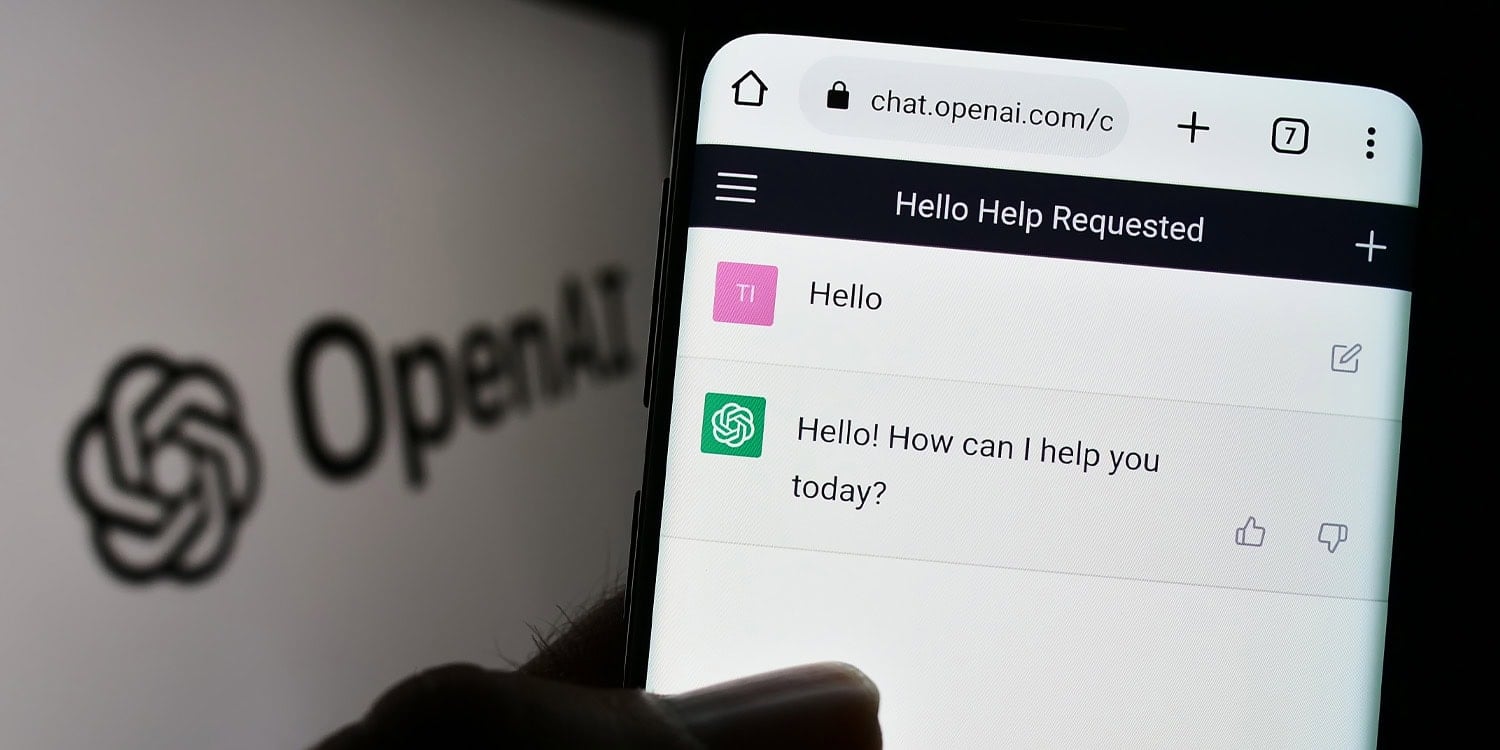
A new study finds that only a small minority of secondary school students in England have used general‑purpose AI chatbots for mental health support in the past year, and that those who do typically continue to seek help from friends, family or professional services. The tools appear to supplement rather than replace human care, with usage clustered among minority ethnic and gender‑diverse pupils and those facing psychological or social hardship.
The research, published in npj Mental Health Research, examined how teenagers’ use of chatbots fits into their wider help‑seeking networks. It builds on concerns raised by policymakers and media coverage about the impact of heavy use of large language model platforms on young people’s wellbeing.
General‑purpose chatbots—such as ChatGPT, Gemini and Copilot—are everyday software that engage users in open‑ended text conversations. They are not designed as clinical therapies, though young people have increasingly turned to them for emotional guidance during adolescence. The researchers note that while some users describe chatbots as an “emotional sanctuary,” other users experience issues around memory limits and safety guardrails.
Oxford University’s Department of Psychiatry led the study, headed by academic clinical fellow Hannah Okechukwu. The team analysed data from the OxWell Student Survey 2025, conducted in English schools between February and May 2025.
Okechukwu said the study was prompted by reports of harm linked to heavy AI chatbot use and by policymakers’ difficulties keeping pace with fast‑moving technology. “This prompted an interest in the real numbers behind how many young people use these tools for mental health support, who they are, and whether chatbots replace other support or sit alongside it,” she said.
The OxWell survey collected responses from 32,102 eligible students who consented to participate. Of these, 24,132 completed the mental health support section and formed the final sample, while nearly 8,000 did not reach those questions. Participants were aged 11 to 18, with an average age of 14 among those 18 and under; roughly half were girls and just under half boys, with about 3% identifying as trans or gender diverse. Ethnically, two‑thirds identified as White, 14% as Asian or Asian British, with the remainder in mixed, Black or other groups.
Respondents reported whether they had used general‑purpose AI chatbots for mental health support over the past year and rated the perceived helpfulness of the assistance. They also listed any other supports they had used, ranging from informal help to formal health and social care services.
Across the full sample, 2.7%—662 adolescents—reported using a general‑purpose AI chatbot for mental health support in the past year. Among those who rated their experience, 55.9% described the support as helpful and 12.8% as unhelpful, with the remainder describing it as neither.
Most chatbot users also accessed other mental health support: 92.1% had used other forms of help in the past year, and 46.1% had used formal health or social care services. Yet 63.2% of chatbot users still reported wanting additional support.
Okechukwu described the finding as surprising. “We don’t yet know why young people turn to chatbots and can only speculate on possible reasons, including difficulties accessing or engaging with other forms of support, discomfort discussing sensitive topics, or limited capacity in existing services,” she noted.
A small subgroup—16.5%—relied exclusively on online sources for mental health support without turning to family, peers, schools, or clinical care. About half of this online‑only group had used AI chatbots without any other form of support, a subset too small for separate statistical analysis.
Even among the small number who used only chatbots for mental health support in the past year, the researchers cautioned that schools and services might not readily identify them. “A small number of students (52) only used chatbots for mental health support in the past year,” Okechukwu added.
When all factors were taken into account, chatbot use tended to concentrate among minority ethnic groups, gender‑diverse students, and those facing greater vulnerability. Adolescents from every minority ethnic background were more likely than White peers to use AI for mental health support, with Asian and Asian British students and those in the “other” category roughly three times as likely. Trans and gender‑diverse students were about twice as likely to report chatbot use, while those experiencing food insecurity were nearly twice as likely.
Higher levels of psychological distress or social strain also aligned with greater chatbot use: more severe depression and anxiety symptoms, a history of self‑harm, and frequent loneliness were each linked to higher use. Occasional or moderate bullying was also associated with greater use, though higher frequencies did not show a statistically significant link. Differences by school stage, neurodivergence and parental mental health or substance use were not statistically significant.
Perceived helpfulness of chatbots did not show major group differences, except that Asian and Asian British pupils were more likely to rate them as helpful. Unmet need followed a similar pattern: those who were Asian or Asian British, those with higher depression or anxiety symptoms, and those who had ever harmed themselves were more likely to want extra support. Loneliness, occasional bullying and food insecurity were also associated with wanting additional help.
Okechukwu emphasised that chatbots appear to sit alongside other forms of support rather than replacing them. “Just over half found them helpful, yet around two‑thirds still wanted more support, so these tools may be filling a gap without closing it,” she said. “Use was also higher among students who were already struggling, so for adults supporting young people, asking about AI use should be a routine part of conversations about where young people seek help.”
The pattern of low use and its association with loneliness echoes findings from a Danish survey that found 2.4% of students engaged in social or emotional AI chats and reported higher loneliness. A six‑country adult survey linked dedicated social chatbots to higher psychological distress and greater loneliness in several countries, though that study focused on adults and on companion‑style bots rather than teen mental-health use.
By contrast, a 2025 U.S. study found higher usage among adolescents and young adults, with 13.1% of 12‑ to 21‑year‑olds tapping generative AI chatbots for mental health advice and 92.7% of users describing the advice as helpful. The authors note that differences in age and wording may explain some of the variation, as the U.S. survey asked about use when feeling “sad, angry, or nervous.”
The researchers caution that usage patterns are rapidly evolving as generative AI tools advance. They point to a later U.S. study showing chatbot use for mental health advice rising to about 19.2% by November 2025. They also emphasise that one in eight chatbot users found the support unhelpful, highlighting ongoing questions about clinical oversight and crisis safety.
Okechukwu said the result likely reflects the framing of the English survey: “Our percentage of AI users was lower than in other studies, likely because our survey asked about general mental health support, with LLM/AI chatbot use one option out of many. This survey also took place in early 2025, and the proportion of young people using these platforms is likely to have increased since then.”
The authors acknowledge the study’s limitations: participating schools joined voluntarily through regional networks rather than through random nationwide sampling, and the questionnaire captured a single point in time without recording actual conversations. They stressed that the figure of 2.7% cannot be viewed as nationally representative, and the data show associations rather than causation.
Looking ahead, the researchers called for systematic research into both the potential benefits and harms of these platforms for youth mental health. “Our next step in this research journey will be exploring how young people use these tools in practice to better understand their real‑world implications,” Okechukwu said. “We hope these findings will help inform policy and regulation on chatbot use in young people.”
The study, General-purpose AI as a source of mental health support amongst 24,000 adolescents in England, was authored by Hannah Okechukwu, Holly Bear, Mina Fazel, and Emma Soneson.
