


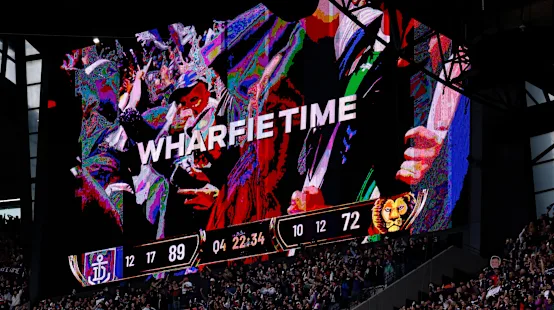
Fremantle’s “Wharfie Time” activation dramatically backfired in the AFL Grand Final, as AC/DC’s “Hell’s Bells” was followed by a stunning Brisbane fightback that denied the Dockers their first premiership.
Fremantle appeared to have the match under control at the Melbourne Cricket Ground on Saturday, leading by 17 points with four minutes remaining after Pat Voss kicked his third goal.
But Brisbane overturned the deficit in remarkable fashion to secure a second three-peat, leaving Fremantle players, staff and supporters to contemplate another devastating defeat.
The ringing of “Hell’s Bells” had become one of the defining features of the Dockers’ 2026 campaign. The club used the song late in close matches to energise its supporters and provide an extra lift to the players.
It had become a celebrated feature of Fremantle’s comeback win over Hawthorn and semi-final victory against Geelong, with the activation generating a wave of attention in Perth as the club’s premiership challenge gathered momentum.
The AFL considered whether it should be permitted in the Grand Final before approving its use, citing the positive engagement it created among supporters.
When the bells rang at the MCG, Fremantle seemed close to completing its long-awaited breakthrough. Supporters in Melbourne and back in Fremantle, where the club’s colours had filled pubs, public transport and streets during grand final week, celebrated what appeared to be their moment.
Instead, the war cry intended to intimidate Brisbane had the opposite effect. The Lions surged, while the purple-clad supporters were left in tears and disbelief.
Fremantle faces questions over “Wharfie Time”
The defeat has prompted debate among Fremantle fans about the future of “Wharfie Time”. Some believe the activation contributed to the loss, while others remain convinced it should return alongside the club.
Fremantle had enjoyed a remarkable season, including the minor premiership, a club-record 14-match winning streak and record crowds at Optus Stadium. The Dockers also handled the pressure of the Grand Final for long periods and were not overawed by the occasion.
That performance is likely to make the result even more difficult to process. Fremantle were beaten only after Brisbane produced a late surge that added another painful chapter to the club’s 32-year history.
Resilience has long been associated with Fremantle and its supporters. After a season that carried them to the brink of a first premiership, both will need it again as the club attempts to return to the final Saturday in September.
