


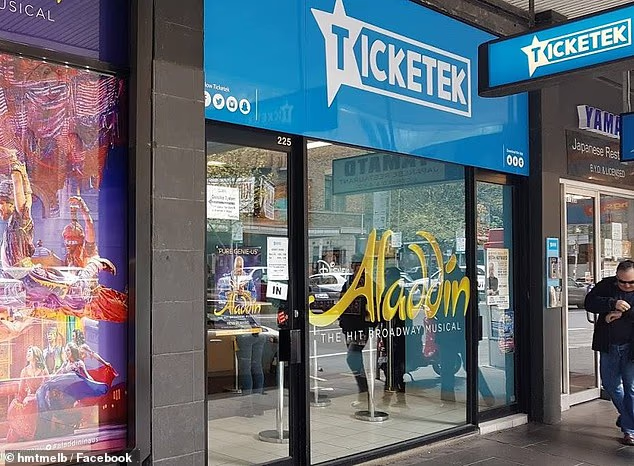
Ticketek has brought in two distressed-debt specialists as its parent company confronts heavy losses, more than $1 billion in reported debt and the loss of several major venue contracts.
Private equity firm Silver Lake, which bought Ticketek Entertainment Group (TEG) in 2019, appointed Matt Hinds and Steven Sher to the company’s board in September. Both have experience managing indebted businesses and exit plans.
The move came after TEG recorded a loss of $97 million in the 2024 financial year, followed by a $160 million loss in 2025.
Silver Lake has also sought an emergency US$52.5 million loan to support the business, while TEG is reportedly carrying more than $1 billion in debt at an average interest rate of 9.32 per cent.
The company has been hit by a series of high-profile event cancellations and the collapse of several lucrative contracts. Those lost agreements included arrangements with Melbourne Park, which oversees Rod Laver Arena, AAMI Park, John Cain Arena and Margaret Court Arena, as well as Venues NSW, which manages Accor Stadium, the Sydney Cricket Ground and Allianz Stadium.
The losses were recorded largely during the tenure of former Woolworths chief executive Brad Banducci, who left Ticketek after 13 months. TEG’s long-serving chief operating officer, Cameron Hoy, became chief executive in June.
TEG operates Sydney’s Afterpay Arena, the Laneway music festival and touring businesses including TEG Dainty. Despite its financial difficulties, the company remains active in selling tickets and says it intends to turn the business around.
A TEG spokeswoman said the company had “fortified its balance sheet” and had “a high conviction of growth opportunities for the business”, adding that its accounts did not reflect the operating performance of the company.
Silver Lake previously attempted to sell TEG for more than $2.5 billion after the Covid pandemic but turned down offers, including one from private equity group KKR.
Australian customers whose events are cancelled or whose tickets are invalidated may have protection under consumer law. The Australian Competition and Consumer Commission said people who paid by credit card could ask their bank or card provider for a chargeback if they did not receive what they had paid for.
Customers are advised to try to resolve the matter with the merchant first. If that fails, a chargeback allows the financial institution to reverse the card payment and seek to recover the money directly from the business.
