


Drivers In Spain Face €200 Fine This Easter For Failing To Follow Emergency Corridor Rules As 17 Million Journeys Expected
Millions of motorists travelling across Spain this Easter week are being warned they face an on-the-spot fine of €200 if they fail to correctly form an emergency corridor when traffic comes to a halt — as authorities prepare for one of the busiest periods on record for the country’s roads.
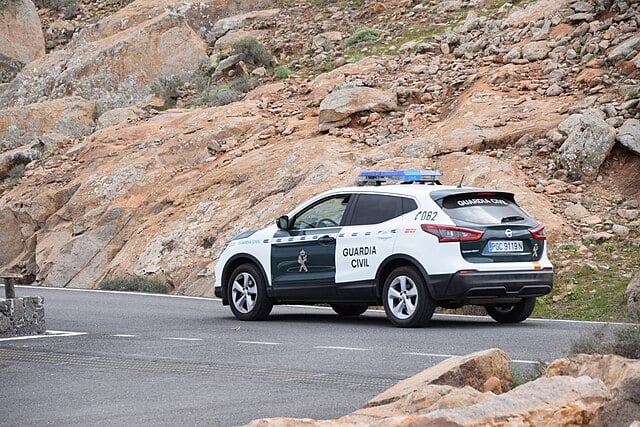
Spain’s Directorate General of Traffic, the DGT, has launched its Semana Santa road operation from Friday 27 March, with more than 17 million long-distance journeys anticipated over the course of the holiday period. The Guardia Civil has confirmed it will be strictly enforcing traffic regulations throughout, with particular focus on driver behaviour during emergencies.
At the centre of the crackdown is the “pasillo de emergencia” — the emergency corridor that drivers are legally required to create when traffic slows or stops on multi-lane roads. The rule requires vehicles in the left lane to pull to the left, while those in the centre and right lanes move to the right, clearing a central path through which ambulances, police, and fire services can pass unobstructed.
Authorities say the rule, despite being a legal obligation under Spanish traffic law, is still widely misunderstood. Common mistakes include drivers stopping randomly, blocking the centre lane, or failing to react until an emergency vehicle is already close behind. Such errors, officials warn, do not only risk a fine — they can directly delay life-saving interventions.
The Guardia Civil has highlighted the concept of the “golden hour” — the critical window immediately following a serious road accident during which rapid medical attention is considered most likely to improve survival outcomes. Any obstruction to emergency vehicles during this period, authorities stress, can have irreversible consequences.
Drivers travelling in Spain this Easter are also being reminded of a separate regulatory change introduced this year. The geolocated V-16 beacon is now mandatory for signalling roadside incidents and has officially replaced the warning triangle under the DGT’s updated 3.0 tracking system.
Congestion is expected to be heaviest on the A-6, A-1, and Mediterranean coastal routes, where the combination of high traffic volumes, long-distance holiday travel, and unpredictable spring weather is forecast to create significant delays.
Authorities are urging all motorists to plan journeys in advance, remain calm when hearing emergency sirens, and to familiarise themselves with the correct lane positioning before they are required to use it.
