


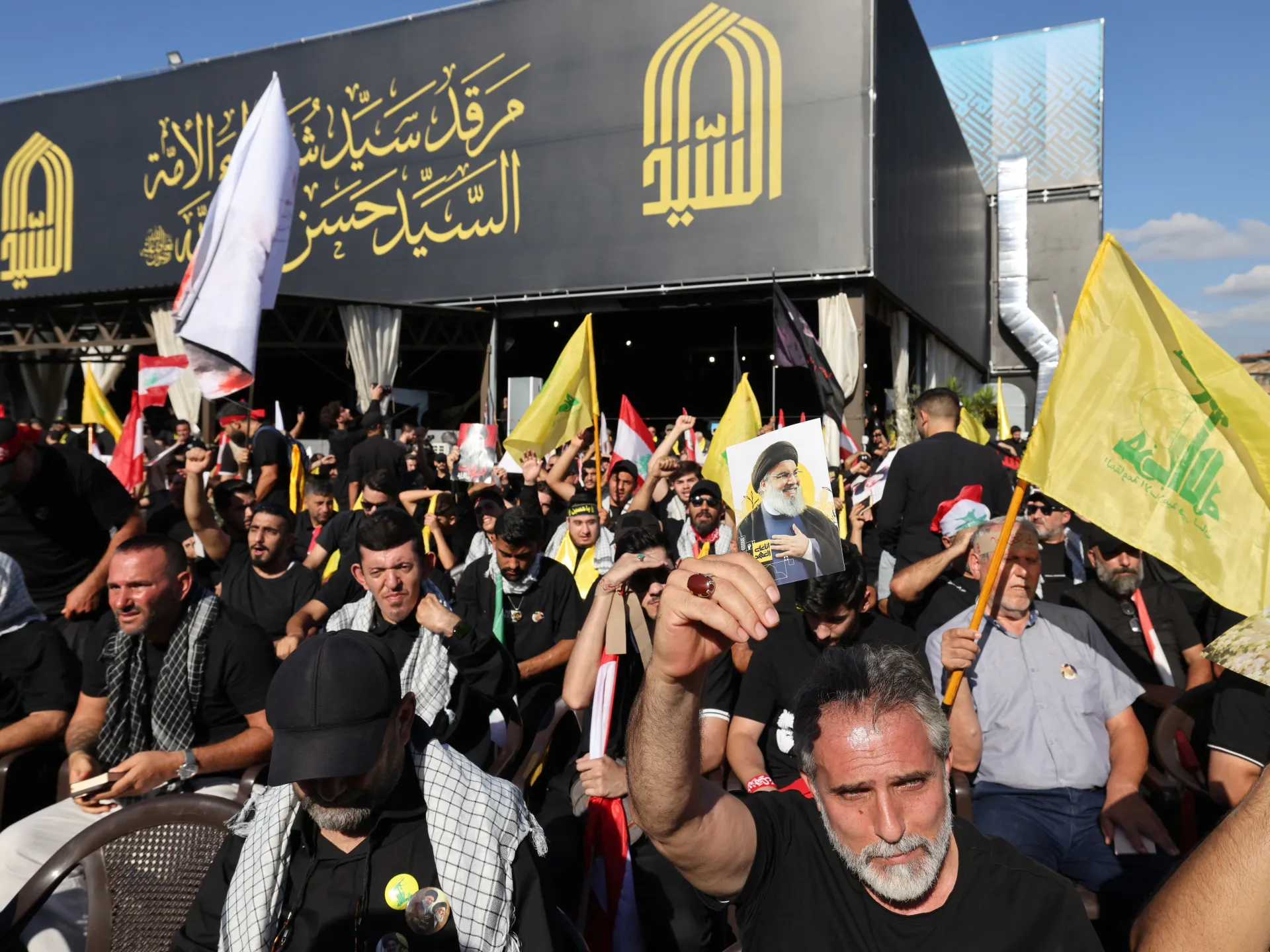
New US sanctions against a Lebanese charity accused of acting as a front for Hezbollah are unlikely to alter the group’s influence inside Lebanon, analysts have said, with the measures expected to deliver more political messaging than practical disruption.
The Treasury announced on November 18 that the Wa Ta’awanu Association, along with other individuals and entities, had been targeted in an effort to weaken Hezbollah’s financing networks. It accused the organisation of providing cover for the group’s activities under the guise of humanitarian work.
Qassem Kassir, a Lebanese journalist close to Hezbollah, said sanctions or threats against political, judicial and security figures would not change the balance of power in the country.
“Sanctions or the threat of sanctions will not change the reality inside Lebanon,” he said.
Hezbollah, a Shia political and military movement backed by Iran, has been one of Lebanon’s most powerful forces for the past two decades. Washington has been pressing the Lebanese government to make progress towards disarming the group, which has been involved in an on-off conflict with Israel for about 40 years.
US sanctions on Hezbollah affiliates
Kassir rejected the US allegations against Wa Ta’awanu, saying it helped people in need. He said sanctions would not stop the association’s work, nor that of other Hezbollah-linked institutions including Al Qard Al Hassan, educational establishments, construction companies and Jihad Al-Binaa.
Al Qard Al Hassan, a financial institution, and Jihad Al-Binaa, a construction company, have both previously been sanctioned by the US. They also employ or provide services to people who are not affiliated with Hezbollah.
Lebanese media reports have suggested that further US measures could target bankers, businessmen and people involved in finance, property and construction. Ali Hamade, a journalist with Annahar, said there could be a second, third or even fourth package focused on Hezbollah’s funding and alleged money-smuggling operations.
He said politicians, security personnel, judges and officials in Lebanon’s public administration were unlikely to be targeted immediately.
David Wood, the International Crisis Group’s senior Lebanon analyst, said sanctions were one of several tools Washington was using against Hezbollah’s financial networks. The US was also seeking greater Lebanese state control over the airport, seaports and the border with Syria to limit the movement of physical cash, he said.
But Mr Wood said the measures were likely to have only a limited effect. Sanctions could influence the behaviour of some Lebanese elites before they were imposed, he said, but that leverage largely disappeared afterwards because lifting them was not straightforward.
“Imposing US sanctions seeks to raise the cost of doing business with Hezbollah, especially for alleged associates of the party who enjoy lucrative sources of private income,” he said. “This tactic is probably less effective in relation to direct affiliates of Hezbollah, which are more likely to operate outside traditional financial networks already.”
Pressure amid stalled disarmament efforts
Israel has continued to carry out intermittent attacks on what it says are Hezbollah targets in Lebanon despite a ceasefire agreement earlier this year. Israeli forces also continue to hold territory they invaded up to 10km inside Lebanon.
Israel, backed by the US, has linked any withdrawal to Hezbollah’s complete disarmament. Talks between the Israeli and Lebanese governments produced a framework agreement in June, including pilot zones where Israeli troops would withdraw and the Lebanese army would deploy to disarm the group.
The programme has made little progress. Israel has refused to withdraw from newly held areas and has accused the Lebanese army of failing to disarm Hezbollah in the existing zones.
Karim Safieddine, a Beirut-based fellow at the Tahrir Institute for Middle East Policy, said the sanctions risked deepening divisions in Lebanon and demonstrated that Washington was not a neutral broker between Beirut and Tel Aviv.
He said measures imposed by the US could have repercussions for people who were not members of Hezbollah, particularly within Lebanon’s Shia community, which is closely associated with the group.
