


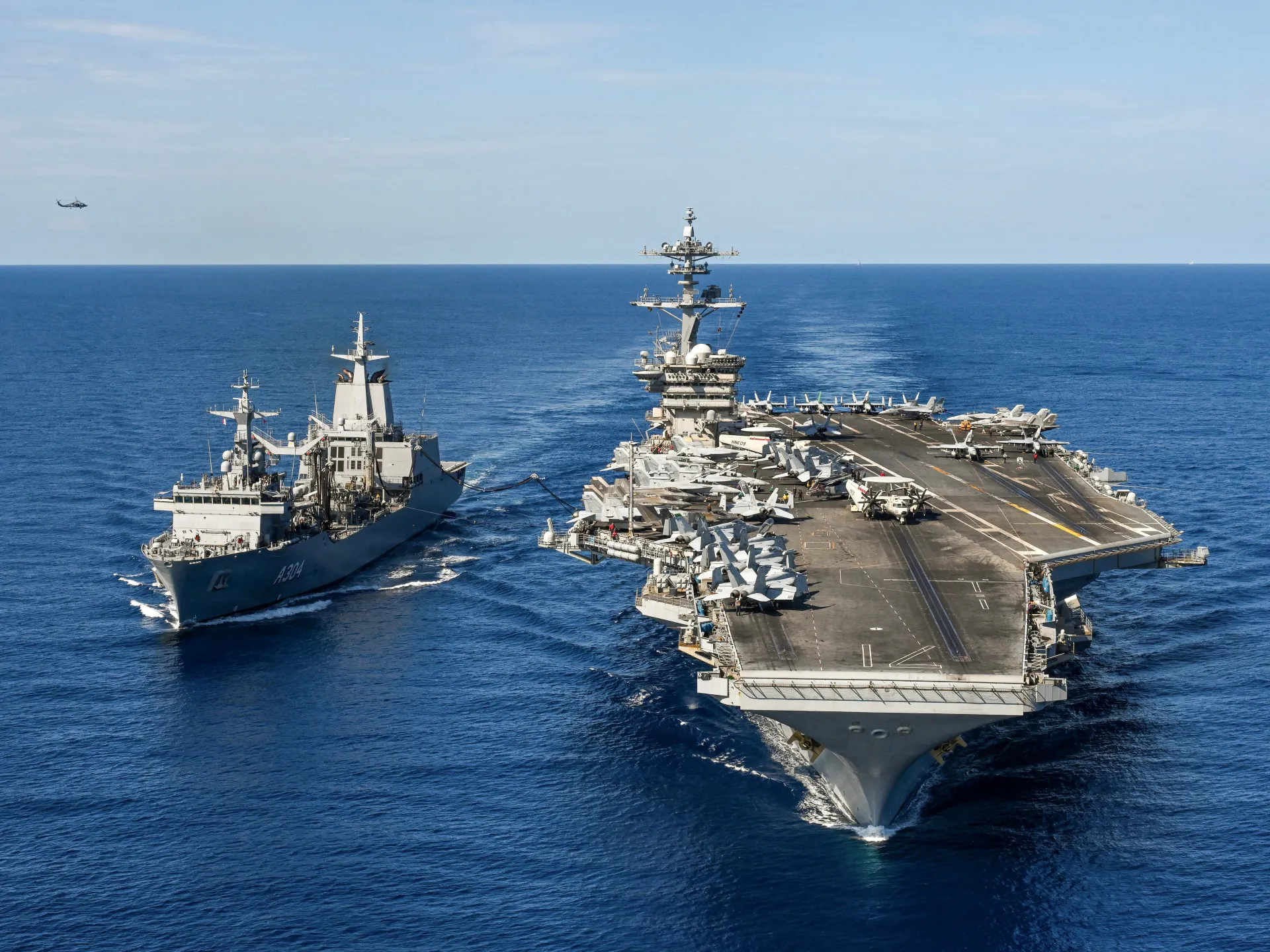
The US military presence in the Middle East could be significantly reshaped after the war with Iran, with experts predicting a smaller, more dispersed network of bases further from the reach of Iranian missiles and drones.
Up to 50,000 American troops are stationed across the region, supported by about 19 major installations and additional assets in countries including Bahrain, Jordan and Saudi Arabia. But the conflict has exposed the vulnerability of that infrastructure and raised questions about whether all of it should be rebuilt.
Michael O’Hanlon, a senior fellow at the Brookings Institution, said the United States was likely to adopt a more distributed and fortified posture once the war ended.
“I think we will go smaller, more dispersed, more hardened, and generally further away from Iran — but not in each and every case,” he said.
Billions of dollars in damage to US bases
The cost of repairing American facilities could be a major obstacle to maintaining the current scale of the US military presence. The Center for Strategic and International Studies has estimated that restoring damaged infrastructure could cost $9.4 billion.
Hundreds of structures have been damaged by Iranian attacks since the war began on February 28. Naval Support Activity Bahrain, which houses US Naval Forces Central Command and the Fifth Fleet, was reported to have suffered serious damage during the conflict.
A Congressional Research Service report estimated that repairing the Bahrain base could cost more than $400 million. The United States has maintained a naval command presence in the country since 1948.
Other military assets have also been hit. A Department of Defence inspector general report found in September that dozens of aircraft had been lost during the war, including attack helicopters and F-35A and F-15E fighter jets.
By October, the Pentagon put the total cost of the conflict at more than $47 billion.
Mark Cancian, a senior adviser with the defence and security department at CSIS, said rebuilding was unlikely to begin until the fighting ended and a degree of stability returned.
“If the war ends with some sort of ceasefire or we get to a place where it’s somewhat stable,” he said, “then you will see some reduction in US forces and reduction of the surge forces certainly and some rebuilding of the bases.”
However, Mr Cancian does not expect every facility struck by Iran to be restored. The Bahrain headquarters of the Fifth Fleet and the Combined Air Operations Centre at Al Udeid airbase in Qatar could be among the sites reconsidered.
Some installations could be moved underground, while others may be shifted further from the Gulf, potentially to locations such as Israel or Jordan. Kelly Grieco, a defence policy expert at the Stimson Center, said the large bases in Bahrain and Qatar were vulnerable because they were within range of Iranian missiles and drones.
Relocation alone may not offer a permanent solution, she warned, as Iran continues to improve the range of its missiles and drones. An alternative would be to establish access to a wider network of airstrips and temporary facilities that could be used during a future conflict.
During the current war, the United States has relied heavily on facilities including Israel’s Ben Gurion airport to refuel combat aircraft. Ms Grieco said access and the ability to move between locations could prove more valuable than maintaining a permanent base.
Pressure for a smaller Middle East deployment
The prospect of a reduction comes after successive US administrations have sought to lessen the country’s military commitments in the region. Donald Trump has completed troop withdrawals from Syria and Iraq since beginning his second term in 2025, while Joe Biden oversaw the withdrawal from Afghanistan in 2021.
Yet new conflicts and continuing regional tensions have repeatedly frustrated plans for a broader drawdown. “The Biden administration wanted to reduce the force posture. The Trump administration wanted to reduce the force posture,” Mr Cancian said. “They haven’t been able to, and it’s not clear they will be able to.”
He added that the scale of the American presence was shaped not only by decisions in Washington but also by the actions of allies and adversaries. “The world gets a vote,” he said, warning that continuing tensions could limit any attempt to reduce forces.
Regional governments may nevertheless seek greater independence from US security arrangements. In August, Saudi Arabia, Turkiye and Pakistan signed the Mecca Joint Defence Agreement, which commits them in principle to assist one another if one of the countries is attacked.
The three states together have more than 1.4 million active military personnel, thousands of tanks and military aircraft, and a combined defence budget of more than $124 billion. The agreement could also expand to include Egypt and Syria.
Ms Grieco said the pact could form part of a wider move by countries in the region to diversify their military relationships. “The region had already been engaged in strategic diversification before this war started,” she said. “The real question moving forward is: Will they decide to pursue greater strategic dependence, or slowly decrease their dependence on the US for security?”
American opposition to the war
Domestic politics could provide another reason for Washington to resist rebuilding its military network at its previous scale. The war with Iran, along with US support for Israel’s war in Gaza, has been unpopular among American voters.
An Ipsos and Reuters survey this month found that 71 per cent of Americans wanted Congress to end the conflict with Iran. Trump’s Republican Party also lost key races in the 2026 midterm elections to Democrats who had opposed the war.
There was criticism within Republican ranks as well. Vice President JD Vance attributed the party’s poor performance to the conflict, writing: “The reason we lost is the war. The president himself said so. Everyone knows why we lost. And any honest conversation about where we go from here must start there.”
Ms Grieco said both major parties were moving away from an interventionist foreign policy, despite divisions over issues including support for Israel. She said many Americans had seen repeated US interventions in the region since 1990 or 1991 and concluded that “none of them have gone well”.
