


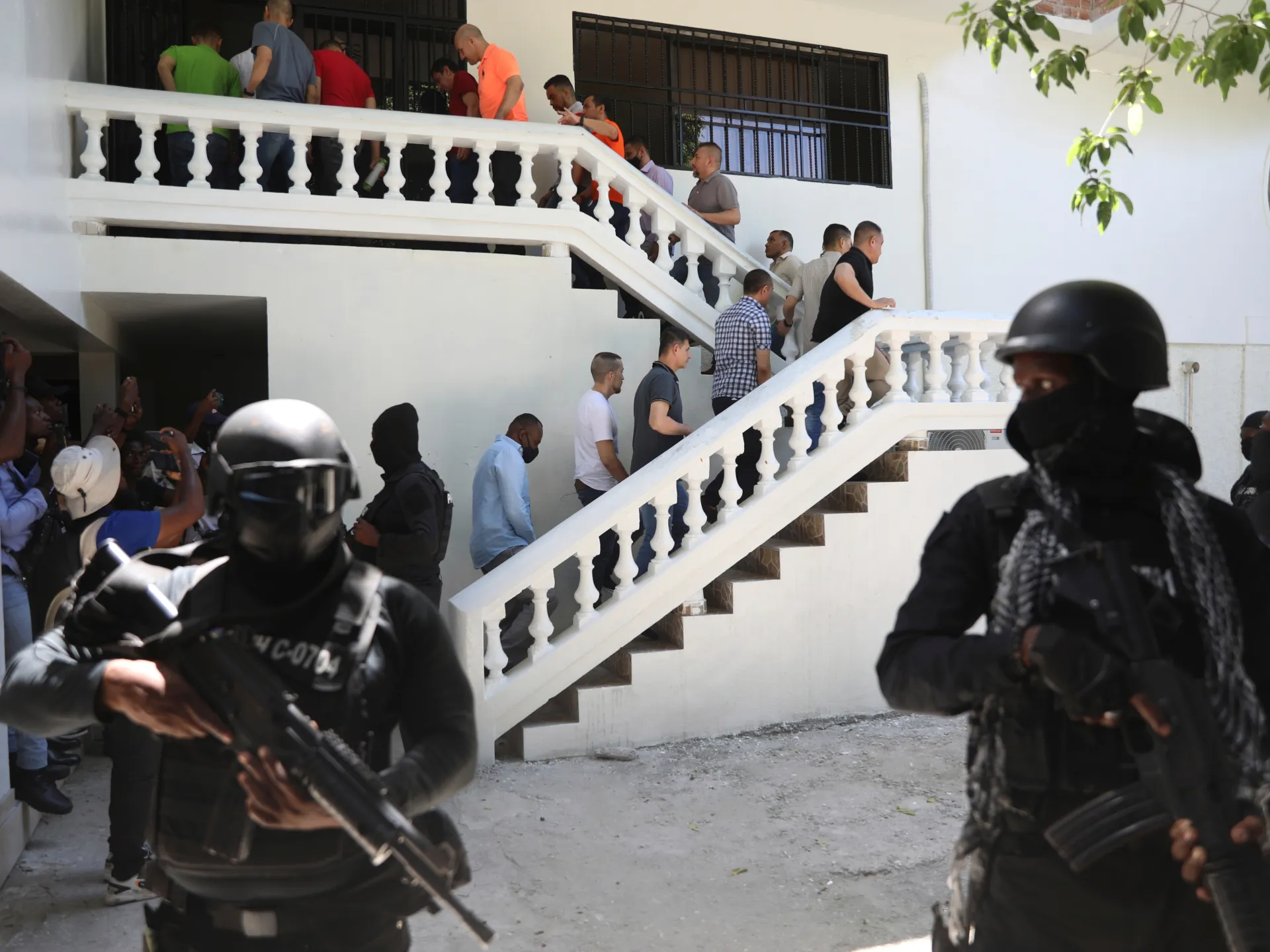
Eighteen suspects accused of involvement in the assassination of Haitian president Jovenel Moise have been extradited to the United States to face federal charges.
The men were flown from Port-au-Prince to Florida on a military aircraft on Sunday, where prosecutors say the alleged plot to kill Mr Moise was largely organised, financed and staged.
The case is being heard in the southern US state because of the alleged links to Florida. A fair trial in Haiti had become increasingly difficult amid the country’s security crisis, political turmoil, corruption and the weakening of its judicial system.
US Attorney Jason A Reding Quinones said the transfer marked a new stage in efforts to hold those responsible to account. He said the investigation would pursue anyone who “financed it, facilitated it, supported it or committed crimes to make it possible”.
“Five years later, we are still bringing defendants before American courts, and we are not finished,” Mr Quinones, an appointee of President Donald Trump, said in a social media statement.
He did not immediately name the suspects. More than a dozen Colombian soldiers and a former Haitian government official remain in Haiti awaiting trial, according to the material released in the case.
The FBI said multiple arrests had been made in the US and abroad on Sunday. Special Agent in Charge Brett Skiles said investigators remained committed to pursuing those accused of profiting from the killing of a head of state.
Mr Moise, 53, was shot dead at his private residence in the Pelerin 5 neighbourhood, in the hills above Port-au-Prince, in July 2021. His wife was critically injured in the attack.
The assassination left Haiti without an elected national leader and created a political vacuum in which armed gangs rapidly expanded their influence. The gangs now control an estimated 90 per cent of Port-au-Prince, while the United Nations documented at least 8,100 gang killings in 2025 and said about 1.5 million people had been displaced by insecurity.
A Florida jury convicted four men in May over the killing. At least five others have pleaded guilty and are serving life sentences.
Pierre Esperance, a prominent Haitian human rights activist and executive director of the National Human Rights Defense Network, described the transfer of the suspects as “a disgrace for the Haitian justice system”. He called for reforms that would allow similarly complex cases to be tried in Haiti in future.
No national elections have been held in Haiti since Mr Moise’s assassination.
