


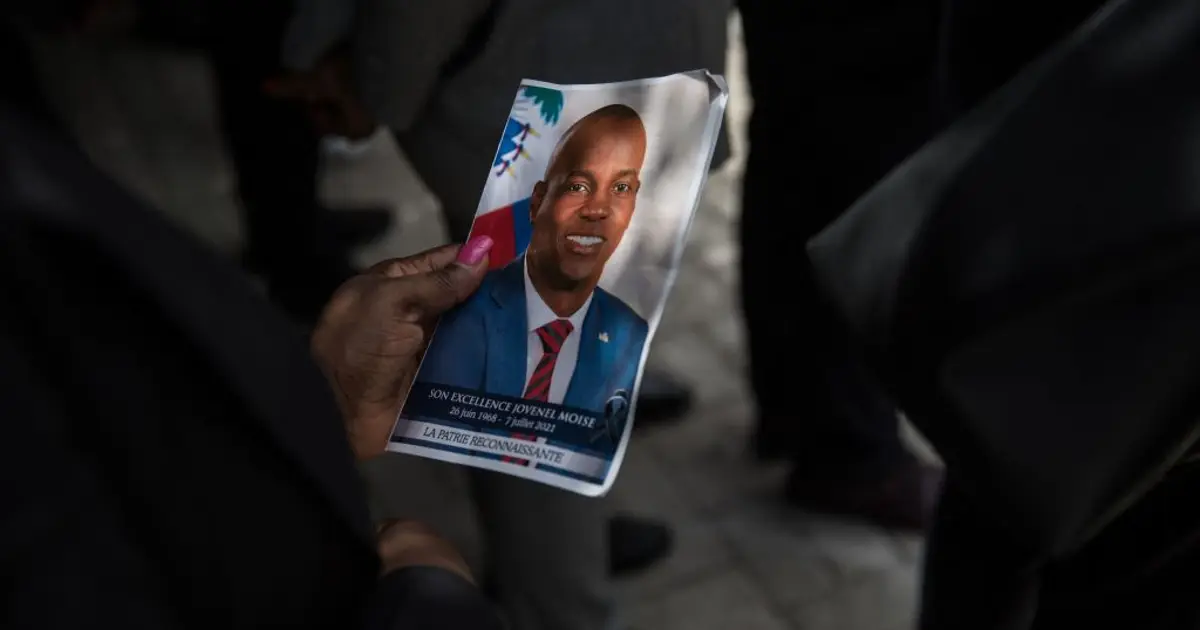
Eighteen people accused over the assassination of Haitian president Jovenel Moïse have been extradited from Haiti to the United States, where they are expected to face trial in Florida.
The transfer on Sunday, 20 September 2026, marks a major development in a case that has been held up for years by gang violence, threats against judges and the collapse of Haiti’s judicial system. The suspects were transported to the Southern District of Florida, according to US officials. ([apnews.com](https://apnews.com/article/d89d2c4a01eaac41f50c007b4726605b))
Those extradited include Joseph Félix Badio, a former Haitian government official, and 17 Colombian nationals, according to Haitian newspaper Le Nouvelliste. The group had been held in Haiti since arrests made after Mr Moïse was killed at his private residence in Port-au-Prince on 7 July 2021. ([lenouvelliste.com](https://lenouvelliste.com/en/article/272118/assassination-of-jovenel-moise-joseph-felix-badio-and-17-colombians-extradited-to-the-usa))
Jason Reding Quiñones, the US attorney for the Southern District of Florida, said the suspects would be brought before American courts as part of an investigation in which 30 people have now been indicted.
“Today marks the next major phase in our pursuit of accountability for the assassination of President Jovenel Moïse,” he said. “We will follow the evidence wherever it leads, to those who financed it, facilitated it, supported it or committed crimes to make it possible. Five years later, we are still bringing defendants before American courts, and we are not finished.”
FBI Special Agent in Charge Brett Skiles said the bureau remained committed to pursuing everyone alleged to have sought financial gain from the killing of a head of state. The FBI said multiple arrests had taken place in the United States and overseas on Sunday.
The extradition follows a series of convictions in Florida. In May, a federal jury found Arcángel Pretel Ortiz, Antonio Intriago, Walter Veintemilla and James Solages guilty of conspiring to kidnap or kill Mr Moïse and providing material support for the plot. All four face life in prison. ([justice.gov](https://www.justice.gov/usao-sdfl/pr/four-defendants-convicted-plot-kill-haitian-president-jovenel-moise))
US prosecutors said the men had helped develop a plan to overthrow Mr Moïse and install a replacement government that would allow them to obtain lucrative contracts in Haiti. Court evidence showed the conspiracy involved allies in the United States, Colombia and Haiti, including former Colombian soldiers. ([justice.gov](https://www.justice.gov/usao-sdfl/pr/four-defendants-convicted-plot-kill-haitian-president-jovenel-moise))
At least five other defendants have pleaded guilty in the United States and received life sentences. Christian Sanon, a Haitian-American accused of being selected to replace Mr Moïse, remains awaiting trial.
The Haitian proceedings had repeatedly stalled, with judges resigning after receiving threats and gangs taking control of the courthouse in central Port-au-Prince. The transfer of the remaining suspects to the US brings the principal Haitian detention phase of the case to an end, while prosecutors in Florida continue to pursue those accused of financing, organising and carrying out the assassination.
