


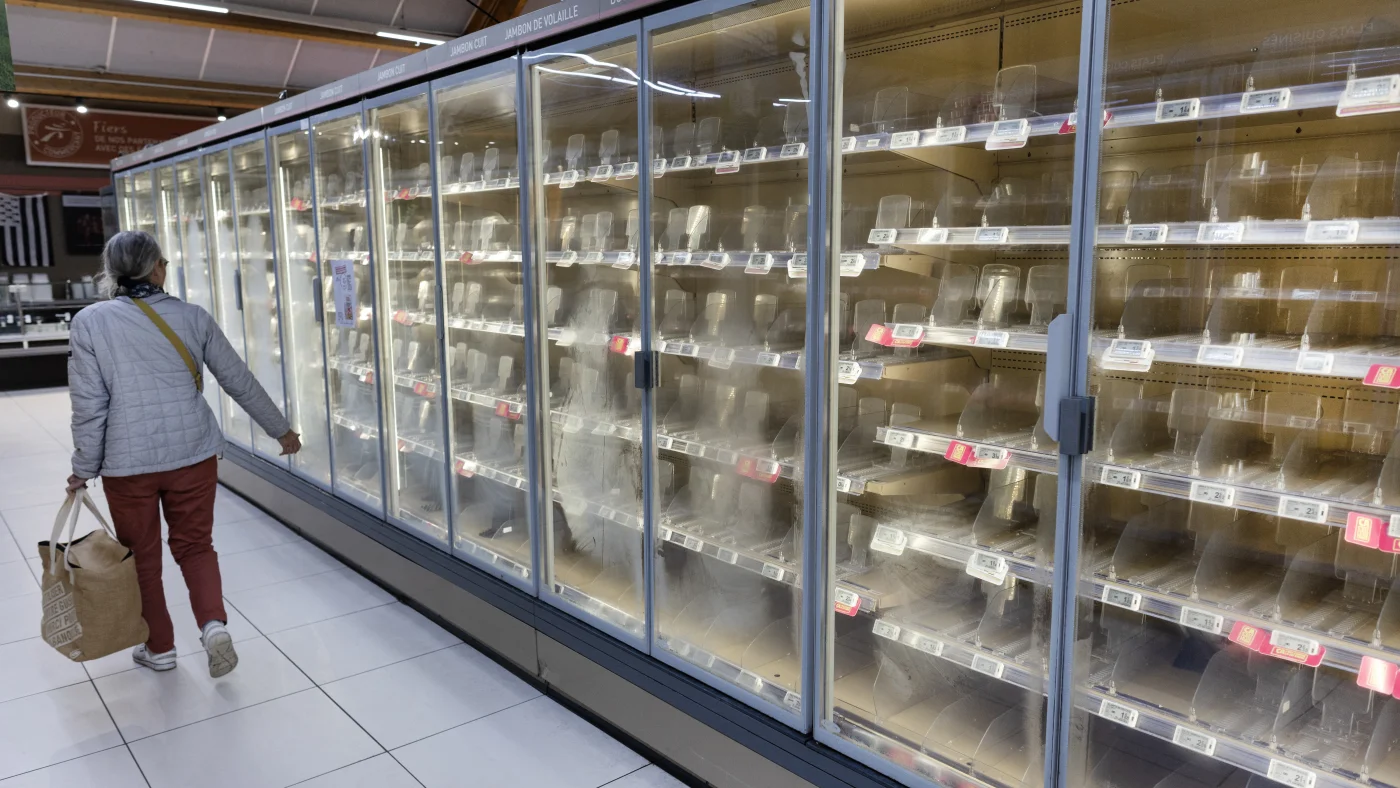
France has accused Iran of launching destructive cyberattacks against critical infrastructure, including refrigeration systems at about 700 supermarkets, butcher shops and other retail sites.
The French National Cybersecurity Agency, ANSSI, said Iranian military hackers seized control of refrigeration equipment and raised temperatures overnight, spoiling food worth millions. Several small hydroelectric power plants were also targeted, with “moderate effects”, the agency said.
French Foreign Minister Jean-Noël Barrot described the campaign as “unprecedented in both its scale and its level of aggression”. He said it was “the first large-scale cyberattack aimed at sabotage on our national territory” and a major threat to France’s interests and public security.
The attacks in October affected supermarket chains including Intermarché and Coopérative U. Retailers said around 150 to 200 Intermarché stores and nearly 100 Coopérative U outlets were targeted in one incident.
France seeks international arrest warrants
The Paris Prosecutor’s Office has opened an investigation into the Iranian cyber unit Shahid Kaveh, which French officials have linked to Iran’s Islamic Revolutionary Guard Corps.
“The Paris Public Prosecutor’s Office is requesting the issuance of international arrest warrants,” the office said.
ANSSI said investigators had identified the suspected hackers through digital clues, including infrastructure used in the attacks, links to a propaganda outlet and traces of Farsi-language use. Iran has not responded to the accusations.
The French claims come amid a wider series of attacks involving refrigeration and other industrial control systems. Grocery shops in Sweden and Ireland were hit in similar incidents, while a French blood bank was forced to act quickly after its refrigeration system was compromised and blood samples began to heat up.
In Israel, a group calling itself the Cyber Isnaad Front claimed responsibility for sabotaging an industrial food-processing plant. The attackers allegedly infected corporate computers, took control of office printers to issue threats and accessed cameras to produce a propaganda video. A cyber incident response company attributed that attack to a wing of Iran’s Revolutionary Guard Corps.
Refrigeration systems at commissaries on US military bases also experienced unexplained temperature rises over the summer, causing food to spoil. US officials have reportedly suspected Iranian involvement, but the Pentagon has not officially confirmed that the disruptions were caused by a cyberattack.
Experts warn of vulnerable industrial systems
Cybersecurity specialists said the attacks were consistent with the methods and objectives associated with Iranian hacking groups, which have previously been linked to disruptive operations against water-treatment facilities and other infrastructure.
Alex Orleans, head of threat intelligence at Sublime Security, said attacks on refrigeration systems could allow the Revolutionary Guard to project power overseas while causing both physical and psychological disruption.
Ari Ben Am, an adjunct fellow at the Foundation for the Defense of Democracies’ Center on Cyber and Technology Innovation, described Shahid Kaveh as an offensive cyber unit responsible for some of Iran’s most significant cyber operations.
He said the unit had links to Cyber Av3ngers, a group the US government connected to attacks on Israeli-made equipment at American water-treatment facilities between 2023 and 2024. French officials have also cited alleged Iranian attacks against French interests, including the satirical magazine Charlie Hebdo and digital kiosks used during the Paris Olympics.
Experts said the incidents highlighted longstanding weaknesses in operational technology, the machinery used to control physical processes such as cooling systems and water pumps. Such equipment is often old, difficult to patch without interrupting essential services and partly exposed to the internet so vendors can maintain it remotely.
US Secretary of State Marco Rubio declined to say whether Washington had shared information with Paris to help attribute the attacks, but said the French were “quite capable”.
