


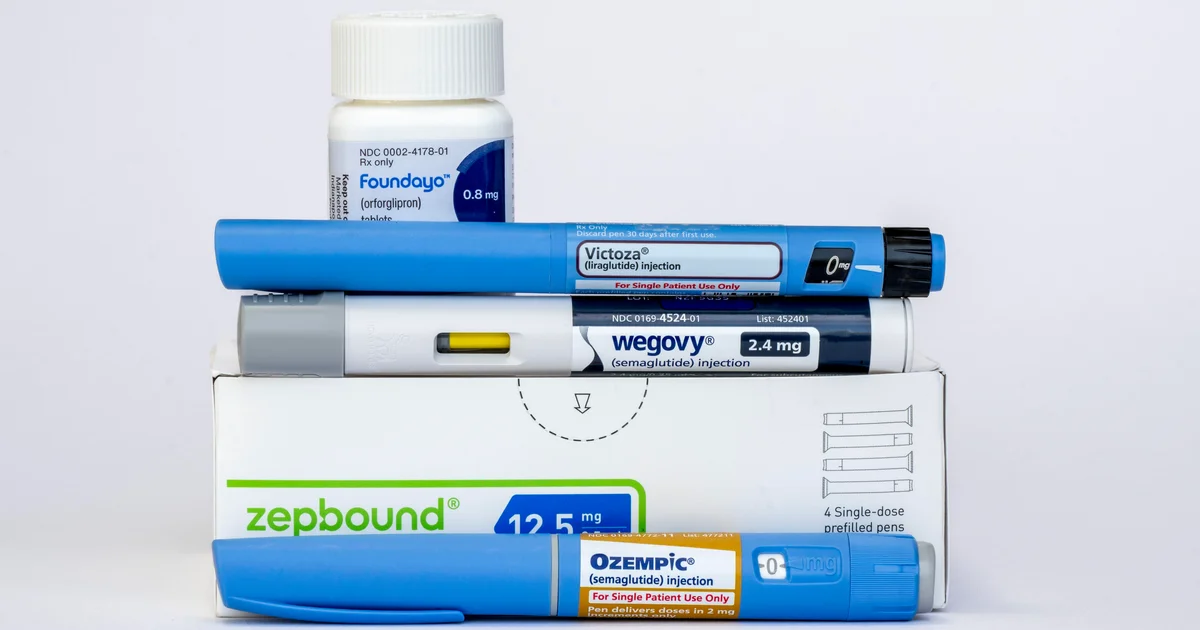
US health regulators are to add a warning about a rare eye condition that can cause permanent vision loss to the labels of popular GLP-1 medicines including Ozempic, Wegovy, Mounjaro and Zepbound.
The Food and Drug Administration said the condition, known as non-arteritic anterior ischaemic optic neuropathy (NAION), had been reported in people taking all GLP-1 drugs. The medicines are used to treat obesity, diabetes and several other conditions.
NAION is caused by reduced blood flow to the optic nerve, although the underlying cause is not understood. Symptoms can include blurred vision, blind spots, distorted colours and other visual disturbances.
The FDA said patients experiencing such symptoms should contact a healthcare professional immediately.
What the FDA analysis found
An analysis of more than 125 clinical trials found that NAION occurred in roughly six out of every 100,000 patients who took a GLP-1 medicine for at least a year. The comparable rate among people taking a placebo or other glucose-lowering medicines was fewer than four per 100,000.
The agency also identified reports of the condition through its electronic system for recording drug injuries and side effects.
Dr Joseph Rizzo, a neuro-ophthalmologist who co-authored a 2024 paper linking NAION to semaglutide, the active drug in Ozempic, said he had been working with the FDA to gather and review data. He said he was not surprised by the decision to add the warning.
Dr Rizzo said he believed the evidence indicated that GLP-1 use increased the risk of NAION, but added that he did not discourage patients from taking the medicines. “The medicines have really been profoundly beneficial to a large number of people,” he said.
He said vision loss caused by NAION was usually irreversible and could worsen even after a patient stopped taking the medication. The condition can also affect each eye differently, meaning mild loss in one eye does not predict the severity of any subsequent loss in the other.
NAION can also occur in people who do not take GLP-1 medicines. The American Academy of Ophthalmology estimates that it affects between two and 10 in every 100,000 adults over the age of 50.
Eli Lilly, which makes Mounjaro and Zepbound, said it was “carefully evaluating the update” and would respond to the FDA. It said the safety communication applied to all medicines with GLP-1 activity and did not refer to findings specific to its products.
Novo Nordisk, the maker of Wegovy, said the available data did not establish a cause-and-effect relationship and that it remained confident in the benefit-risk profile of its GLP-1 medicines. The company said it continued to monitor safety, review new research and work with health authorities.
