


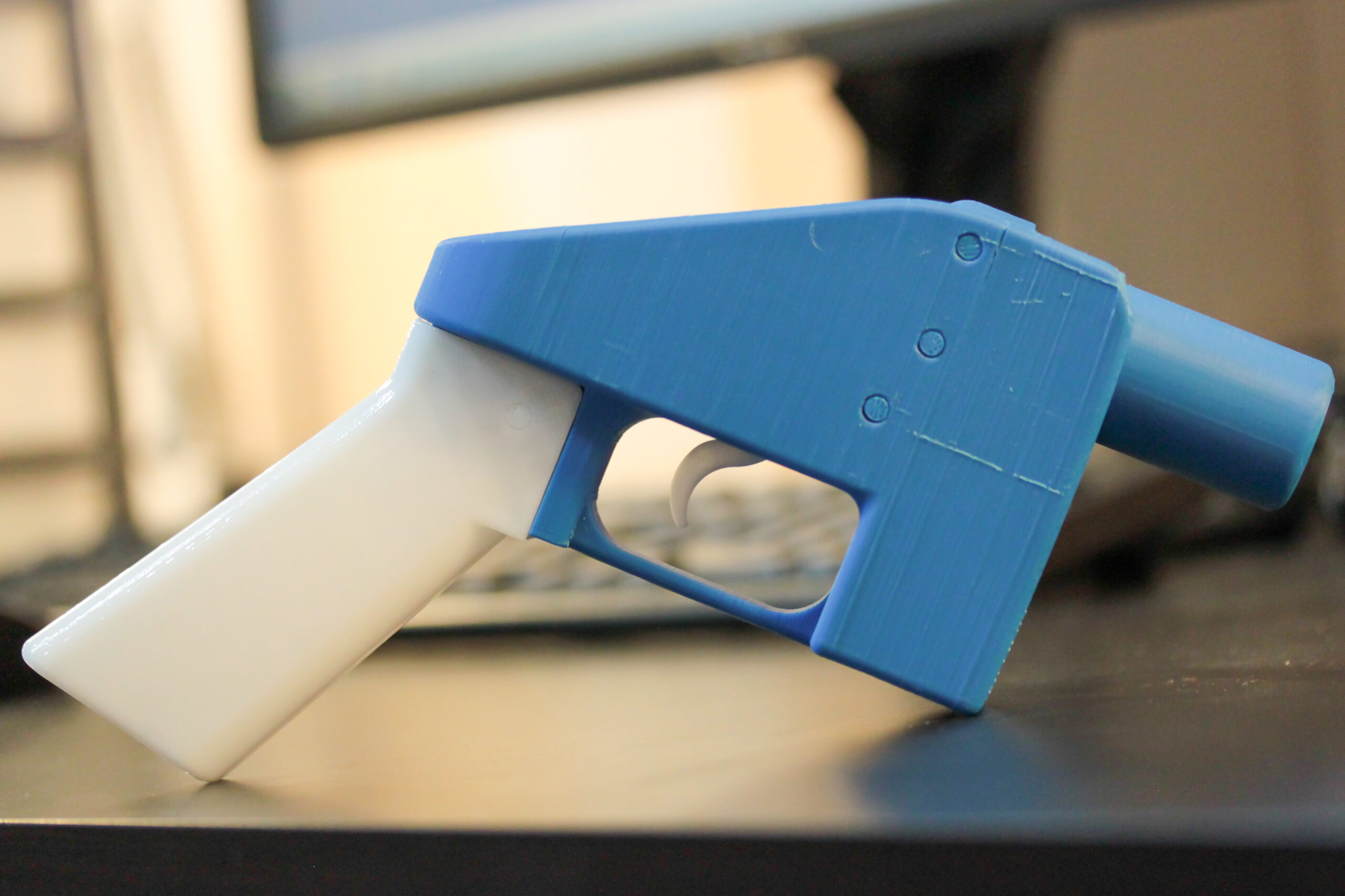
New York has passed a first-of-its-kind law that could require 3D printers sold for use in homes and businesses to be fitted with technology that prevents them from producing firearms, in a novel attempt to curb the spread of untraceable “ghost guns”.
According to the Associated Press, the measure — which is also being considered in California — marks a significant shift in how authorities are trying to tackle homemade weapons. Roughly a third of US states already restrict or ban build-it-yourself firearms that carry no serial number and so escape the background checks required when buying from a licensed dealer. What sets the new approach apart is that it targets the machines used to make the guns rather than the people making them. Because New York and California are among the most populous states in the country, the rules they adopt could end up shaping standards for the wider 3D-printing industry and offer a template for other Democratic-led states.
The concern driving the legislation is a documented rise in privately made weapons turning up at crime scenes. The AP reported that a US Department of Justice study released last year found the number of such guns recovered in crimes and handed to federal authorities had climbed from about 1,600 in 2017 to nearly 27,500 in 2023, although the report did not say how many had been produced on 3D printers. The technology has also featured in one of America’s most high-profile recent killings: police believe a 3D-printed gun was likely used in the murder of the UnitedHealthcare chief executive in 2024.
The growth of the devices themselves helps explain the unease. Bill Decker, executive chairman of the Association of 3D Printing, told the AP that the number of printers worldwide had risen from an estimated 30,000 in 2012 to more than 3 million, with the industry’s annual value swelling from around $2 billion to $26 billion. While high-end machines still cost thousands of dollars, some can now be bought for only a few hundred — and the same printers that produce toys, prosthetic limbs and even aircraft parts can, using designs found online, also turn out the components needed to assemble a working firearm.
Under the New York law, signed last month, and the parallel Californian bill, panels of experts would be tasked with devising “firearm blueprint detection” algorithms. The software would examine each design submitted for printing, measure it against a digital library of gun parts and refuse any that closely matched. Solomon Diamond, an engineering professor at Dartmouth College, compared the idea to a smartphone app that identifies a plant or flower from a photograph. One possible method, the AP reported, would analyse the shape and dimensions of an object to flag those resembling gun parts. Julian Chultarsky, of the Ohio-based firm Physna, said the underlying geometric search technology was already mature and ready to be applied to the problem. Even so, the requirement would not take effect until 2029 at the earliest, and potentially later in New York if the study group concludes it is not yet workable.
Not everyone is convinced it will achieve its aim — including some who back it. Decker said his association supported the legislation but believed it would not succeed in practice, calling it “more of a political statement than anything else”. Determined offenders, he argued, would simply alter their designs or take their printing elsewhere.
Others warn the technology could prove both too weak and too blunt. Rory Mir, of the digital rights group the Electronic Frontier Foundation, cautioned that the more aggressive such filters became, the more likely they were to block harmless objects — a length of pipe or an S-shaped wall hook might be mistaken for a gun component — and that detection algorithms of this kind tend to catch a great deal of lawful activity. Sending designs to a cloud-based artificial intelligence system for checking, he added, could also expose people’s private and proprietary creations.
Gun-safety campaigners maintain the effort is overdue, arguing that 3D printers have opened a route to firearms for those barred from buying them, such as children and convicted felons. The group Everytown for Gun Safety, which notes that eleven states already prohibit 3D-printed guns and six more require serial numbers, described the technology as the new frontier in the fight against ghost guns. The National Rifle Association takes the opposite view. John Commerford, of its lobbying arm, said homemade firearms were a long-standing American tradition and that the measures would only restrict law-abiding citizens.
