


The new season of 60 Minutes opened on Sunday with a familiar blend of conflict, accountability journalism and sport, despite sweeping changes to the programme’s leadership and correspondent line-up under CBS News editor-in-chief Bari Weiss.
Ross Douthat joined the cast in place of Scott Pelley, while the programme adopted more polished visual production. Its redesigned stopwatch and sleek screens replaced the traditional “book” graphics that had appeared behind correspondents.
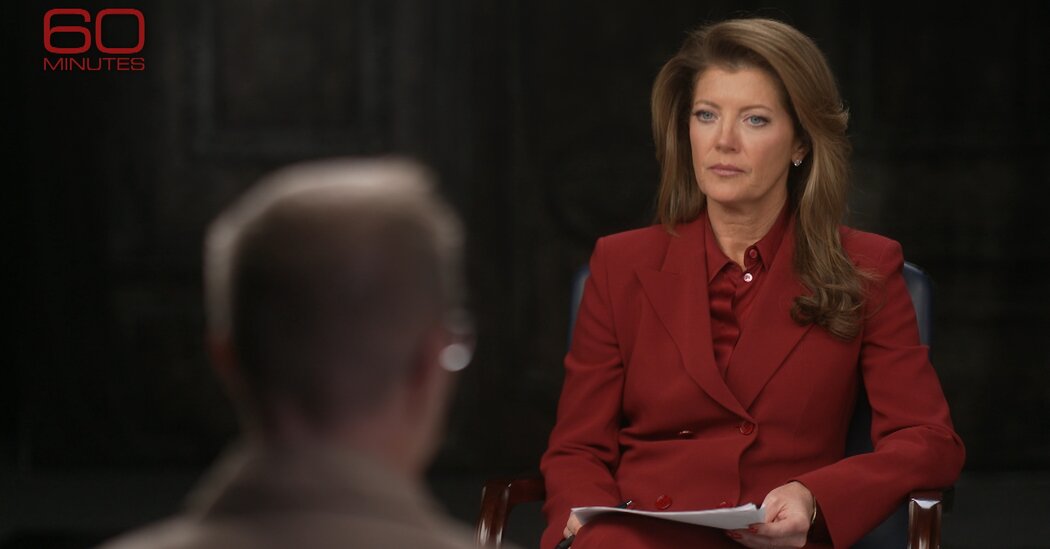
But the content remained recognisable to long-standing viewers. Norah O’Donnell interviewed an Air Force colonel who described being rescued after he was shot down over Iran, while Lesley Stahl investigated intermediaries who charge substantial sums to lobby for presidential pardons.
A lighter report focused on Sean McVay, coach of the Los Angeles Rams. The programme also brought back hidden-camera reporting, a technique once regularly used by 60 Minutes but seen less often in recent years.
60 Minutes premiere follows upheaval under Bari Weiss
The broadcast was closely watched because it followed months of turmoil at one of American television’s best-known news programmes. Weiss removed senior figures this year, while several prominent correspondents, including Pelley and Anderson Cooper, left or were forced out.
Pelley accused Weiss of “murdering” the programme, an episode that preceded his dismissal. Former staff members have also alleged that she sought to introduce political bias, a claim denied by CBS News.
Weiss and Nick Bilton, the technology journalist and filmmaker chosen to oversee 60 Minutes, treated the season opener as an important test of whether the changes could reassure viewers and media executives who questioned the overhaul.
The programme’s handling of Donald Trump was also under scrutiny. It described the war in Iran as “costly and unpopular” and said the president had pardoned “a string of unrepentant financial con men” as well as rioters involved in the attack on the US Capitol on January 6 2021.
One report featured Defence Secretary Pete Hegseth, who used an expletive during his interview that was removed from the broadcast. The effort to secure the interview with the downed colonel, known as Dude 44 Bravo, involved executives from both the former and current leadership of the programme.
Keith Sharman, the segment’s producer, began contacting potential sources within hours of the rescue on April 6. He and Tanya Simon, the executive producer who was dismissed in May, later attended a meeting arranged by Weiss with an adviser to Mr Hegseth; the interview was eventually secured during the summer.
Stahl’s investigation into presidential pardons followed a months-long collaboration between 60 Minutes and CBS News’s investigative team, a partnership that Weiss and Bilton are encouraging more actively than in the past. The Trump administration rejected any suggestion that the president had acted unethically, describing such a claim as “either ill-informed or malicious”.
The behind-the-scenes dispute was not mentioned during the broadcast. Instead, Douthat ended the programme by discussing fears about artificial intelligence and said that for six decades 60 Minutes had “meant the same thing: journalism you can trust. Where we’re headed, we’re going to need it.”
CBS promoted the new season with the slogan “It’s Time” and commissioned a glossy cast photograph taken by Mark Seliger in Grand Central Terminal. One version included Bilton and another did not.
The premiere’s audience figures will provide a further measure of the changes. 60 Minutes averaged 9.1 million viewers per episode last season, a 9 per cent increase on the previous year, with the latest ratings expected on Tuesday.
