


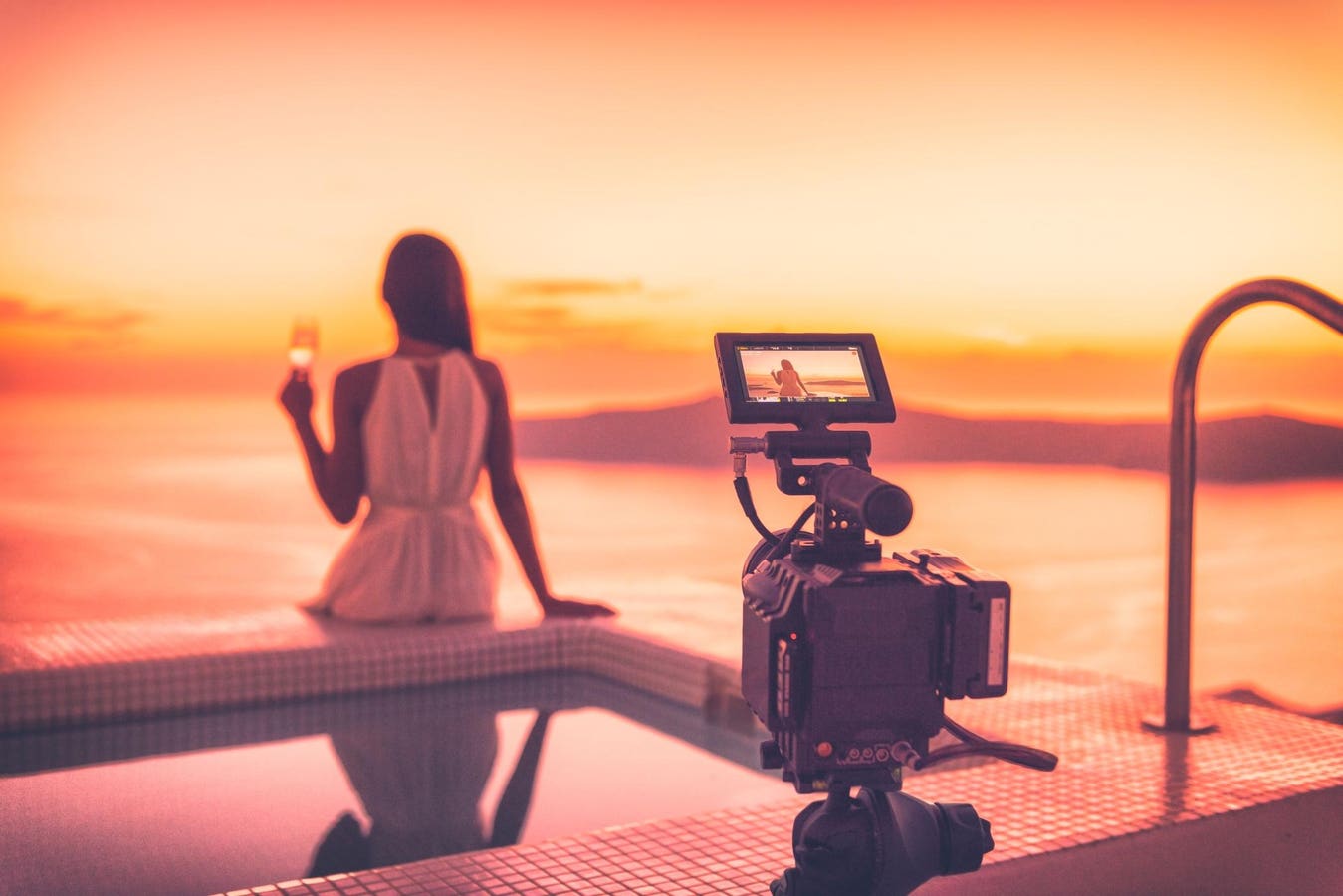
Influencers and travel reviewers who post on YouTube, Instagram, TikTok, and other social media platforms generate tens of millions of views and provide plentiful exposure. However, there are also complaints from patrons, particularly at small uber-luxury hotels and resorts, who don’t wish to be extras on the set of their productions.
getty
Accessing the good life has become a good deal pricier. Luxury hotel rates have doubled since before the pandemic, now averaging over $1,600 per night, according to Virtuoso, a network of travel agencies that sell over $35 billion in high-end travel annually. Bookings for hotels charging over $1,500 per night are growing by 37% year-over-year. Future bookings by clients who are spending over $50,000 on a trip are up 47% compared to 2025. Clients are looking for exclusivity and privacy. There has been a 45% jump in requests for “ultraluxe travel, from hotels-within-hotels to private members’ clubs with rooms.” At the same time, there are 3.7 million YouTube channels posting travel videos. Digital advertising firm Pixability reports 95% of the top 4,000 travel conent accounts by viewership are creator-driven with only 5% from brands and publishers. Millions more influencers use the places they travel to as backdrops for their social media shoots they post on Instagram, TikTok and other social media platforms. The converging trends are creating opportunities and consternation for travelers, content creators, and the travel industry.
Content creator online reviews of hotels, resorts, cruises, restaurants, and airline flights, often with impressive production values, can generate hundreds of thousands, and even millions, of views. Top creators have millions of followers. Some of this new breed of travel and food reviewers started as hobbyists and now do it full-time. Reviewers who are not paid or sponsored by the companies the review boast that they are serving the public interest. They believe that because they are self-funding, their reviews are unbiased. Yet there are variations.
Some reviewers and influencers coordinate their reviews in advance with the travel companies. Since they are filming on private property, they want to obtain permission so they aren’t shut down after incurring the expense of visiting far-flung destinations. The coordination, travel companies say, ensures the content creators don’t disturb other patrons. Some film early in the morning or right when a restaurant opens, when fewer guests are there. Some diligently blur out the faces of guests who are in the vicinity and captured on camera. A few reviewers don’t show their faces on camera so they can conduct their reviews without being recognized and possibly receiving special treatment.
While this new wave of travel critics has different styles and expectations, even offering their own ratings scores, the video reviews, which can run up to an hour in length, give a wide consumer audience a unique and comprehensive look inside hotel rooms and suites, cruise ship cabins, luxury trains, and business and first-class flights. Followers get detailed reports about the bathroom amenities and commentary covering everything from whether the soup was too salty to if there was dust on a picture frame. The depth of the content is unmatched by supplier websites and videos, which are meant to promote the product. Creators often give much more detail than similar postings by traditional media that use short-form presentations or are filmed during press junkets.
Despite the undisputed benefits the wide exposure the online reviewers provide for their subjects, they are not without controversy. Earlier this month, a newly opened 18-casita resort in Mexico turned away YouTube hotel reviewer Ryan Walker and his videographer, refusing to let them onto the property. According to Walker’s account, he booked the hotel for $6,000 per night. He showed emails from the hotel confirming the booking and coordinating his plans to review the hotel, including areas he would not be allowed to film. He says the hotel then canceled his reservation via email the night before his arrival. Walker said he hadn’t seen the email because he was busy.
His video titled “Amanvari Called The Police On Me” generated over 700,000 views on YouTube in a few days. CNN, The New York Post, and even luxury lifestyle magazine Robb Report covered the story.
Aman has not issued a statement as to why they cancelled Walker’s reservation. However, viewers reacted to his video about the incident, often with outrage. Some canceled future reservations at other properties in the group. A large majority supported Walker, but several noted that not all guests enjoy being extras on the set during filming. A poster who goes by Twoyatris in the Luxury Hotels and Travel channel of Flyertalk wrote, “I’m a nobody, but if I’m at a property like Aman and someone had a videographer set up filming during my stay, I’d be very annoyed.”
How do travel advisors and industry executives feel about the YouTube reviewers and other social media influencers? Like glossy travel magazines and Sunday newspaper travel sections of yesteryear, they say the reviewers and influencers generate substantial interest that can translate into bookings. “From our perspective, all the various levels of social media have a massive marketing impact. It exists, it’s growing, and I don’t expect that to slow down in the future,” says Stephanie Malakie, an advisor with Empress Travel Club.
But have advisors received complaints from their well-heeled clients about being in the middle of a shoot? Do travel providers do a good job of creating, communicating, and enforcing filming policies? How about advisors, who also post videos and photos to social media from their visits? Advisors and travel executives attending Virtuoso Travel Week, which is being held this week in Las Vegas, have diverse opinions and experiences.
Embark Beyond Founder and CEO Jack Ezon says, “At a hotel, you don’t know who someone is with. Maybe they’re on a rendezvous. People are concerned about paparazzi and security because they’re wealthy and may worry about being monitored. A lot of people spend this kind of money specifically because they don’t want that,” adding, “There are certain places that simply don’t allow it, and that’s becoming more common. You walk into places like 5 Hertford Street or Maxime’s, and there are restrictions on phones because they don’t want photographs. I’ve been to places where they’ll take my phone and tape it up because they don’t want images. It is very hard in 2026 to have privacy, and privacy is something people are willing to pay for.”
Jim Strong of Strong Travel Services has had blowback directly from clients about content creators. One client recently returned from a 5-star hotel on the French Riviera. “She loved the hotel. She loved the staff. But one day at a pool, she said influencers were doing a photo shoot in a disruptive way. They were even doing outfit changes, and it ruined her experience.” Strong says his client won’t go back to that hotel. He also recently witnessed it first-hand aboard a luxury train, where the reviewer and family members were seated at the next table, speaking loudly and describing what they were eating, bite by bite.
One advisor says, “We have clients who specifically don’t want to go to hotels or restaurants that create Instagram walls and market to influencers, so I think that’s the point. The friction is when this starts taking place in smaller resorts, luxury trains, yachts, and where the clientele is specifically paying super high prices to avoid this stuff.”
360 Private Travel Marketing Manager Josie Turner adds, “For me, the biggest issue is clients worrying that they’re in the background of someone else’s pictures at the pool. When a place becomes very Instagrammable, people are trying to get that perfect bikini shot at the pool, and other guests are often in the background. I’ve had messages saying, ‘Hey, this influencer is here. She’s filming, I’m in the background, I’m in my bathing suit, and I’m not comfortable. Could we make a note of that for next time and perhaps go somewhere that has a stricter photography policy?”
Keith Waldon, a former public relations executive, is the founder of travel agency Departure Lounge. He’s not surprised that Walker’s YouTube video caused such an uproar. He says, “In the age of digital immediacy, one side of a story can cause a communications uprising of avalanche proportions, fueled by pile-on influencers and posters wanting to ride the wave of drama and score views and followers in the process, often now for financial gain.”
At the same time, he notes travel advisors also post photos and videos from their visits, which are generally arranged in conjunction with the hotel sales departments. Waldon says, “Departure Lounge’s travel advisors are respectful when taking photos and videos at travel venues, as we know first-hand that luxury travelers value their privacy and peace…more travel providers have strict policies to protect guests, and we fully support that.”
Waldon notes, “Seeing things first-hand is very important for travel advisors, and digital platforms allow clients to virtually join in on the discovery immediately. It’s powerful.” Regarding customer feedback about YouTubers and influencers interrupting their enjoyment, he says, “We have had a few complaints from clients that we addressed with our travel partners,” adding, “These days it’s sometimes hard to tell the difference between influencers and regular travelers… both can exhibit bad behavior while taking videos or conducting photo shoots.”
Wagner Bespoke Travel Founder Eli Wagner says, “Content is undeniably a part of our industry, and as a travel advisor who shares behind the scenes moments on our Instagram, I understand the value of first-hand perspectives,” continuing, “That said, there’s a fine line between creating authentic travel content and ensuring it never comes at the expense of another guest’s experience or privacy.”
The CEO of a company that represents several dozen ultra-luxury properties says the hotels receive dozens of requests each week for comp stays, discounts, and payments from online reviewers and influencers in exchange for visiting and creating content. From time to time, a celebrity who stays at a hotel will post on social media, which he says can drive significant interest, if not necessarily bookings. He says each hotel is different, but smaller hotels are very sensitive to protecting guests’ privacy.
Daniel A. Hostettler is CEO of The Boca Raton, with over 1,000 rooms and suites split into six separate enclaves, and a gated entrance to its grounds. He says the property prefers that content creators coordinate with the hotel in advance of arriving. However, it only stops creators if they “start setting up to film in the lobby” or their filming disturbs other guests, something he says hasn’t been an issue. The hotel’s public relations staff has learned to deal with both the good and the not-so-good. They actively reach out to creators and influencers who post flattering content about the property, asking permission to share the content. On the flip side, when there was a flood in the lobby, one creator, who happened to be there, posted on social media. Hostettler says the mess was cleaned up in short order, and the hotel responded by posting its own video to show everything was again pristine.
YouTubers who present their reviews as credible assessments of their subjects the are reviewing sometimes criticize travel advisors’ objectivity, since they earn commissions from suppliers. Others have affiliate relationships with travel agents or have started their own travel agencies to capitalize on their success. Advisors say the new breed of travel reviewers and their content drive clients to call, even when the reviews are negative. The advisors counter that the online reviewers, who typically stay one night in a hotel, offer only a snapshot of what the property is like, despite the lengthy videos.
“The YouTube travel reviewers are great, but it’s the you can’t see the forest through the trees situation. We had a client call up after seeing a negative review (on YouTube), and asked us if she should cancel her booking,” one advisor said, adding, “We had sold over 200 room nights at that resort in the past year, and clients had been happy. We suggested a couple of options if she wanted to change, but she went and had a great time.”
The bad behavior of some social media stars creates an opportunity for advisors. Departure Lounge’s Waldon says clients are reacting by spending even more and booking villas with private pools, noting, “True privacy is going for a premium.”
Peter Bates, a former executive with Mandarin Oriental, and now a consultant, says YouTubers and influencers, and how to handle their growing legions, had already been at the top of the conversation for luxury travel providers before Ryan Walker’s video. He says, “Some (companies) leave it to local management, and some have global policies. I encourage everybody to have a global policy. We need to get the names of the brands out there. We need that support to get clients, and influencers are a terrific way of generating business. Like anything, it’s about managing the process,” adding, “No guests should be included unless they are prepared to be included. The privacy issues are enormous.”
Bates and Embark Beyond’s Ezon say many hotels now have policies banning drones, a result of influencers, reviewers, and regular guests bringing and flying them to the chagrin of other guests.
Balancing privacy and publicity isn’t new, says Alice Marshall, who runs her own public relations agency handling luxury travel clients. She recounts an experience from the 1980s when she was a young press agent for Cunard Line. She had arranged a photo shoot for a fashion magazine using the narrow window when Queen Elizabeth 2 was docked in Manhattan, after guests from the concluded voyage had disembarked and before the new passengers had boarded. After acquiescing to the photographer’s demand for more time, the guest who had booked the cabin entered with “somebody who was not his wife.” While she was not fired, after the guest complained, Marshall says she was called on the carpet. “I learned my lesson,” she says, adding, “For a lot of high-end clients, privacy is a big factor.”
