


China and the Association of Southeast Asian Nations have failed to complete a long-awaited South China Sea code of conduct, despite reaching tentative agreement on about 80% of a draft at a summit in Manila.
Philippine foreign minister Theresa Lazaro said several important issues remained unresolved, including whether the proposed agreement should be legally binding.
“There is no conclusion yet,” Ms Lazaro told reporters, adding that ASEAN members and China held differing views on how the arrangements should work.
The negotiations have continued for more than two decades as China and several South-east Asian countries contest maritime claims in the strategically important waters. The Philippines, which currently chairs the 11-member bloc, had hoped to accelerate the process and secure an agreement by the end of the year.
Ms Lazaro said she remained hopeful that the code could be completed under Singapore’s leadership when it takes over the ASEAN chair next year.
South-east Asian governments want the agreement to reflect international law, while Beijing maintains that its conduct in the region has been lawful and professional. China claims most of the South China Sea, overlapping with the exclusive economic zones of Brunei, Indonesia, Malaysia, the Philippines and Vietnam.
The dispute has made a workable code a central concern for managing encounters at sea and preventing tensions from worsening. An international arbitration tribunal ruled in 2016 that China’s broad claims had no foundation in international law, but Beijing rejected the decision.
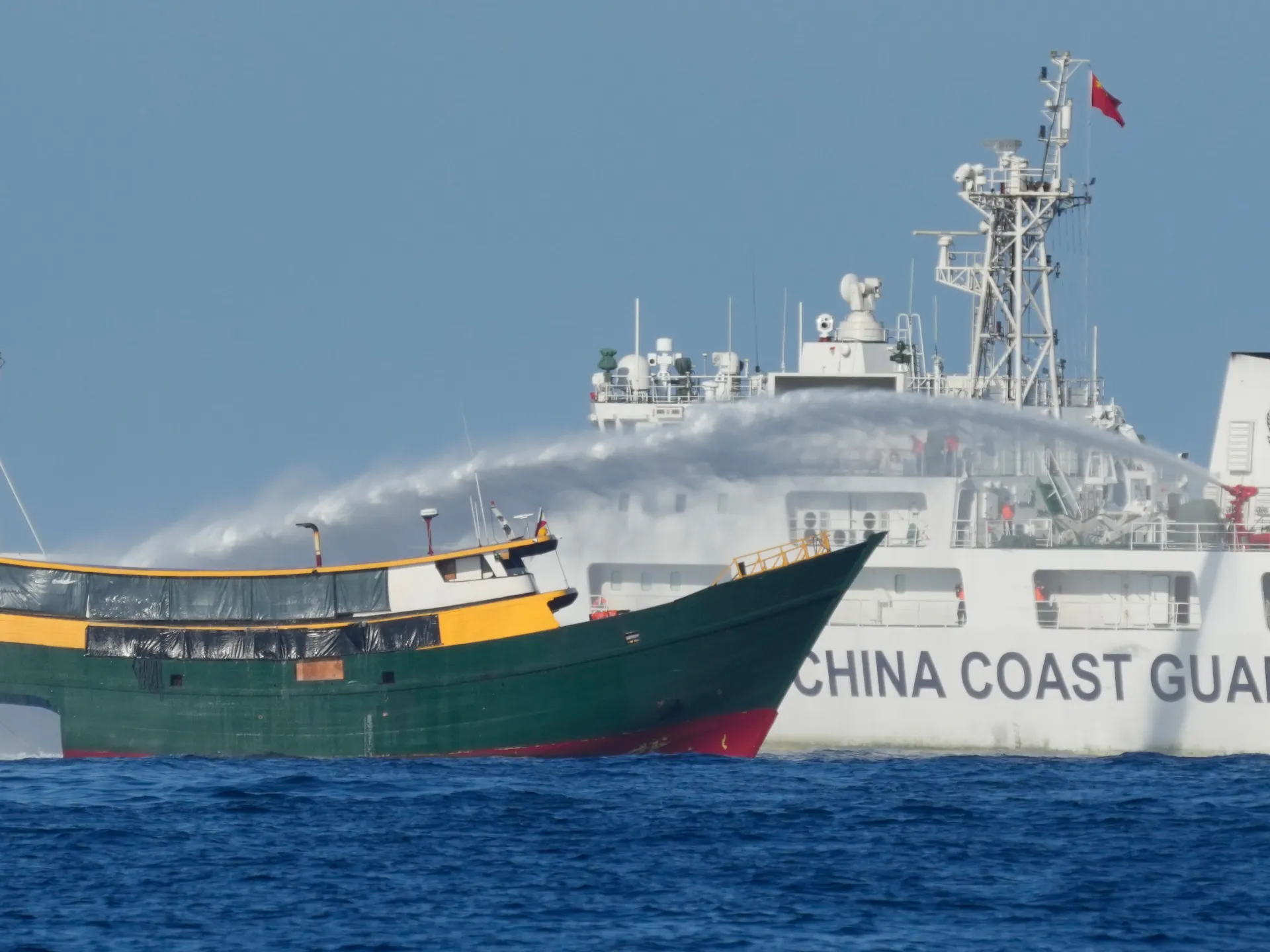
China and the Philippines have been involved in repeated maritime confrontations in recent years. Manila has accused Chinese vessels of aggressive actions in its exclusive economic zone, including dangerous manoeuvres, water-cannon attacks and interference with resupply missions, while Beijing has accused the Philippines of entering what it regards as Chinese territory.
ASEAN extends ban on Myanmar leader
ASEAN leaders also extended a ban preventing Myanmar’s leader from attending the bloc’s summits, citing a lack of progress on a five-point peace plan agreed in 2021.
Myanmar may be represented at the meetings only by lower-ranking career diplomats. The country was due to take over ASEAN’s rotating chair this year, but the role was handed to the Philippines because of the continuing civil conflict.
In Manila, leaders expressed “deep concern” over insufficient progress in implementing the plan and called on all sides to “stop targeted attacks against civilians and civilian infrastructure”. They condemned attacks by Myanmar’s military and armed groups as the civil war continued.
The crisis began after the military seized power from the democratically elected government of Aung San Suu Kyi in February 2021. Pro-democracy protests were violently suppressed, prompting armed resistance and conflict across much of the country.
Ms Lazaro, who is also ASEAN’s special envoy to Myanmar, said civilians continued to face bombings and displacement. She said the bloc would set out steps for addressing the situation and monitor progress.
Myanmar leader Min Aung Hlaing has made official visits to several ASEAN member states since becoming president after elections held in December and January that were widely seen as rigged. ASEAN has not blocked those visits, but its leaders have continued to describe the 2021 peace plan as the “main reference for addressing the political crisis in Myanmar”.
