


Australia’s population is heading for a major demographic shift, with deaths forecast to exceed births by the 2060s as fertility declines and the number of older people rises. From that point, net migration would be the country’s only source of population growth.
The population is still expected to increase, reaching 39.3 million by 2065–66, but growth will slow sharply. Treasury projects average annual growth of 0.9 per cent over the next four decades, down from 1.1 per cent in the 2023 Intergenerational Report and 1.4 per cent over the past 40 years.
The fertility rate is forecast to fall from 1.48 babies per woman to 1.34 by 2065–66. The report said the change would mark the first time deaths had been projected to outnumber births in an Intergenerational Report.
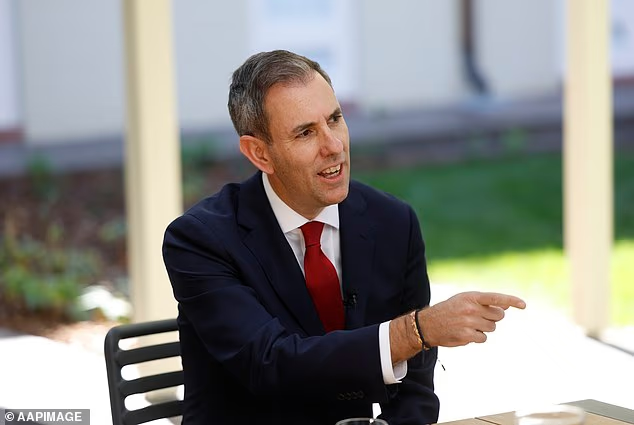
Jim Chalmers, Australia’s Treasurer, said migration would remain important as the country faced a smaller proportion of younger people and a rapidly ageing population.
“Despite these pressures, we’re better placed than many others. Migration will play a role here too, an important source of skills that complements our domestic workforce,” he said.
New migrants have a median age of 26, compared with 38 for Australia’s resident population, according to the report.
Australia’s ageing population will increase pressure on public finances
The number of Australians aged under 20 is now expected to rise by only 10.4 per cent by the early 2060s, compared with an increase of almost 28 per cent forecast in the previous report. Meanwhile, the number of people aged 85 and over is projected to triple during the next 40 years.
Mr Chalmers described longer and healthier lives as “obviously overwhelmingly a good thing”, while acknowledging the additional pressure they would place on government finances.
“It’s welcome recognition of the quality of our universal healthcare and the contribution that older people make, and it’s worth every dollar of extra pressure that it puts on our budgets,” he said.
Government payments are forecast to rise to 27.7 per cent of gross domestic product over the next four decades. Population ageing is identified as one of the main reasons for the increase, with Mr Chalmers saying it would account for one-third of all additional health spending during that period.
Demand for hospitals, aged care, disability support and other health services is expected to grow as the population becomes older.
Mr Chalmers warned that the report’s findings could be used for political purposes, arguing that the central challenge was how governments responded to the pressures created by economic and generational change.
“And so the division in politics now is not between those who accept all of this and those who don’t. It’s between those who prey on it, and pick at it, and politicise it, and catastrophise it, and those who seek to alleviate it,” he said.
He also suggested that longer political terms could help governments concentrate on long-term challenges rather than short election cycles. Australia’s future growth, he added, would increasingly depend on industries including renewable energy, critical minerals and artificial intelligence as the economy adapted to an older population and changing global demand.
