


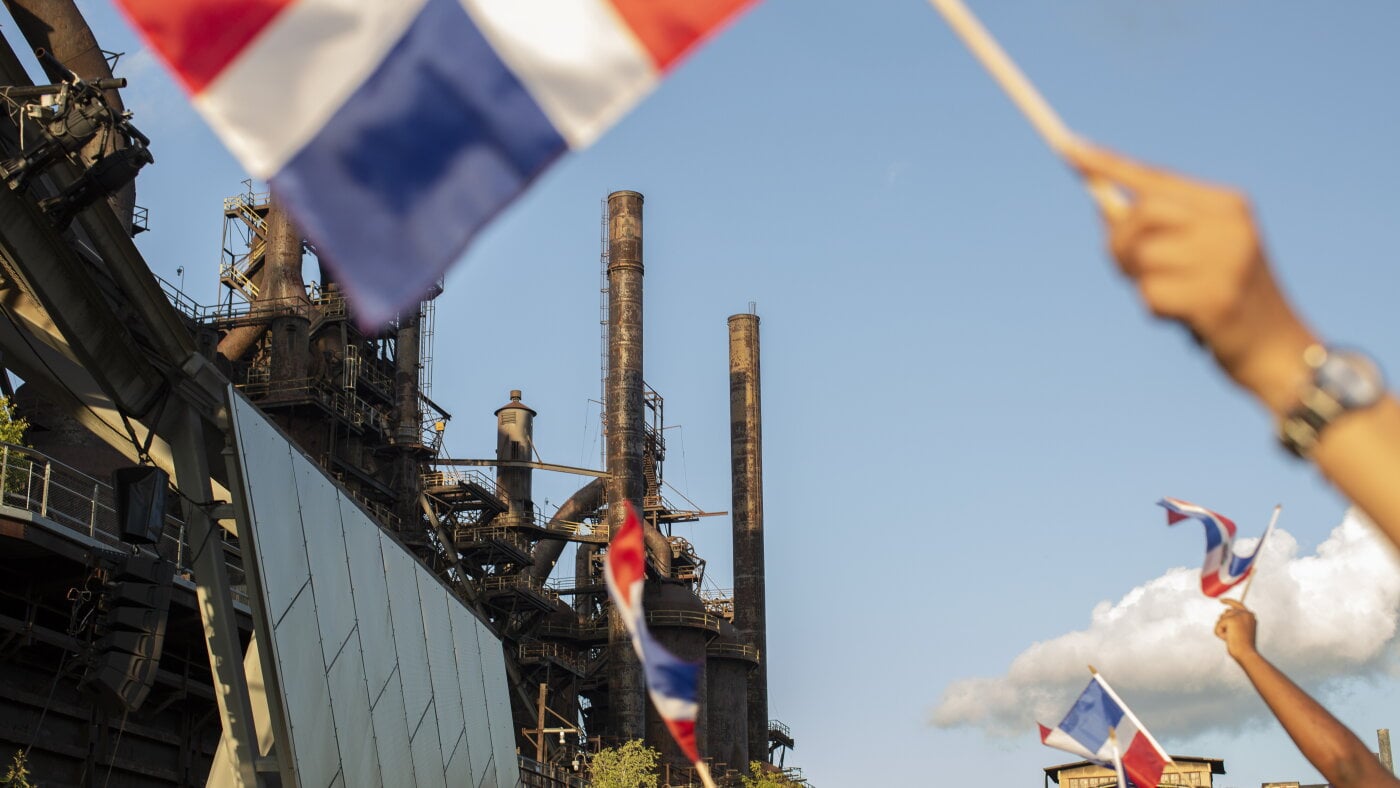
Latino voters are emerging as a decisive bloc in Pennsylvania’s fiercely contested seventh Congressional District, with Democrats and Republicans competing for support in a community increasingly focused on the cost of living, immigration and a lack of faith in politicians.
Allentown, once overwhelmingly white, is now a majority-Latino city, largely home to Puerto Rican and Dominican communities. The shift has made its voters central to both parties’ hopes of controlling the House of Representatives.
Stephanie Valencia, co-founder of Equis Research, which surveys Latino voters, said the outcome would depend heavily on whether Latinos turned out and which party they supported.
“How the House is decided is inextricably tied to whether Latinos turn out to vote, and for whom,” she said.
The political contest is being played out against mounting economic pressure. At La Placita, a Mexican deli and restaurant in Allentown run by Beti Rosales and her parents, the price of ingredients including limes, avocados, milk and meat has risen.
Rosales said higher costs were affecting both the family business and its customers, who were cutting back on eating out. She also said many people in the community no longer trusted either political party, believing elected officials appeared only around election time.
Economic anxiety is also shaping the views of voters who have previously backed different parties. Equis Research found that about one-third of Latino voters do not identify with either party, with many making their decision based on their personal financial circumstances.
Allentown mayor Matt Tuerk, the city’s first Spanish-speaking mayor, said the political landscape had changed sharply. He said 52 of the city’s 55 precincts had moved from voting Democratic to voting Republican from the 2020 election onwards, with the biggest shift occurring in one of the precincts with the largest Latino populations.
Valencia said Democrats had lost ground with Latino voters in recent election cycles, while Donald Trump had made gains. She said surveys suggested many Latinos felt Democrats had concentrated on the wrong issues, rather than their concerns about the economy and immigration.
Immigration becomes a dividing line
Immigration policy is another major fault line in the race between Republican Congressman Ryan Mackenzie and his Democratic challenger, Bob Brooks, a retired firefighter and union leader. Mackenzie won the previous election by one percentage point.
Democrats argue that the Trump administration’s immigration policies could undermine Republican gains among Latino voters. Mackenzie rejected what he called misinformation about the issue, saying he had worked with local police to ensure they pursued criminals in the community.
He said Immigration and Customs Enforcement should be reformed when it failed to operate properly at national level, but added that his local experience had not involved such problems.
Brooks said fear of ICE was a frequent concern on the campaign trail. He recalled meeting a woman who was afraid to go shopping or visit her late husband’s grave because she feared being taken away by a masked officer.
An Equis Research poll found that 66 per cent of independent Hispanic voters and 26 per cent of Hispanic Republicans believed the administration’s immigration actions had gone too far.
Rosales said she supported removing undocumented criminals but believed enforcement needed a better system, arguing that workers without criminal records were also being detained.
George Rivera, chairman of the Lehigh County Republican Committee, described the Democratic message as alarmist. He argued that children of immigrants and people who had immigrated legally would support the Department of Homeland Security, while acknowledging that mistakes could occur.
Cost of living dominates voters’ concerns
For many voters, however, household finances remain more immediate than party loyalties. Barbara Gonzalez-Rizzotti, a Puerto Rican Republican who runs a nursery from her home, said parents were under severe pressure and some were afraid to have more children because of the expense.
She said the middle class was being squeezed between the very rich and the poor, and that she could support a Democrat who was not on what she described as the party’s extreme left.
Ana Acosta, a Dominican-born lorry driver from Allentown, said the cost of diesel had consumed much of her earnings. She supported Trump in 2024 but said she had become disappointed with his administration and had not yet decided how she would vote.
“They promise and promise, and it is always the same,” she said. “It is more of the same.”
