


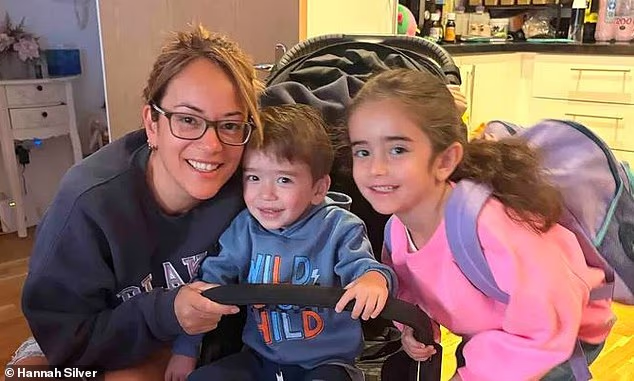
A three-year-old boy born with five rare heart conditions needs specialist surgery in the United States after his mother was told there were no further treatment options for him in the UK.
Sebastian Silver has spent much of his life being treated at Great Ormond Street Hospital, where doctors diagnosed him with congenital corrected transposition of the great arteries, a criss-cross heart, an underdeveloped right ventricle, ventricular and atrial septal defects, and Wolff-Parkinson-White syndrome.
The combination of conditions has been described as “an exceptionally rare and perilous clinical picture”. Specialists at Boston Children’s Hospital believe Sebastian may be suitable for a specialised double switch biventricular repair, which is intended to balance blood flow between the two chambers of his heart.
His family needs £400,000 for the operation. A fundraising appeal launched in September has raised £350,000, but a further £50,000 is needed for the procedure, along with another £30,000 for medical transport, travel and accommodation.
Sebastian’s mother, Hannah, 42, is a single mother of two from north London and works as an executive assistant at Google. She hopes to travel to Boston with Sebastian and his five-year-old sister, Sidney, once the fundraising target has been reached.
Sebastian’s complex heart conditions
The problems were first identified during Hannah’s 20-week pregnancy scan, when doctors noticed that the right side of her unborn baby’s heart appeared small. After his birth, Sebastian was transferred to Great Ormond Street Hospital and diagnosed with multiple rare defects.
At two weeks old, he underwent surgery to fit a pulmonary band, designed to prevent too much blood flowing to his lungs. Doctors expected he would need further treatment as he grew.
When Sebastian was 18 months old, surgeons attempted to close a ventricular septal defect, commonly known as a hole in the heart. During the procedure, he suffered a major cardiac arrest.
Hannah said nurses physically pumped his heart until he could be transferred to a life-support machine. The family was then presented with three options: withdrawing life support, a heart transplant which doctors said was not viable, or reversing the surgery.
“I genuinely believe they thought he was not going to survive the reversal surgery, but he made it through,” Hannah said. “I think it’s a miracle that he is alive.”
Sebastian spent months recovering and had to learn how to sit up and walk again. He was also fed through a tube, could take only limited amounts of liquid and was repeatedly taken to hospital when he became unwell.
As he has become more active, his condition has grown increasingly difficult to manage. Hannah said he becomes tired while walking and eating, and that his lips and fingernails can turn blue if he exerts himself too much.
“When the pulmonary band gets too tight he will need more surgery, but the doctors have told us there are no next steps for him,” she said.
Hannah said the proposed surgery in Boston offered her son a chance of remaining alive and having a good quality of life, despite his continuing fragility.
“Sebastian is the happiest child. He is always smiling, he loves people, he loves life,” she said. “I have been fighting to keep this boy alive for three years – and this fight is not over yet.”
She added: “It gives me hope that I can start talking about Sebastian going to school in two years’ time or that he will actually get to grow up. I’ve never been able to think that far ahead with him.”
