


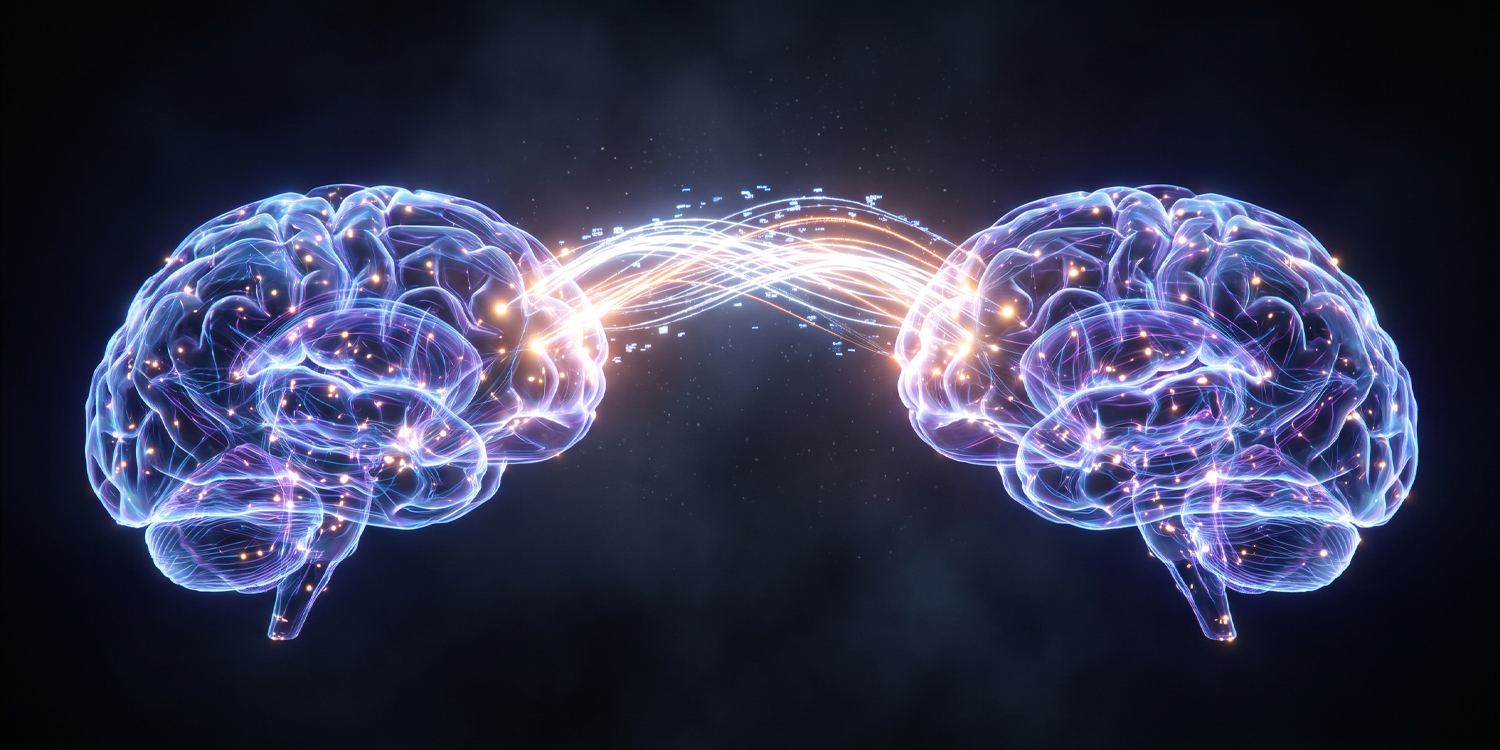
A six-week programme of collaborative drawing has yielded fresh insights into how the brain wires itself to create social bonds across generations. The study, published in PLOS Biology, found that younger and older adults who regularly work together show decreasing neural synchronisation over time, while same-age pairs become more synchronised, even as both groups report growing feelings of closeness.
The findings come as loneliness remains a global health concern and cross-generational community schemes are increasingly used to foster connection. The research suggests that the physical brain changes accompanying these relationships are nuanced and depend on who is interacting with whom.
“As the global population ages, and with social isolation acknowledged as a global health risk, it is critical to understand how social bonds form between people from the same and different generations,” said Ryssa Moffat, a postdoctoral researcher at ETH Zurich’s Social Brain Sciences Lab. “My motivation to study social interactions between seniors and young adults grew from positive experiences getting to know seniors around the world. The idea for this project really gained momentum when I read statistics about the growing proportion of older adults globally and learned about the risks of loneliness and social isolation.”
To track these brain changes in real time, the researchers used functional near-infrared spectroscopy. Participants wore flexible caps embedded with sensors that shine safe light through the scalp to measure blood flow changes in key brain areas, allowing scientists to track interpersonal neural synchrony—the extent to which two people’s brain activity lines up in time as they interact.
Two brain regions received particular attention during the tasks: the temporoparietal junction, located near the ears and involved in processing social information and others’ perspectives, and the inferior frontal gyrus, near the temples and linked to shared attention.
Previous work gradually points to evolving brain-to-brain dynamics as relationships unfold. A 2022 meta-analysis linked cooperative work with synchrony in frontal and temporoparietal regions, while research cited by PsyPost in 2024 showed brain alignment between humans and dogs increasing with familiarity. The study’s authors say this body of work underpins the idea that tracking neural synchrony across repeated sessions is essential to understanding how social bonds develop, including between different generations.
The ETH Zurich team recruited 61 pairs of strangers from the local community, forming 31 intergenerational pairs (one younger adult and one adult aged 69 or older) and 30 same-generation pairs (two younger adults). Across six weeks, pairs met weekly to take part in a creative drawing programme.
Before each session, participants completed surveys measuring loneliness, felt closeness to their drawing partner, and attitudes toward people of different age groups. After the surveys, researchers fitted the sensor caps and the drawing tasks began: three five-minute oil-pastel tasks. The first drawing was done independently behind a visual divider; in the following two, the divider was removed and the duo worked together on a single piece. The session concluded with a short puzzle or game.
“It is very exciting to have mapped how synchrony emerges among younger and older adults for the first time,” Moffat said. “They were able to show how patterns of synchrony change across repeated encounters with information from each encounter, instead of just the first and the last encounter.”
Over the six weeks, loneliness dipped by about 1 per cent per session for both groups, while reported closeness rose by around 4 per cent per session. The researchers noted that these small but robust changes occurred for both same-generation and intergenerational pairs, with intergenerational pairs generally reporting less loneliness and more positive attitudes toward other generations.
When all sessions were analysed together, interpersonal neural synchrony was higher when pairs drew together than when they drew separately. The synchrony was particularly pronounced in the temporoparietal junction and the inferior frontal gyrus.
The results align with earlier work showing that shared activities boost brain synchrony, though this study specifically compared cross-generational pairs across multiple sessions rather than a single interaction.
A striking finding emerged from tracking synchrony over time. For same-generation pairs, synchrony in the right temporoparietal junction increased as weeks progressed. By contrast, intergenerational pairs showed a decrease in synchrony in the same region.
“I was initially surprised to see synchrony levels decrease for intergenerational dyads,” Moffat admitted. “My assumption that we would see increases in synchrony was based on the existing studies comparing strangers, friends, and romantic partners who attend a single session.”
The authors suggest the divergence may reflect how different age pairs integrate social information. “The main takeaway from our study is that the way in which people’s brains synchronize during cooperation depends on who they’re interacting with and the common ground shared by the interacting people,” Moffat explained. As familiarity grows, and predicting each other becomes more fluent, synchrony in certain brain regions may reduce rather than rise.
Links between brain data and self-reported measures emerged as well. Across all pairs, reporting higher social closeness predicted a rise in synchrony between the inferior frontal gyrus and the temporoparietal junction. Pairs with more similar loneliness levels showed greater synchrony in the inferior frontal gyrus when drawing together, suggesting that shared social mindsets influence how easily two people coordinate their attention.
Experts caution that the study’s scope is narrow. The brain scans targeted specific regions, so the findings do not capture activity across the entire brain. The drawing tasks were conducted with limited verbal communication, meaning results might differ if participants spoke during the activity. The study compared two groups only—mixed-age pairs and young adult pairs—not two older adults, leaving open the question of age-related brain changes independent of intergenerational dynamics. A small number of sensors also failed during the experiment, reducing data from the right side of the brain slightly.
Researchers say future work could explore other forms of common ground, such as shared cultural backgrounds or long-running hobbies, and extend the research to larger group settings to better understand how community arts programmes benefit participants physically and socially.
Moffat and colleagues plan to broaden their analysis by integrating the brain data with other collected signals, including motion capture of body movements, performance on collaborative games and puzzles, the actual drawings produced, and participants’ subjective experiences. “Our next steps are to analyse the other signals and to bring them together to understand how social connections form from a holistic perspective,” she said.
The study, “Social interactions between people of same and different generations shape longitudinal changes in interpersonal neural synchrony, loneliness, and social connection,” was authored by Ryssa Moffat, Guillaume Dumas, and Emily S. Cross.
