


Florida voters have approved sweeping property tax cuts that could remove billions of dollars from local government budgets, while California voters rejected a proposed tax on billionaires and backed a ban on future wealth taxes.
The contrasting decisions emerged from the US midterm elections, setting up two sharply different experiments in how states tax wealth and fund public services.
In California, a proposed one-off levy of 5% on the assets of billionaires had appeared likely to pass in polling before the vote. Some wealthy residents established homes elsewhere in anticipation, while Google co-founder Sergey Brin helped fund the campaign against Proposition 40.
The measure was ultimately defeated, with opposition particularly strong among voters in Silicon Valley. Californians also approved Proposition 42, preventing the introduction of wealth taxes in the future. The campaign was funded by Mr Brin and other billionaires.
Florida property tax cuts threaten local budgets
Florida took a different approach, approving Amendment 3 to expand the homestead exemption on residential property. The change will increase the portion of a home’s assessed value shielded from tax from $51,400 to $150,000 in 2027, and then to $250,000 in 2028.
The amendment also reduces the annual assessment increase allowed on rental and commercial properties from 10% to 5%. It does not apply to school-related property taxes, but creates a route towards abolishing other property taxes altogether.
State economists estimate that local authorities will lose almost $5 billion in the first year, rising to nearly $12 billion annually once the exemption is fully introduced.
Florida has no state income tax and relies heavily on property taxes, while California has depended more on income tax revenue, particularly from high earners, since it restricted property tax increases in 1978.
The scale of the changes has prompted local authorities in Florida to start preparing for reduced budgets before the tax cuts take effect. Police, fire services, paramedics, roads and other infrastructure could all face pressure.
In Deltona, city manager Doc Dougherty told residents that almost every city event had been cancelled, apart from two self-supporting 5K runs. The city also withdrew vehicle orders, ended construction contracts and cancelled professional services as it sought to adjust to the result of the vote.
The decision to cancel Deltona’s annual Christmas parade was later reversed after public opposition. Community organisations offered help to preserve the event, although the city manager said the underlying financial pressures remained.
“I am overwhelmed with the outpouring of support from the community,” Mr Dougherty said.
Manatee County commissioner George Kruse has estimated that the county will receive $63 million less in tax revenue next year and $113 million less the year after. He said the amendment represented a “permanent, structural shift in how government functions”.
Mr Kruse warned that community events such as parades, films in the park and holiday celebrations could be at risk as local authorities sought to balance their budgets.
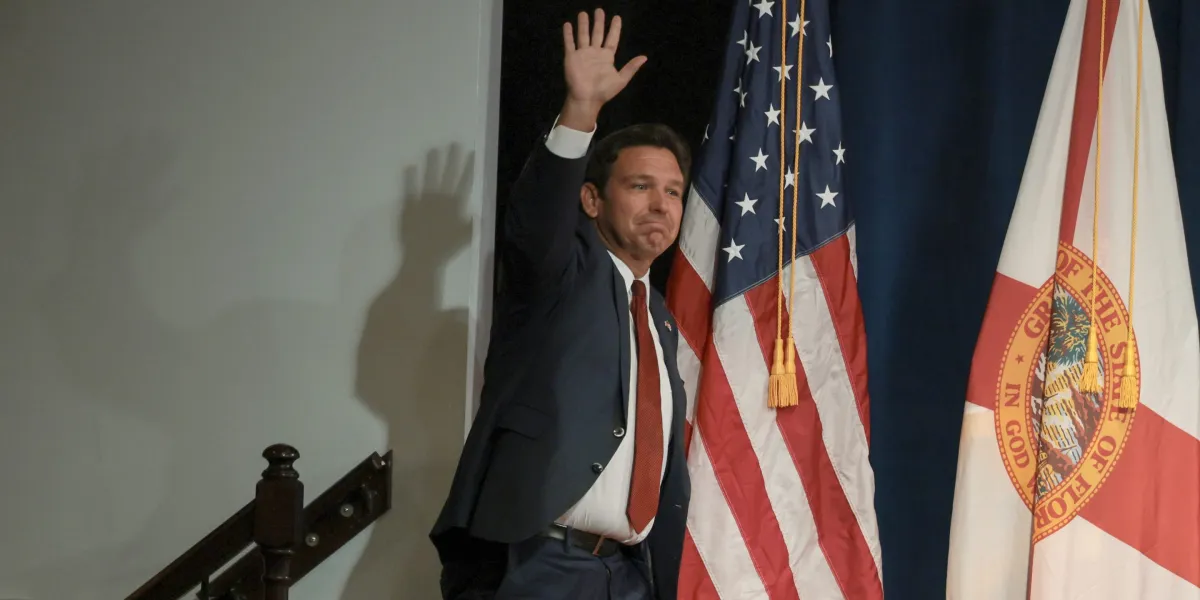
Ron DeSantis, Florida’s outgoing governor, backed Amendment 3 and has dismissed warnings about its impact as “fearmongering”. He has suggested that state grants could help local agencies cover shortfalls and called for lawmakers to prevent new taxes and fees being introduced to replace lost property tax income.
Mr DeSantis also called for a special legislative session to clarify how the amendment will operate. State House leaders have said one is unnecessary, with House Speaker Sam Garrison instead requiring every House member to attend classes on the measure on December 1 and 2.
Mr Garrison said lawmakers needed to be realistic about the consequences of cutting local revenue. “As someone who never met a tax he didn’t want to cut, let me be clear: the laws of economics remain undefeated, and there is still no such thing as a free lunch,” he said in a speech after becoming speaker.
“It is our responsibility to ensure that we do not replace one broken system of local taxation with another, and that we deliver on the promise to support critical local services in our entire state,” he added.
Florida’s response to the property tax cuts will now be closely watched as councils and counties determine which services they can maintain with less revenue. In Deltona, the effort to save one local tradition showed that community support may help preserve some activities, even as the wider budget challenge remains.
