


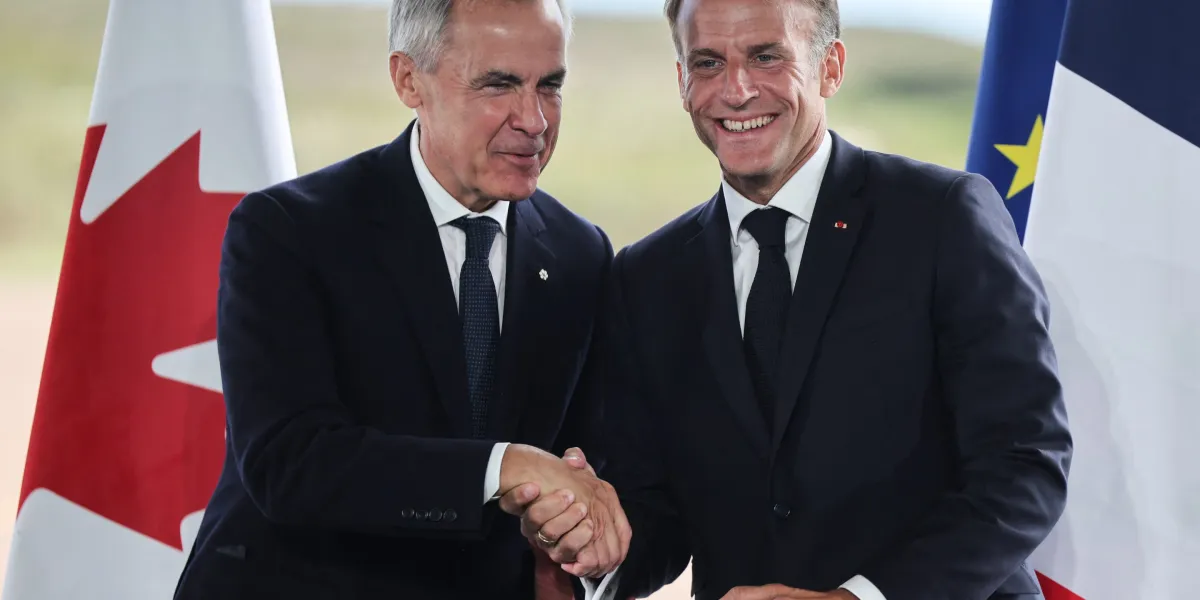
Canada-France cooperation is set to deepen across defence, energy, space and business after Canadian Prime Minister Mark Carney and French President Emmanuel Macron agreed to expand strategic ties between the two countries.
The leaders’ talks on Sunday included plans for their space agencies and defence ministries to develop and share infrastructure, including launch systems and ground-based reception facilities.
They also agreed to increase collaboration on telecommunications, climate resilience and economic development, while identifying aerospace, critical minerals and advanced technologies as areas for closer partnership.
The discussions took place as Canada seeks to reduce its dependence on the United States and build stronger economic and security relationships with Europe.
Mr Carney has embraced the possibility of Canada becoming the European Union’s first associate member, arguing that closer links with Europe could make the country less vulnerable to economic pressure from any single state.
“Canada and Europe will build an alliance for the future that will strengthen our collective resilience so we can live our lives as we choose based on the values that we share,” Mr Carney said.
Mr Macron welcomed Mr Carney at the airport in Saint-Pierre-et-Miquelon, the French territory off Newfoundland’s coast. The territory is home to about 5,800 people.
“This is an important moment,” Mr Macron said on Saturday after arriving there, adding that the talks would help “strengthen our bilateral economic ties and defense relationship”.
Energy supplies were also central to the meeting, as the war in Iran disrupts global energy markets and raises fears of higher prices for fuel and other essentials.
Mr Macron said Canada’s critical minerals, rare earths, oil and natural gas resources could help France secure additional supplies for Europe’s Atlantic coast.
“What we want to do is conclude agreements to secure more liquefied natural gas that can be shipped to Europe’s Atlantic coast,” he said.
The meeting followed an announcement by US President Donald Trump of a deal on Greenland that would expand the US military presence there while keeping the territory under Danish control.
The agreement came after months of threats by Mr Trump to seize the semi-autonomous territory, which is part of a Nato ally. Mr Macron welcomed the deal, saying: “Danish sovereignty is being respected, international law is being respected. Anything that helps ease tensions is a good thing.”
