


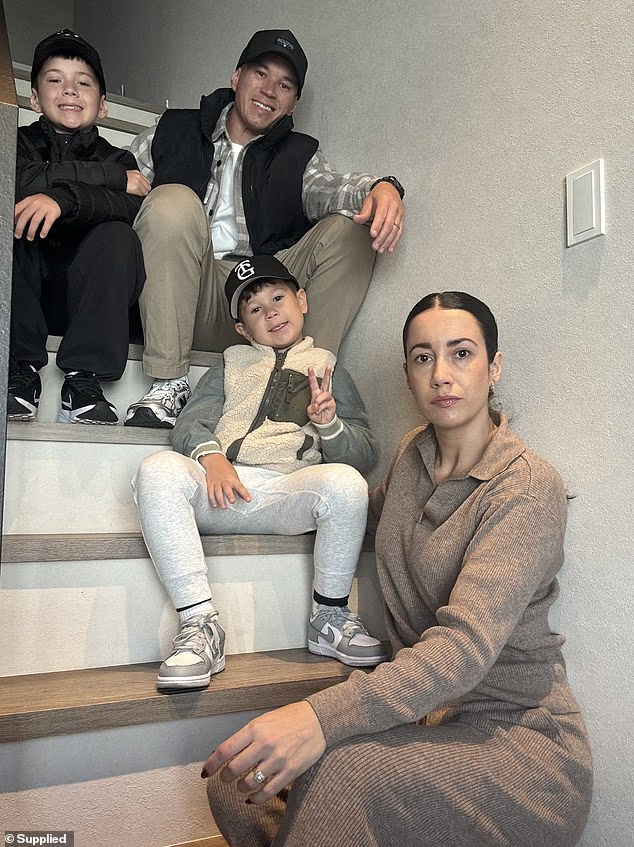
An Australian family is planning to leave the Gold Coast for Italy in a bid to escape rising living costs and become mortgage-free.
Krysti-Glory Gallo and her husband, Ricardo Parata, intend to sell their home later this year and move with their two children, aged seven and 11, to a three-bedroom terrace in Lucca, Tuscany.
The couple bought their Gold Coast property in 2023 for $525,000 and expect it to sell for about $1 million. They estimate they will be left with approximately $450,000 in equity after clearing the remaining $600,000 mortgage.
That money will be used to buy the €205,000 property in Italy, which they plan to move into in February 2027.
Ms Gallo, who works in styling and design, said the decision had become clear after her salary was no longer enough to cover the mortgage and the family’s day-to-day expenses.
“We realised moving overseas was a better option than staying in Australia when my wage no longer covered our mortgage,” she said.
The couple calculated that their existing mortgage would cost about $1.295 million if repaid over its full 30-year term. Ms Gallo said selling the house would allow them to transfer their equity into a home they owned outright.
“We now take that equity to another country (Italy), have zero mortgage, and have 100 per cent equity from day one,” she said.
Family expects lower cost of living in Lucca
The family currently has three income streams between them, earning about $150,000 to $160,000 a year. Despite that, they spend at least $120,000 annually.
Mr Parata, who works in education, is holding down two jobs, one full-time and another involving nights, weekends and travel, according to his wife.
“Ricardo is working two jobs, one full time and the other means nights, weekends and travel, yet we’re still checking our bank accounts before we buy the necessities,” Ms Gallo said.
She estimated the family could live on about €45,000 a year in Italy once they owned their home.
In videos documenting the planned relocation, Mr Parata said the move was intended to improve the family’s quality of life rather than increase their earnings.
“We aren’t replacing our lifestyle for income reasons, we’re replacing our lifestyle so we can actually enjoy our life,” he said.
“Italian incomes are a lot less than Australian incomes, but when cost of living is a lot less, you can do more with your income.”
The house in Lucca is similar in size to the family’s Gold Coast townhouse, with three bedrooms and two bathrooms across three floors. However, its 30-square-metre garden gives the children more outdoor space than their current property.
The Italian house has already undergone work to its roof, plumbing, electrics and heating. Ms Gallo said the family planned to make further changes to suit their taste, estimating that the completed renovations would have cost about €70,000 if they had carried them out themselves.
The property is one suburb away from the area the couple originally preferred, but is close to shops, other amenities and a local school. Their youngest child will attend a school 200 metres from the house, while the other children will still be able to walk there.
“It had everything we needed and it is ready to live in right now,” Ms Gallo said.
A new life for the family in Italy
Ms Gallo said the family hoped their move would give them more time together, after finding that life in Australia had become increasingly rushed.
“At the moment, no matter what we have done to simplify our life, it just never seems like we have a minute spare to breathe and our time together is rushed,” she said.
She also said the family expected to spend some weekends travelling to other European countries, with flights to destinations including the UK, Germany and Greece costing less than filling Mr Parata’s utility vehicle with fuel.
The children were initially unsure about leaving Australia, but Ms Gallo said they had begun to understand the reasons for the move and its potential benefits.
She and Mr Parata are both Italian, and their children have dual citizenship. Ms Gallo said living in Italy would allow them to experience more of their heritage and eventually become bilingual.
