


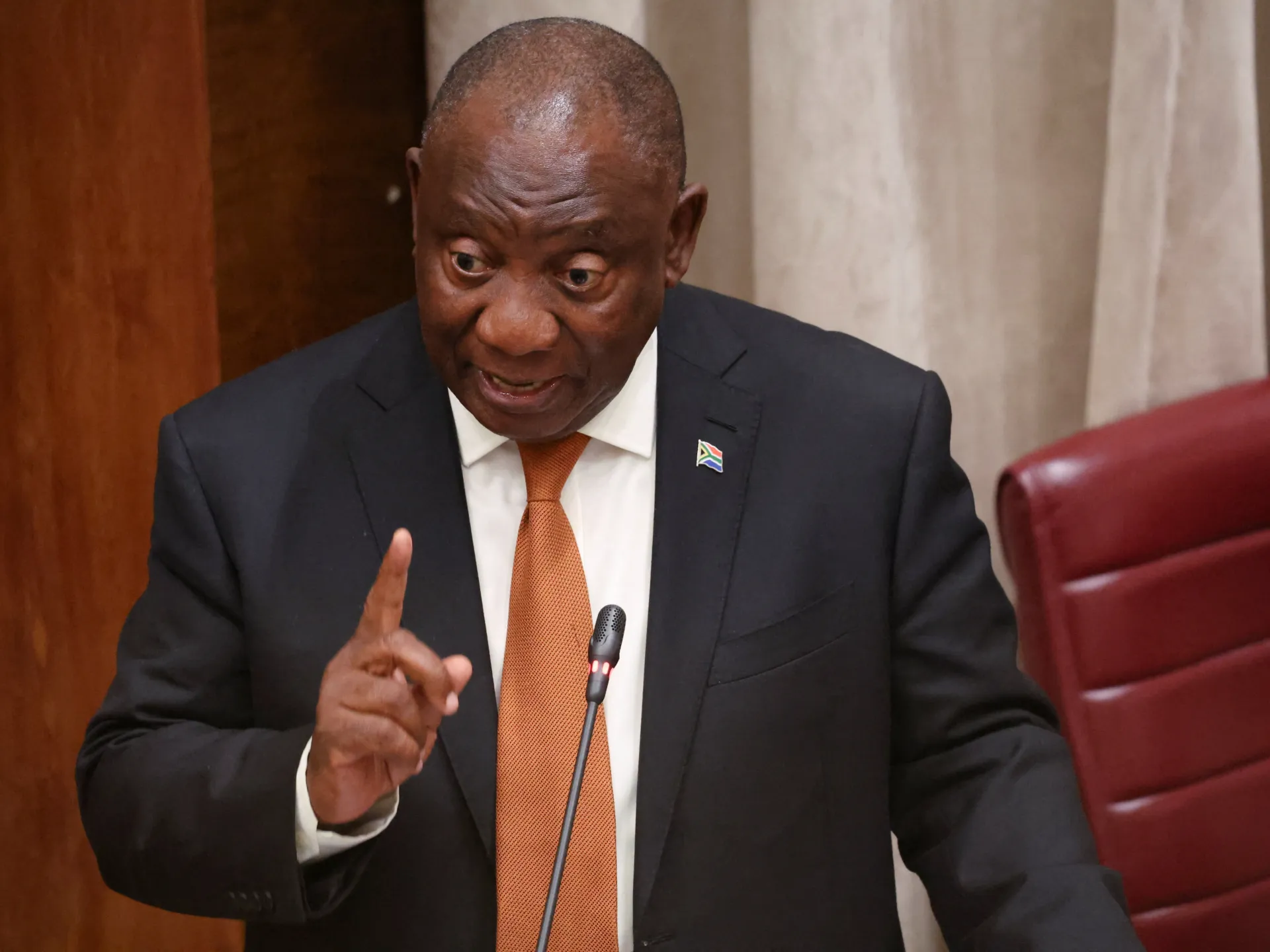
South African President Cyril Ramaphosa has secured a court ruling overturning an independent parliamentary panel’s findings that had exposed him to possible impeachment over the “Farmgate” scandal.
The Western Cape High Court declared the panel’s 2022 report unlawful, finding that it had wrongly assessed allegations surrounding the theft of cash from a sofa at Ramaphosa’s Phala Phala game farm in 2020.
Judge Nolwazi Mabindla-Boqwana, delivering the unanimous judgment, said the panel had “fundamentally misconstrued its functions”.
“The panel went beyond its lawful remit, asked itself wrong questions and made several material errors of law,” she said.
The decision gives Mr Ramaphosa a political reprieve by removing a finding that had helped pave the way for impeachment proceedings at a difficult time for the president and his African National Congress party.
Mr Ramaphosa’s office said he had noted the judgment and would study it. It said that, in seeking a judicial review, the president had exercised a constitutional right and had acted in accordance with his respect for the rule of law and judicial independence.
Farmgate allegations and impeachment proceedings
The controversy began after a former intelligence chief reported to police that Mr Ramaphosa had allegedly tried to cover up the theft of millions of US dollars from his farm. The amount was initially said to be about $4 million.
Mr Ramaphosa has consistently denied wrongdoing. He said the $580,000 stolen from the property was proceeds from the sale of buffaloes, although the presence of so much cash hidden in furniture raised questions.
The 2022 panel report said the president had failed to report the theft through the proper channels, breached constitutional rules concerning paid work from his farm and instructed presidential security officers to carry out police functions.
The African Transformation Movement, which supports Mr Ramaphosa’s impeachment, criticised the High Court ruling.
The Constitutional Court revived impeachment proceedings in May after ruling that a parliamentary vote to halt the process in 2022 was invalid and that Parliament should establish an impeachment inquiry. The Western Cape High Court temporarily suspended that inquiry in July while it considered Mr Ramaphosa’s challenge.
The affair has been an embarrassment for a president who came to power promising to tackle corruption and improve the image of the former liberation movement.
The ANC won about 31 per cent of the vote in this month’s local elections, its worst result in such elections. The party lost its national parliamentary majority in 2024 for the first time since the end of apartheid and the beginning of democracy.
Mr Ramaphosa, 74, has been head of state since 2018. His second presidential term is due to end in 2029, while the ANC is expected to elect its next leader next year when he steps down after two five-year terms as party leader.
