


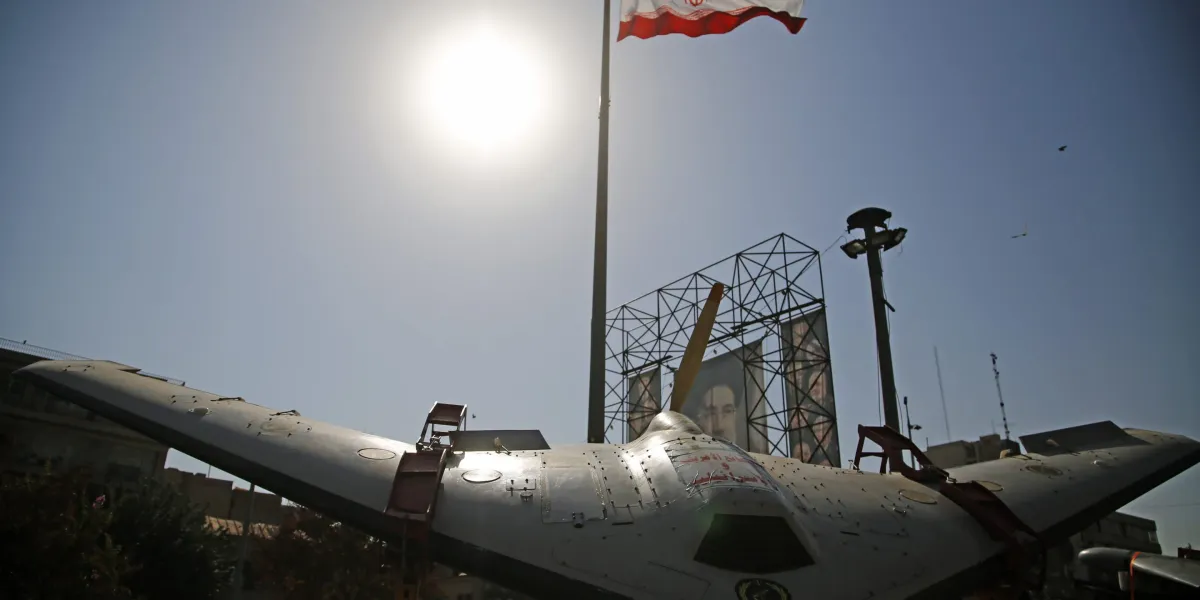
Iran used SpaceX’s Starlink satellite internet service without authorisation to direct its forces and monitor one-way drone attacks during its war with the United States, according to a classified Pentagon report.
The report, issued during the summer and provided to Defence Secretary Pete Hegseth, said Starlink became an alternative communications system after US bombardment damaged traditional networks, sources familiar with the findings said.
The Pentagon said it was unaware of the report. “The Department is not aware of the report to OSW pertaining to this subject,” Kingsley Wilson, the Pentagon press secretary, said in a statement, referring to the office of the secretary of war.
SpaceX concluded in early March that Iran had exploited Starlink for military purposes, a development that angered Elon Musk, the company’s chief executive.
The assessment followed an Iranian drone attack on a US military base in Port Shuaiba, Kuwait, on March 1, in which six US troops were killed. Within hours, SpaceX introduced identity-verification requirements for aircraft travelling at more than 100mph, according to sources familiar with the matter.
Weeks later, the company tightened controls on its sales network to reduce the risk of terminals reaching unauthorised users. It also suspended a resale scheme that had allowed approved resellers to distribute terminals to sub-resellers.
SpaceX did not immediately respond to a request for comment.
Terminals in Iran could be deactivated, but sources said it was almost impossible to prevent publicly available Starlink equipment from being used by US adversaries.
At the same time, dissidents and ordinary Iranians have used the service to bypass government internet controls. Before the war began, SpaceX offered free Starlink access to Iranians who had terminals after the regime shut down the country’s internet during a deadly crackdown on protesters in January.
Starshield dispute over US attack drone
Musk also became angry in early March over the Pentagon’s use of Starshield, the military version of Starlink, on a low-cost US attack drone known as LUCAS.
SpaceX’s subscription was intended for land-based use rather than aerial systems. Company executives argued that the military was paying about $5,000 per terminal for a service worth nearly $25,000, according to sources.
The Pentagon responded that the higher monthly charge was intended for aircraft, not one-way attack drones.
The dispute comes as satellite communications and unmanned aircraft have become increasingly important in modern conflicts. SpaceX has also been drawn into the war in Ukraine, where Starlink has been used by both sides of the wider communications battle.
In February, SpaceX cut off Starlink access for Russian troops by shutting down terminals that were not on a whitelist of authorised users. Russian drones subsequently faced severe limitations, allowing Ukrainian forces to inflict heavy losses and retake some territory.
Ukraine has since complained that its Starlink service was sharply throttled, slowing links with drones and reducing their effectiveness. On two occasions in the autumn, Ukrainian forces reported speed limits of 100mph on their terminals, making attack drones easier to intercept and reducing the ability to stop incoming Russian drones.
Neither SpaceX nor the US Government has accepted responsibility for the reported restrictions. Musk has said Starlink satellites are not intended for deadly drone strikes.
“What you see is a gradual loss of efficiency. Fewer opportunities. More work for the same result,” a Ukrainian drone pilot said.
