


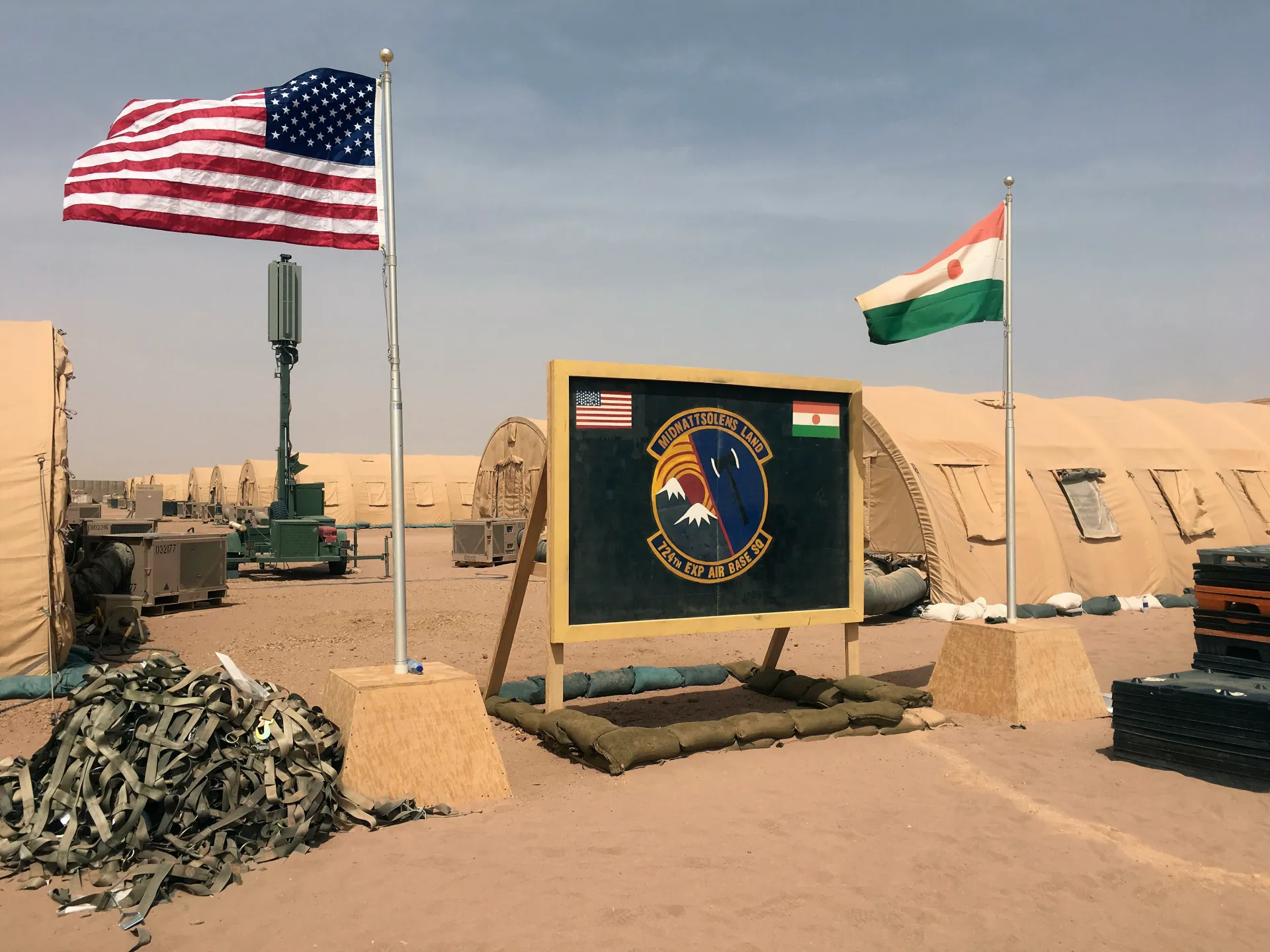
US diplomatic outreach to the Sahel has begun less than two years after Washington withdrew its troops from Niger, as the region’s military-led governments deepen ties with Russia and pursue economic links with China.
Nick Checker, a senior US State Department official, visited Mali, Burkina Faso and Niger earlier this year in a sign that Washington is seeking to reopen relations with governments that have become increasingly hostile towards Western powers after a series of coups.
The effort marks a change in approach following the completion of the US military withdrawal from Niger in September 2024. The departure ended an American security presence lasting about a decade, including operations from Air Base 201, a drone facility near the northern city of Agadez.
The Sahel, a semi-arid belt south of the Sahara, has become a focus of international competition amid continuing armed violence, political upheaval and the retreat of traditional Western influence.
Russia fills the security gap
Mali experienced coups in 2020 and 2021, followed by Burkina Faso in 2022 and Niger in 2023. The takeovers came as insecurity worsened and public frustration grew over Western military interventions, particularly those associated with France, the former colonial power in all three countries.
Armed groups linked to al-Qaeda and ISIL continued to expand across parts of the region despite years of international counterterrorism operations.
After Niger’s military government overthrew elected president Mohamed Bazoum in July 2023, it ended its military cooperation agreement with Washington. The United States subsequently withdrew about 1,000 troops, having already suspended security assistance following the coup.
Russia moved to exploit the deteriorating relationship between the Sahel governments and their Western partners. It offered military assistance and political backing first through the Wagner Group and later through Africa Corps, which operates under Russia’s Ministry of Defence.
Mohamed Mouttii, a political researcher at the Arab Center for Research, said Moscow’s expanding role was the product of a wider political shift rather than simply a military advance.
“Russia’s growing influence should be understood not simply as a military expansion, but as the result of a political opening created by the deterioration of relations between Sahelian governments and their traditional Western partners,” he said.
Moscow has presented itself as an alternative to Western powers by stressing national sovereignty and providing security support without similar demands for democratic reform. Yet continuing attacks by armed groups have prompted questions over how effective the new security partnerships have been.
Mali, Burkina Faso and Niger formed the Alliance of Sahel States in September 2023. The mutual defence arrangement became a confederation in July 2024, and the three countries later left the Economic Community of West African States, the region’s main political and economic bloc.
Minerals add to US-China rivalry
The contest for influence extends beyond security. Niger has significant uranium resources, while gold is a major industry in Mali and Burkina Faso. Lithium deposits have also increased the region’s importance as demand grows for minerals used in batteries and advanced technologies.
China has built a substantial economic presence in Africa over the past two decades, investing in infrastructure, telecommunications, mining and energy. Its influence also reaches into the processing and manufacturing stages of global mineral supply chains.
For African governments, however, the key issue is whether outside investment creates lasting domestic benefits. Ahlam Qafas, an economics professor in Kenitra, Morocco, said agreements should be judged by their contribution to industrialisation, employment and economic diversification.
She said mineral extraction would offer limited development if it did not strengthen local production or allow African countries to keep a meaningful share of the proceeds.
That leaves Washington facing a challenge that goes beyond securing access to resources. Any attempt to compete with Beijing will also be measured against the scale of US investment and its impact on local economies.
Democracy and engagement
The administration of US president Donald Trump has indicated that it is prepared to deal directly with the Sahel’s military governments, despite longstanding American concerns about constitutional rule and democratic governance.
Under Joe Biden, Washington restricted assistance to Niger after the 2023 coup and called for a return to elected government. The renewed engagement raises questions over whether the US will continue to press for political reform while seeking security and commercial cooperation.
Washington’s position has also been complicated by the restructuring of US foreign assistance and the dismantling of the US Agency for International Development. For decades, American development programmes, educational exchanges and institutional partnerships had accompanied its diplomatic and military relationships in Africa.
The reduction in aid has therefore raised questions about what the US can offer beyond counterterrorism cooperation and commercial agreements to countries facing poverty, unemployment and insecurity.
Mary Joyce Takali, co-founder and executive director of Malkia Africa Network, said the success of the renewed outreach would depend on whether Washington could address African governments’ own priorities.
“Washington’s renewed engagement will depend on whether it can offer consistent partnerships that respond to African governments’ political and economic priorities, rather than approaching the continent primarily through the prism of great-power competition,” she said.
The authorities in Mali, Burkina Faso and Niger have shown no indication that closer security ties with Russia prevent them from working with China economically or maintaining diplomatic contact with the United States. Their approach has instead been to diversify external relationships and seek greater control over the terms of engagement.
The competition also reaches beyond the Sahel into North Africa. Morocco remains a longstanding US security partner, Algeria combines close military ties with Russia with diplomatic engagement with Washington, and Russia’s presence in eastern Libya adds a further dimension to the contest between the Sahel and the Mediterranean.
