


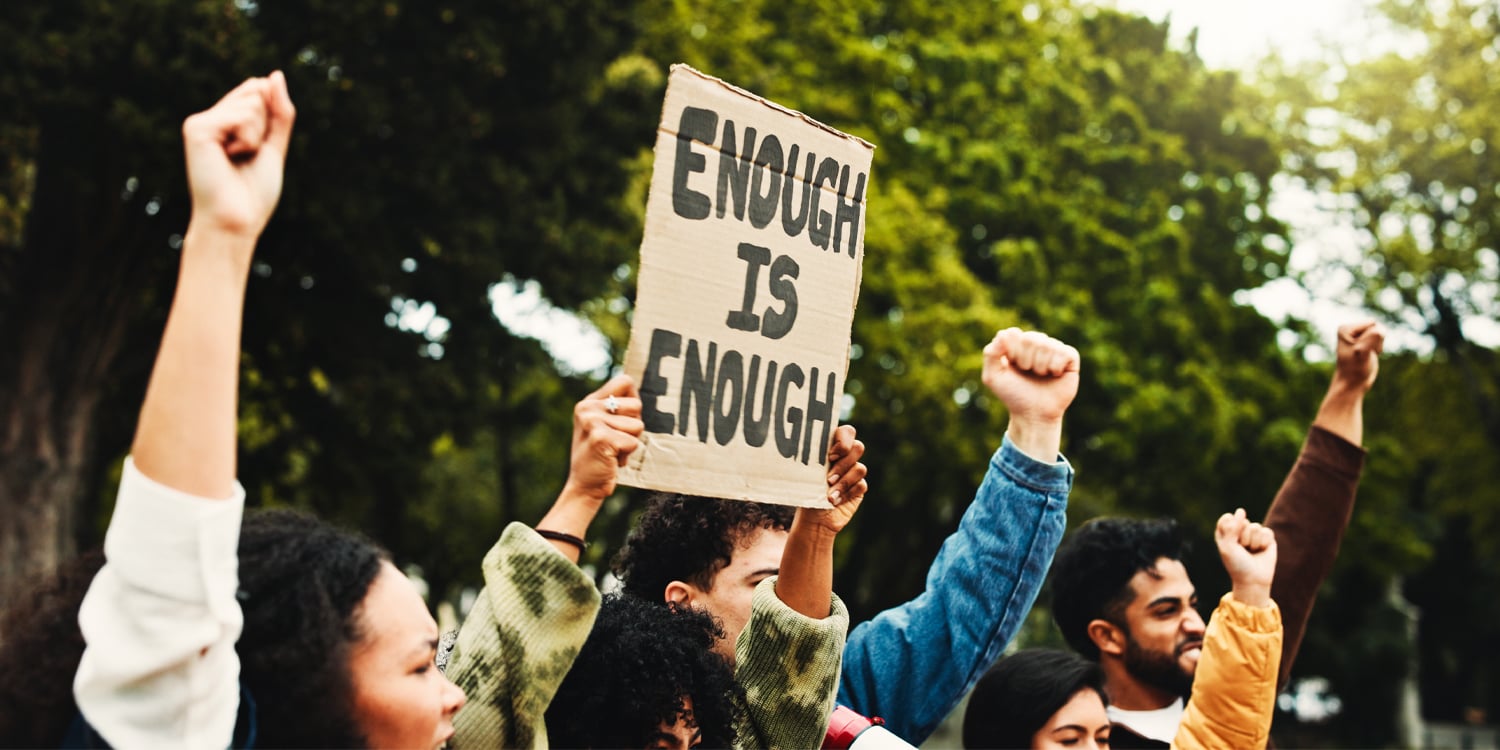
A sweeping meta-analysis spanning six decades of protest research concludes that people who join demonstrations are driven more by social connections and political interest than by personal grievances or distrust of government. The study, published in Science Advances, identifies key factors behind micromobilisation and pinpoints who is most likely to take to the streets. The work is led by Shelley Boulianne of Mount Royal University in Canada and Jennifer Earl of the University of Delaware, with collaborators from Lund University.
The researchers focused on physical marches and demonstrations, ensuring a like-for-like comparison across actions rather than mixing in online petitions or postings. They conducted a meta-analysis of 181 surveys published between 1965 and 2023, drawing on data from hundreds of thousands of respondents in Western democracies. In total, they analysed more than 1,800 statistical estimates to map the links between personal characteristics and protest participation.
The central finding is that general political interest and ideological positioning are among the strongest predictors of turnout. People who already pay attention to politics are significantly more likely to attend protests, and left-leaning individuals likewise show higher participation rates in the reviewed data.
Beyond individual beliefs, social and organisational connections are major drivers. Belonging to a voluntary association, such as a labour union or a community group, substantially increases the likelihood of marching. The authors suggest these networks either provide direct invitations to protest or connect individuals to politically engaged social circles, creating a straightforward pathway to activism.
Digital and social media use also emerges as a consistent predictor of mobilisation. Regular users of digital platforms are more likely to protest, the researchers say, because social media facilitates the distribution of information and sustains social networks. By contrast, reliance on traditional media such as television or print did not reliably predict protest behavior.
Demographic factors also shape who protests. The analysis finds that younger people, those with higher levels of education, and urban dwellers are more likely to participate. The authors interpret these patterns through concepts such as biographical availability—having the time and freedom to participate—and the greater supply of protest opportunities in cities, which reduces the costs of joining a march.
Scholars, media commentators and politicians often assume that grievances drive protest, but the study’s findings challenge that narrative. The researchers report weak or inconsistent support for the idea that personal grievances predict march participation. Low income, unemployment, dissatisfaction with personal finances, or distrust of government did not consistently forecast who would march, with many surveys showing non-significant results for these variables.
“I think many people get stuck on the issues – or what social movement scholars would call the grievances – because if you ask people why they participated, that is what they will say,” Earl explained. “But, if you compare people who did participate and people who did not, a lot of people who didn’t participate share the same concerns or grievances.”
“This makes grievances a weak predictor of action, which … is hard for a lot of people to swallow because they think it is either a precondition for participation (empirically, it’s not) or enough to generate support (empirically, it’s not),” she added.
“Instead, the consistent predictors are political interest and social connections,” Boulianne said. “If one thinks of these people as groups of engaged citizens who want a voice, then the reaction to these protests might differ.”
“For example, the police might view protesters as community members demonstrating their democratic rights, rather than disrupters,” she continued. “Politicians might view these protesters as committed citizens who show up on election day, despite the time and effort required to vote. The media might view these protesters as well-connected members of the community, rather than loners or deviants.”
There are limitations to the study. The meta-analysis relies largely on survey data from Western countries, and the dynamics of protest can differ in places with harsher legal or physical risks or in non-democratic contexts. The studies reviewed are observational, making it difficult to untangle causal relationships between variables and protest participation.
The authors emphasise that while general dissatisfaction does not reliably predict protest, emotions are not inconsequential. They suggest future research could explore how sudden, shared grievances might act as catalysts for those already embedded in social networks, shifting focus from personal deprivation to collective concern. They also note that future surveys should explicitly ask whether participants received a direct invitation to protest, a factor that smaller studies have found powerful but which is rarely measured in large-scale surveys.
“If you want people to participate, specifically invite them to – it’s simple but very powerful,” Earl advised. “Don’t expect that convincing someone of your goals, concerns or arguments is the most important thing – some people participate without knowing much about the protest (especially when they are invited) and many who agree with you on the issues won’t translate that agreement into action.”
The authors call for methodological updates to capture these dynamics more accurately. “The divergence in how much some survey questions are asked … but how infrequently other questions are asked even though they have elicited really strong evidence when asked,” Earl noted.
Looking ahead, Boulianne is expanding the framework with a global perspective. She is writing a book that compares the study’s findings to the World Values Survey and her 2025 four-country survey data, aiming to refine how researchers frame questions on protest participation. “We really hope that future survey research looks at this article and improves and changes the questions that are asked in response to the findings so that research on the topic continues to advance,” Earl concluded.
The study, Most people who agree with you won’t protest predictors of marches and demonstrations from six decades of research, is authored by Shelley Boulianne and Jennifer Earl.
