


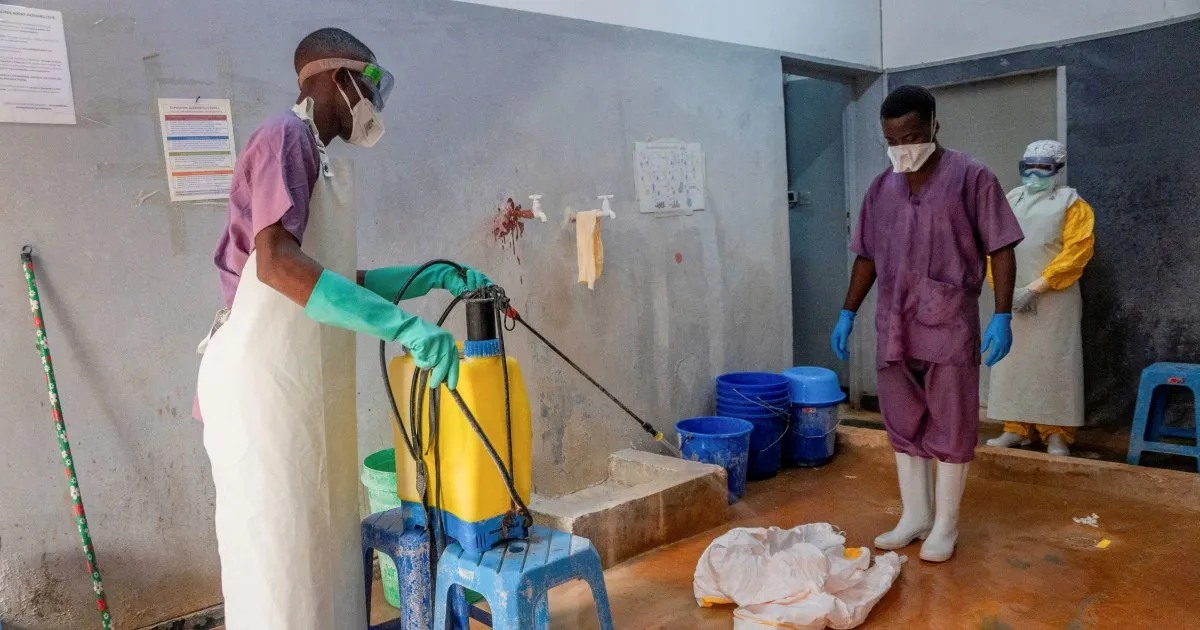
Ebola deaths in the Democratic Republic of the Congo have surpassed 6,000, with government figures recording 6,025 fatalities and 12,254 confirmed infections across eight provinces.
The outbreak, declared on 15 May, is the country’s deadliest on record and the second-deadliest globally, behind the 2014-2016 epidemic in Guinea, Liberia and Sierra Leone which killed more than 11,000 people.
Most cases have been reported in Ituri and North Kivu, eastern provinces where armed groups have been fighting for decades. Insecurity has hampered the delivery of medical supplies and efforts to identify infections in some communities.
More than 60 per cent of deaths occurred outside treatment centres, according to figures released earlier this month by the Africa Centres for Disease Control and Prevention.
Nearly half of confirmed infections have proved fatal, while many patients have either sought medical help too late or avoided healthcare facilities altogether.
The death toll could be considerably higher, according to an analysis of satellite imagery from two of the worst-affected areas reported by Reuters.
Cases have also been detected in Uganda, Kenya and Nigeria. Africa CDC director-general Jean Kaseya has described the outbreak as the most geographically widespread in the continent’s history.
Vaccine trials planned as outbreak spreads
The outbreak has been caused by the Bundibugyo strain of Ebola, for which there is no approved vaccine or specific treatment. Several candidate vaccines are being developed.
Uganda, which declared its own Ebola outbreak over in July, said on Friday that it had begun trials of an experimental vaccine made by the US pharmaceutical company Moderna.
A second candidate, developed by the University of Oxford and the Serum Institute of India, is due to enter clinical trials in the Democratic Republic of the Congo on Monday.
Gavi, the international vaccine alliance, has committed to buying 1.5 million doses of the Oxford and Serum Institute vaccine. The doses could be made available if trials are successful and health authorities approve its use.
