


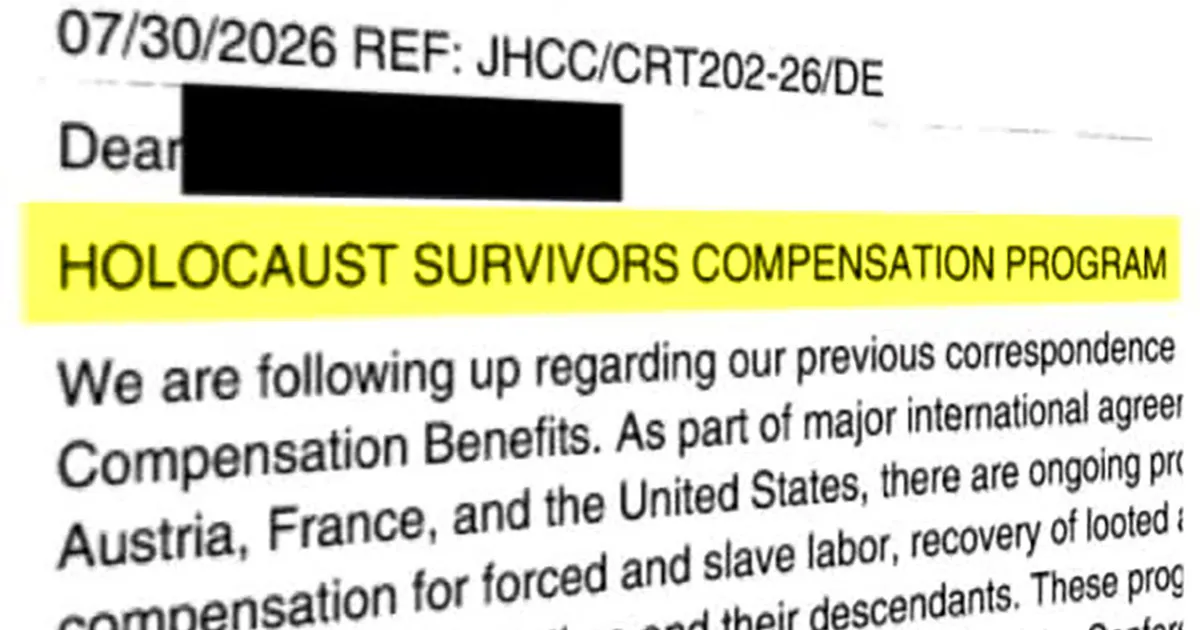
Families of Holocaust survivors in Wisconsin are being warned about a letter scam offering compensation allegedly backed by the German government.
The letter claims to come from an organisation called the Jewish Holocaust Claims Center and tells recipients that they may be entitled to money from a Holocaust survivors’ compensation programme.
One Wisconsin family received a letter containing accurate details about a relative’s connection to a Holocaust survivor, according to Michelle Reinen, administrator of the state’s Division of Trade and Consumer Protection.
“They had matching information about this person being a descendant and who the family member was. It mentioned the German government,” Ms Reinen said.
The family initially believed the approach might be genuine, but checks revealed that the organisation named in the letter did not appear to exist. Respondents are then sent forms requesting personal information, officials said.
Similar letters have been reported in other US states, including New York, where officials said they were unable to verify the identity, services or legitimacy of the Jewish Holocaust Claims Center. The organisation’s website was subsequently reported to its hosting provider and taken down.
Wisconsin officials say the letters are particularly concerning because they use details about individual families to appear credible. The fact that a message includes accurate personal or genealogical information does not prove that it is genuine.
There are legitimate services that help Holocaust survivors and their heirs pursue restitution claims. New York’s Holocaust Claims Processing Office, for example, provides assistance free of charge and does not take a percentage of any assets recovered. ([dfs.ny.gov](https://www.dfs.ny.gov/consumers/holocaust_claims?utm_source=openai))
Anyone receiving an unexpected offer of compensation is advised not to use the contact details provided in the letter or send personal documents in response. Instead, they should independently verify the organisation through a government agency or established consumer protection service.
“When the consumer went to the website to try and look at this organization, there was nothing there,” Ms Reinen said.
Wisconsin’s Department of Agriculture, Trade and Consumer Protection advises consumers to report suspected scams through its Consumer Protection hotline or website, and to be particularly cautious about unsolicited correspondence promising free money.
