


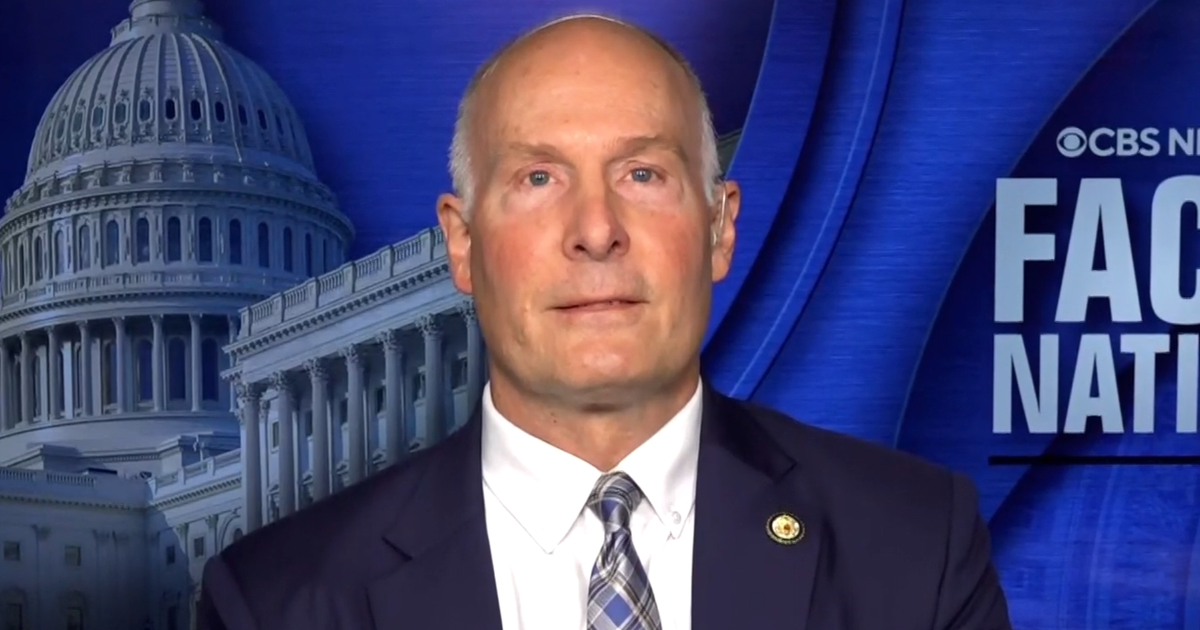
US Congressman John Moolenaar has accused Nvidia and its chief Jensen Huang of creating a serious national security risk through links to a Chinese national, as lawmakers prepare to question the company behind closed doors.
Mr Moolenaar, the Republican chair of the House Select Committee on the Chinese Communist Party, said Mr Huang and Nvidia representatives had agreed to meet with members of three congressional committees. The discussions are expected to examine whether sensitive information was accessed and whether an alleged Chinese spy influenced Nvidia’s approach to artificial intelligence and export controls.
The meeting is expected to take place in the coming weeks, with 1 December proposed, although no date has been finalised. Mr Moolenaar said a subpoena would therefore not be necessary.
He said the inquiry would focus partly on Alice Huang, whom he described as a Chinese national who had established a company able to access more than $12 billion-worth of high-end computer chips. Investigators are examining whether the chips were illegally smuggled into China, he said.
Mr Moolenaar argued that Nvidia should have treated the relationship as a national security concern, saying Chinese nationals could be pressured by the Chinese Communist Party to comply with intelligence directives.
He also questioned why the company Megaspeed, which Alice Huang was running, had not been placed on the US Commerce Department’s entity list. He said the company had partnered with Alibaba, which he described as a Chinese military company designated by the Department of War.
The congressman was also asked why President Donald Trump had continued to give Jensen Huang access, including taking him aboard Air Force One and bringing him to China, despite concerns raised by the national security adviser.
Mr Moolenaar said he believed the president had taken Mr Huang to China because he thought it would assist negotiations. However, he said the more important questions concerned whether government policy had been influenced and why questionable practices had not been properly investigated or enforced.
Congressman calls for tighter chip controls
Mr Moolenaar stopped short of saying whether Commerce Secretary Howard Lutnick should remain in his post, leaving that decision to the president. But he said Mr Lutnick and the wider Commerce Department had questions to answer over the handling of export controls.
He said Congress should use the forthcoming National Defence Authorisation Act to strengthen and codify controls on advanced technology. Mr Moolenaar argued that legislation was needed to provide certainty for businesses and ensure that safeguards continued between administrations.
The Republican said restrictions should distinguish between different types of computer chips. Some products did not pose a national security threat, he said, while the most advanced technologies had to be protected from reaching China’s military-industrial complex.
He also called for checks on where chips were sent, safeguards against remote access and smuggling, and guarantees that American companies received first access to critical technology.
Mr Moolenaar said the issue had generated growing bipartisan concern in Congress, framing the contest with China as involving national security, economic and technological power, as well as human rights.
He made the comments as President Trump prepared to travel to Asia, where he is expected to meet Chinese President Xi Jinping and Russian President Vladimir Putin to discuss reducing nuclear weapons. Mr Moolenaar said such talks were important, although he did not expect a three-way nuclear agreement to be reached.
