


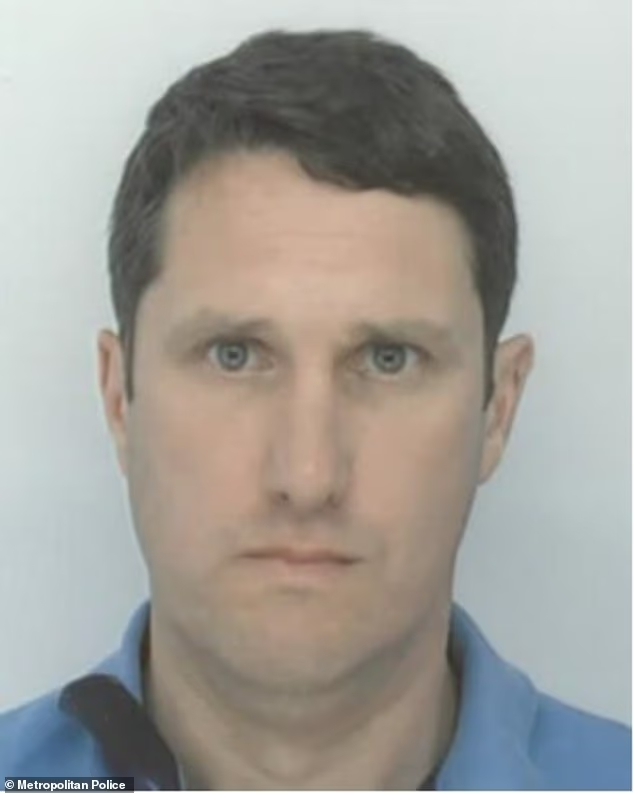
Four men have been jailed for more than 70 years after police uncovered a plan to smuggle 600kg of cocaine into Britain concealed in frozen fish shipments from South America.
The proposed consignment, estimated to be worth more than £20 million, was due to enter the country through a legitimate fish business at London’s Billingsgate Market. The scheme was never completed.
Detectives discovered the plot by analysing encrypted EncroChat messages shared with police through the National Crime Agency. The gang discussed payments, shipping documents, logistics and contacts in Ecuador who were allegedly responsible for sourcing the cocaine.
The messages also revealed plans involving cocaine, ketamine, cash and cryptocurrency, alongside attempts to use legitimate businesses to move drugs and conceal criminal profits.
Four men jailed over organised drug operation
Samuel Tokeley, 57, was sentenced to 22 years in prison after pleading guilty at Woolwich Crown Court to conspiracy to import Class A drugs.
Nicholas Shilling, 63, of Dubai, also received a 22-year sentence. Scott Richards, 51, was jailed for 14 and a half years, while Scott Unwin, 52, was sentenced to 13 years.
Richards, Unwin and Shilling were convicted by a jury following a trial which concluded in May.
Police identified Tokeley as the gang’s leader, saying he coordinated the wholesale supply and importation of drugs into Britain. The operation had links to South America, mainland Europe and the UK.
Tokeley was living in Alicante, Spain, when he was arrested in summer 2023 by Spanish National Police officers supported by the NCA and the Metropolitan Police. Shilling was arrested in Ibiza under extradition warrants.
Richards and Unwin were arrested by Met officers at addresses in Colchester and Dagenham. Police found cash and mobile phones linked to drug dealing.
Detective Chief Inspector Dean Grafton said the investigation had exposed “an organised crime group operating on an industrial scale”, which attempted to hide its activities among people carrying out their daily business.
He said the defendants had believed encrypted communications would protect them while they discussed large quantities of drugs, laundering criminal profits and exploiting legitimate businesses.
Mr Grafton added: “Through meticulous analysis of EncroChat data and close collaboration with the National Crime Agency and our international law enforcement partners, we were able to identify those responsible and gather overwhelming evidence against them, to ensure they were put behind bars.”
He said the sentences reflected “the scale and sophistication of this criminality” and demonstrated the police’s determination to pursue organised crime groups wherever they operated.
