


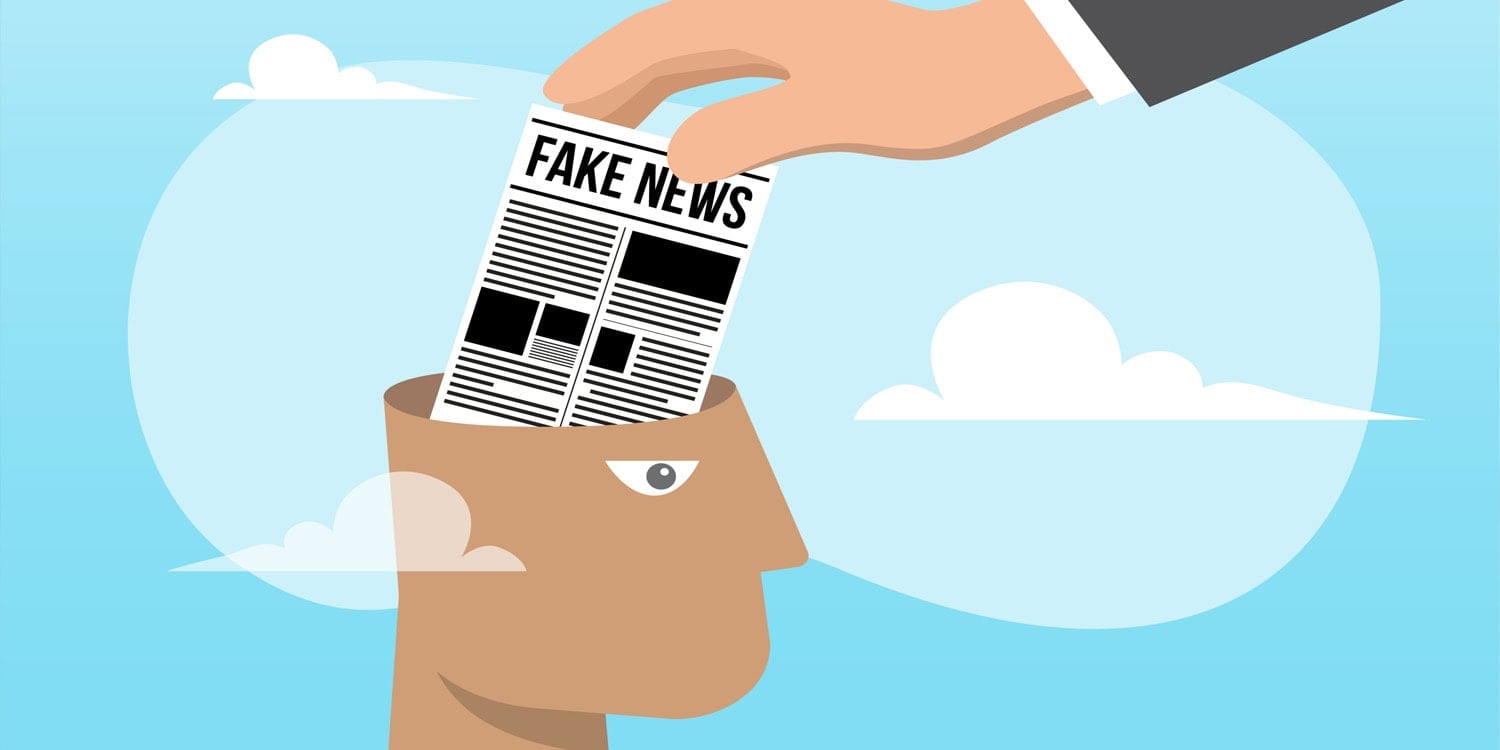
A new study into disinformation during the 2024 United States presidential election, conducted by researchers Alba Córdoba-Cabús and Andreu Casero-Ripollés of Universitat Jaume I in Spain, identifies who spread hoaxes and who were targeted, offering a fresh view of modern political communication.
The project analysed 374 false messages verified by PolitiFact between January 2024 and the presidential inauguration in January 2025, focusing on the United States race. The researchers sought to categorise the spreaders of political hoaxes, known as issuers, and the subjects of those hoaxes, known as recipients.
For each verified hoax, the team recorded the channel, topic and the exact type of falsehood, as well as the political affiliations and public roles of both the people spreading the claims and the people the claims were about.
In more than 90 per cent of cases, the researchers could readily identify the person or group issuing the false statement. The work suggests that spreading falsehoods is a normalised, public tactic rather than a secretive operation, with anonymous online users the most common source at nearly 40 per cent. Political candidates and celebrities or internet influencers tied for the second most common sources, each accounting for around 16 per cent.
The data also revealed a link between who shared the content and how they shared it. Anonymous users and influencers relied almost exclusively on social media to circulate their messages, whereas candidates and public officials distributed unverified claims across a wider array of channels, including campaign rallies, television interviews and press releases.
The subject matter tended to vary by issuer. Politicians often focused on public policy areas such as the economy, immigration and crime, while anonymous posters and influencers concentrated on the mechanics of the campaign—voting processes, polling data or the private lives of political figures.
The study also noted differences in the deception techniques used. Politicians frequently employed misleading content that twisted real statistics or data, while anonymous users and influencers more often relied on false context—pairing real images, videos or quotes with fabricated background details.
Looking at party affiliations, the analysis found that Republicans accounted for about 73 per cent of the hoaxes, with Democrats responsible for roughly 22 per cent.
Most of the false content appeared designed to attack opponents. Candidates were the primary subjects in 38 per cent of the analysed items, while Democratic figures were the recipients of about 57 per cent of the falsehoods and Republicans about 22 per cent.
There was also a growing trend of constructive disinformation. Republican actors directed nearly 20 per cent of their false claims at their own party or candidate to bolster support, while Democratic actors did so in roughly 7 per cent of cases.
The researchers caution that the findings rest on data collected from a single fact-checking organisation, meaning the sample may not capture all questionable statements circulating online. The study focuses on the 2024 U.S. presidential election, and its observations might not generalise to other nations or political contests.
The study, “Actors of Disinformation: Issuers and Recipients of Hoaxes in the 2024 U.S. Presidential Election,” was authored by Alba Córdoba-Cabús and Andreu Casero-Ripollés.
