


Rooming houses in Victoria are expanding rapidly as councils and housing advocates warn that weak oversight is leaving vulnerable tenants exposed to unsafe conditions, overcrowding and inadequate support.
The number of registered rooming houses across the state rose by almost 19 per cent in the year to June, from 1,710 to more than 2,040, according to the Consumer Affairs Victoria public register.
In Frankston, the increase has been even sharper. The number of registered properties has risen from 70 in 2020 to 121 today, prompting concern about the pace of growth and the standards being applied.
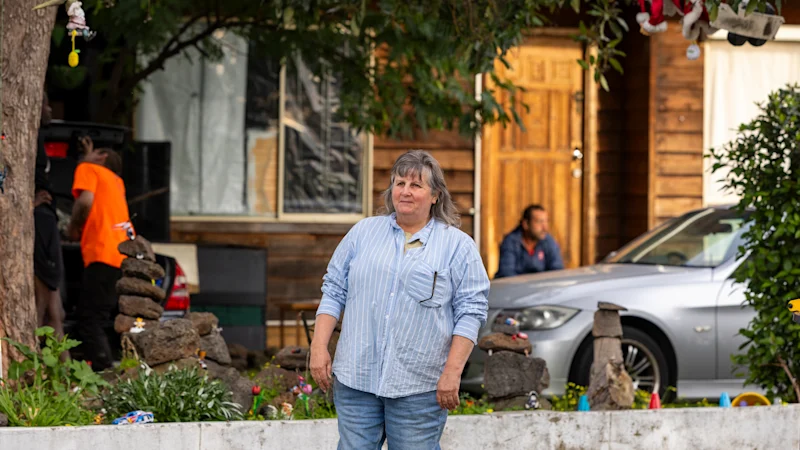
Helen Dawson spent four and a half years living in rooming houses alongside criminals, people who used drugs and other vulnerable residents. She described the experience as “chaotic and terrifying”, with little privacy and almost no access to support or dispute resolution.
“Everything is just really difficult on a personal, intimate scale,” she said.
Dawson recalled how easily tenants’ possessions could disappear while they slept. “Someone can go and steal all of your possessions. In my case, literally take your pair of jeans from under your pillow and take all of your belongings overnight while you’re asleep.”
She now lives in public housing and is campaigning for reform, particularly in Frankston, where she says rooming houses are becoming a mainstream housing option.
Rooming houses, also known as boarding houses or multi-tenant houses, are properties where rooms are rented separately to four or more people. Residents typically share kitchens, bathrooms and living areas.
Most are privately owned and operated for profit, rather than being managed as public housing. Oversight is divided between local councils and Consumer Affairs Victoria, while planning rules generally require a permit only when an operator intends to run a property with more than nine rooms.
Concerns over rooming house safety and standards
Advocates say the system can leave residents with fewer practical protections than people in other forms of housing. Dawson has raised concerns about overcrowding, operators managing too many properties and rooming house tenants having rights similar to those living in temporary accommodation such as motels or caravan parks.
“Mostly the barriers are systemic, institutionalised … it means that people feel incredibly degraded by being excluded from the rights that other people have,” she said.
Jackie Galloway, chief executive of Peninsula Community Legal Centre, said rooming houses filled an important gap during a housing shortage but that some tenants were being offered unacceptable living conditions.
“It is not uncommon for residents to feel unsafe, and they have elected to move to rough sleeping,” she said.
“We need to highlight this dire situation. Where there are incredibly low rental vacancy rates, rooming houses can play a role. However, we need to ensure they are safe and well managed.”
The centre’s 2025-26 impact report found that the average weekly rent for a room in the south-east Melbourne region had reached $303. Although rooming houses are often presented as temporary accommodation, the average stay was two and a half years.
The report said properties visited by the legal centre had been found with broken windows and doors, pest infestations, water leaks and mould. It described the conditions as “wholly inadequate” for long-term accommodation.
Frankston Council has received 250 complaints about rooming houses over the past two years from residents and other members of the community. The complaints mainly concerned anti-social behaviour, safety and noise.
Councillor Nathan Butler, who has previously lived in a rooming house, moved a motion in August calling on the Victorian Government to urgently review the laws before the November state election. The motion was defeated by a narrow margin, with four of the nine councillors supporting it.
It called for stronger minimum standards, particularly on privacy and security, more resources for Consumer Affairs Victoria and greater rights for the public to receive notice of and review rooming house applications.
Butler said rooming houses provided an important source of accommodation, but warned that the relative ease of establishing them, combined with their profitability, could be driving disproportionate growth in communities such as Frankston.
“My concern is that an unintended consequence of how relatively easy they can be to establish – combined with how profitable they can be – is that we’re seeing them grow very quickly in communities like Frankston, potentially at a disproportionate rate,” he said.
Frankston mayor Sue Baker, who supported the motion, said residents should have access to housing that was both safe and suitable.
“Council has a shared responsibility to ensure these properties meet required standards and operate in a way that protects the wellbeing of both residents and the surrounding community,” she said.
Josh Cohen, who runs a counselling clinic next to a registered rooming house in Frankston, said mental health difficulties contributed to some of the behaviour associated with the residences.
He said many residents had fallen through gaps in support services and called for greater government funding for people with complex needs. He also questioned how transparent the current regulatory arrangements were.
“If they’re privately run, how regulated are they?” Cohen said.
The issue has also been raised by councils elsewhere in Melbourne. The cities of Knox and Brimbank have supported motions at Municipal Association of Victoria meetings calling for tighter regulation and stronger minimum standards.
Paige Kennett, the mayor of Knox, said community concerns had been building for some time. The council met Planning Minister Sonya Kilkenny in April to discuss regulation and also wrote to the then local government minister, Nick Staikos.
“Council would welcome further discussion with the state government about opportunities to improve the regulatory framework and management arrangements,” Kennett said.
Dawson said her years in rooming houses had also shown her the importance of personal responsibility and a supportive community. She formed close friendships with other residents and remains in contact with some of them.
But she believes the rapid expansion of the sector must be matched by stronger protections for the people relying on it.
