


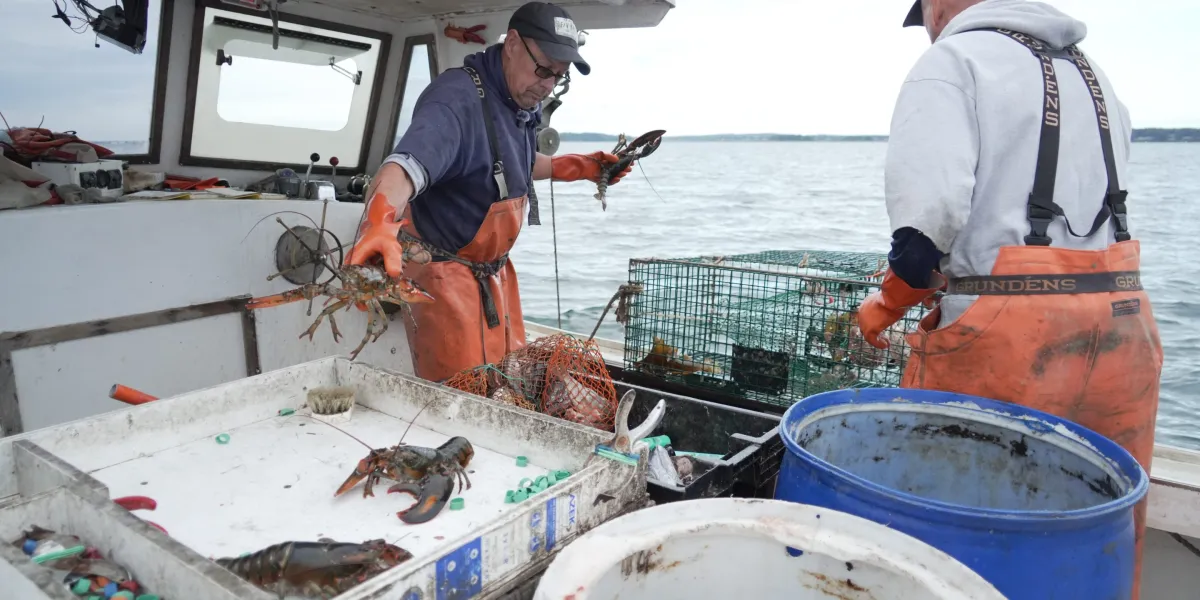
Discontent among US commercial fishermen over rising diesel prices, trade tensions with Canada and proposed cuts to the National Oceanic and Atmospheric Administration (NOAA) is threatening to weaken support for Donald Trump in key fishing states.
Fishermen in Alaska, Washington, Maine, New York and Rhode Island say the cost of operating at sea has soared, while uncertainty over seafood markets and government services has made an already difficult industry more precarious.
John Evich, a commercial fisherman working in Washington and Alaska, has voted for Mr Trump three times because he believed the president would stand up for the industry. He now says he would consider another candidate.
“If somebody came along that was going to do a better job, I would vote for them in a heartbeat,” Mr Evich said.
The shift in sentiment could have political consequences in Alaska, Washington and Maine, where competitive House and Senate races are being fought. Mr Trump has sought to cultivate fishermen for years through expanded fishing territory, opposition to regulation and aggressive trade policies.
Fuel and tariffs weigh on fishing businesses
Marine diesel, used by almost the entire US commercial fishing fleet, has risen to around six dollars a gallon, compared with less than four dollars a year earlier. The increase has been linked in the source material to the war with Iran.
Bonnie Brady, executive director of the Long Island Commercial Fishing Association, said fuel costs could determine whether vessels left port at all.
“Actual dockside marine-fuel prices vary, but the magnitude of the increase is undeniable. It determines whether a trip is economically viable, what the crew earns and whether necessary vessel maintenance can be performed,” she said.
Chris Brown, who fishes for species including fluke and squid from Point Judith in Rhode Island, offered a more sarcastic assessment of the situation: “It’s huge. It’s crazy. Thank you, Donald Trump.”
Mr Trump’s trade dispute with Canada has added to concerns, despite Canada exempting US fish and seafood products from the retaliatory tariffs imposed after the US placed tariffs on Canadian goods.
Canada remains the United States’ largest seafood trading partner, while American businesses also depend on the country for seafood processing and fishing equipment. Lobster and salmon fishermen in the two countries sometimes operate close to one another or in the same waters.
Steve Train, a lobster fisherman from Long Island, Maine, who describes himself as a right-leaning centrist, said the dispute risked harming people on both sides.
“I get the standing up to a bully concept, but too many people will be caught in the middle of this,” he said. “Both sides need to reconsider these tariffs, and they need to reconsider soon.”
NOAA cuts cause further unease
NOAA Fisheries, which oversees commercial fishing, faces a proposed reduction of more than 40 per cent in the fiscal 2027 budget. The cuts would affect scientific research, fisheries management and data collection.
John Sackton, founder of SeafoodNews.com and a long-time industry analyst, said disruption across fisheries, science and weather reporting had left fishermen eager to “turn the page” on the Trump administration.
Staff reductions have also slowed NOAA’s response to the industry’s needs and reduced the number of weather balloons used to gather data relied upon by fishermen.
Linda Behnken, executive director of the Alaska Longline Fishermen’s Association, said the changes had made it harder for fishermen to work with the agency. She said staff, particularly in the weather service, were “doing the work of three people”.
“It’s hard to retain good people when their future at the organization is that uncertain,” Ms Behnken said.
A NOAA survey cited in the source material found that 70 per cent of commercial fishing crews believed fishing rules were too restrictive. The administration has continued to court the sector, including with a September promise to reduce regulatory burdens, but dissatisfaction over costs and government cutbacks appears to be testing that support.
Mr Evich said his priority was the long-term welfare of his family and country. “I’m for whatever has to happen for the greater good in the long run for my family and my country,” he said.
