


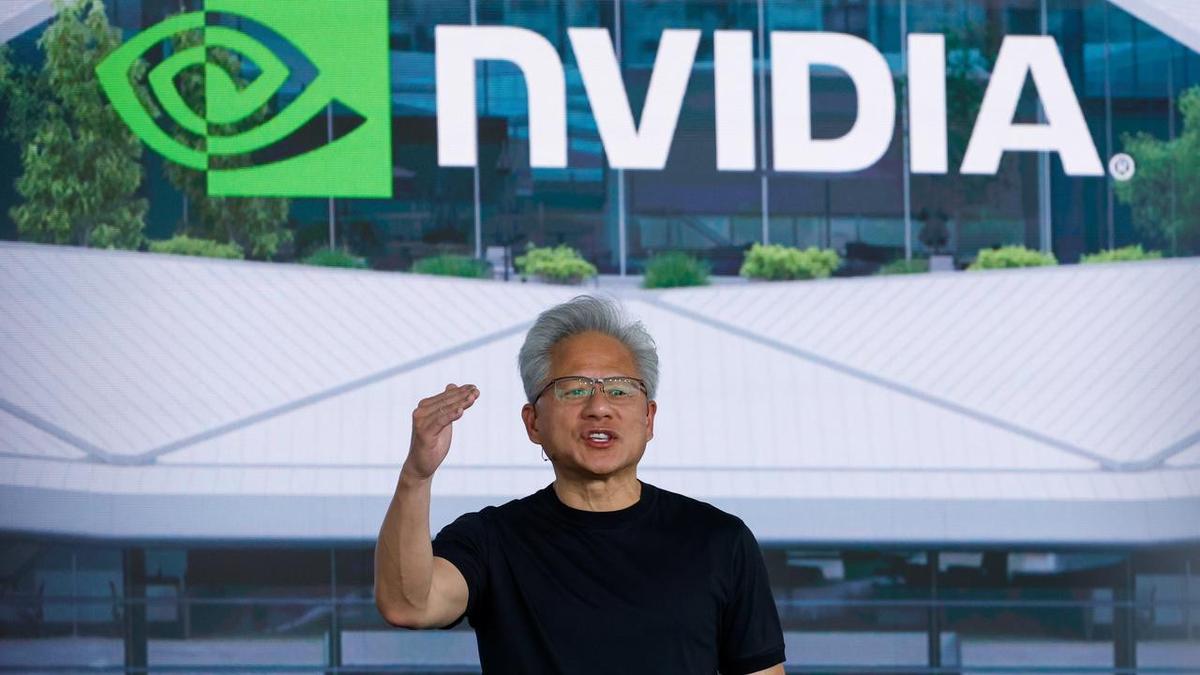
Jensen Huang has said he would be willing to return as chief executive of Nvidia if the company’s board decided it was in the best interests of shareholders and employees.
Mr Huang resigned from the chipmaker on November 12 after revelations about extramarital affairs intensified scrutiny of Nvidia’s business in China. In his first public statement since stepping down, he said he had received calls from employees, investors, business partners and customers urging him to return.
“I would be honoured to return as CEO if the board decided it would be in the best interest of shareholders and employees,” Mr Huang said.
He added: “I created problems for the board that I deeply regret. I own my mistakes completely, and I am committed to co-operating with the board’s independent investigation.”
Nvidia did not immediately respond to a request for comment on the statement.
The former chief executive has also agreed to appear before several House committees on December 1, as US politicians increase their scrutiny of Nvidia’s role in China and national security. The company’s general counsel, Tim Teter, is due to appear the following day.
The chairmen of three House committees overseeing China and intelligence issues said they wanted answers about Nvidia’s role in allowing “dangerous PRC actors” to access its most advanced chips, as well as the alleged involvement of a potential Chinese intelligence asset.
On Tuesday, Nvidia established a board-level National Security and Export Control Oversight Committee, its first major governance move since Mr Huang’s departure. The committee will be chaired by Suzanne Nora Johnson, a former Goldman Sachs vice chairwoman, alongside directors Stephen Neal and John Dabiri.
US President Donald Trump welcomed the creation of the committee, describing the national security initiative as a good idea.
The move came a day after the Trump administration said it would impose further restrictions on China’s access to advanced artificial intelligence chips made by companies including Nvidia. Washington has for years sought to limit Beijing’s access to the company’s most powerful processors, placing Nvidia’s China business at the centre of disputes over national security, trade and US technological leadership.
Chinese companies have repeatedly found ways around existing restrictions, while Mr Huang had advocated allowing more chip exports to China.
Questions have also been raised about Mr Huang’s relationship with Alice Huang, a former senior executive and controlling shareholder of Singapore-based cloud computing firm Megaspeed. US intelligence agencies suspect she has links to Chinese intelligence.
Megaspeed is under investigation over the possible diversion of restricted Nvidia chips to China and potential export-control violations. The company has denied wrongdoing.
