


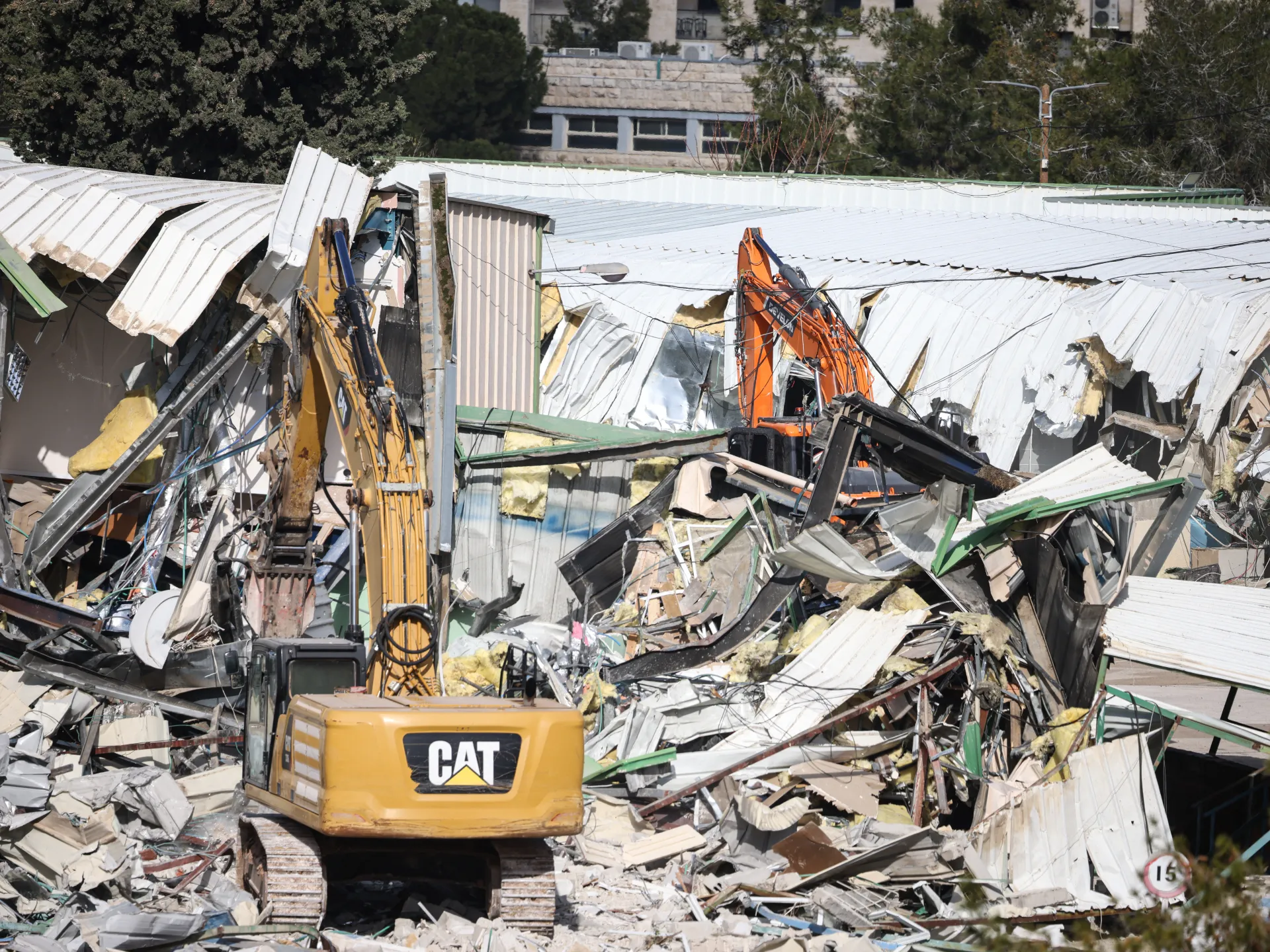
The US-led Board of Peace has ruled that UNRWA will have no role in Gaza, adopting a position that mirrors Israel’s longstanding demand to remove the UN agency for Palestinian refugees from the territory.
The board, established by US President Donald Trump to oversee the ceasefire and Gaza’s reconstruction, said it would work only with partners it considered reliable and capable of meeting the needs of Gaza’s population.
“The Board of Peace’s policy as it relates to UNRWA’s involvement in Gaza is unchanged,” it said in a statement on Friday. “We will only work with trusted partners who will deliver for the people of Gaza and contribute to a deradicalised Strip. UNRWA fails on those litmus tests.”
UNRWA excluded from Gaza reconstruction plan
The decision came after the Board of Peace unveiled a 66-project reconstruction blueprint, including $2.4 billion-worth of proposals, on the sidelines of the United Nations General Assembly.
UNRWA was not included among the UN agencies identified as partners in the plan. A board official said its programmes could continue if they served Gaza’s residents effectively, but added that “UNRWA’s days are over”.
The official also confirmed that board members had met UNRWA representatives several times.
UNRWA acting commissioner-general Christian Saunders defended the agency’s role, saying it had “capabilities and expertise that are difficult to replicate today”.
“To disregard these capabilities at a moment of such profound need is neither logical nor responsible,” he said in a statement from Gaza.
The agency employs about 11,000 Palestinians in Gaza and provides healthcare, education, water and sanitation services. It has also delivered aid and education to Palestinians in occupied East Jerusalem and the West Bank, as well as refugees living in Jordan, Syria and Lebanon.
Former UNRWA chief Philippe Lazzarini warned that removing the agency could have a “devastating” effect on Palestinians. He said those seeking to dismantle it also understood that doing so immediately could worsen the humanitarian situation.
Hamas accuses board of following Israel’s position
Hamas accused the Board of Peace of adopting Israel’s position on UNRWA.
Its spokesman Hazem Qassem described the decision as “a complete alignment with the Zionist [Israeli] position”, saying it was intended to end the agency’s operations, prevent it from distributing aid and undermine Palestinian refugees’ right of return.
He also criticised the board for excluding UNRWA while failing to provide aid or compel Israel to observe the ceasefire and stop the killing of Palestinians in Gaza.
Israel has for years accused UNRWA of being infiltrated by Hamas and has sought to remove it from Gaza. An International Court of Justice advisory opinion said allegations that a significant proportion of UNRWA employees belonged to Hamas or other armed factions had not been substantiated.
Palestinians regard the agency as helping to safeguard their right to return to their former homes, while Israel wants it dismantled. The Board of Peace’s decision has strengthened efforts to exclude UNRWA from Gaza’s future administration and reconstruction.
Reconstruction and ceasefire remain stalled
The board’s reconstruction proposals include temporary rebuilding in areas designated as being free of Hamas control, with humanitarian compounds intended for unarmed civilians.
The plan would direct aid, shelter and reconstruction towards areas outside Hamas’s control while Israeli forces remained behind the so-called Yellow Line. Its implementation is dependent on Hamas disarming.
Hamas and other Palestinian factions agreed in July to a roadmap under which weapons would be surrendered in stages as Israeli troops withdrew. The two steps were explicitly linked, but the Board of Peace has since said that Israeli forces will not withdraw beyond the Yellow Line until Hamas has fully surrendered light and heavy weapons, as well as its tunnels.
Hamas maintains that it will not fulfil its obligations unless Israel carries out its own commitments. Israeli forces currently control more than 60 per cent of Gaza, while most of the territory’s 2.3 million residents remain displaced.
Almost a year after the October 2025 ceasefire, reconstruction has yet to begin on a meaningful scale. Gaza’s Health Ministry says at least 1,451 Palestinians have been killed and 4,953 wounded in Israeli attacks since the ceasefire began.
The ministry has warned that the healthcare system is close to total collapse, with shortages of fuel, medical supplies and spare parts disrupting hospitals, water and sanitation services. More than half of Gaza’s hospitals and clinics remain non-functional, while the estimated reconstruction bill has reached $71.5 billion.
The UN says nearly 84 per cent of Gaza’s population, or more than 1.76 million people, are living in displacement sites or damaged and inadequate shelters.
